Introduction
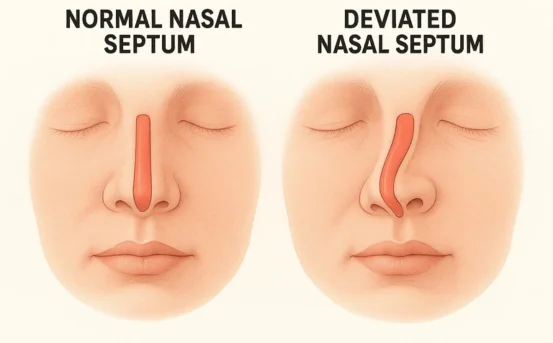
The nasal septum is the thin wall made of cartilage and bone that divides the nose into two nostrils. Ideally, the septum should be positioned in the center, allowing equal airflow through both sides of the nose. However, in many people, the septum is not perfectly straight. When the septum is significantly shifted to one side, it is known as a deviated nasal septum.
A deviated nasal septum can be present from birth or develop later due to injury or trauma to the nose. While mild deviation may not cause any symptoms, a severe deviation can lead to breathing difficulty, frequent nasal blockage, sinus infections, nosebleeds, snoring, and facial discomfort. Understanding the different types of deviated nasal septum helps doctors decide the right treatment approach and helps patients understand their condition better.
Types of Deviated Nasal Septum
- Anterior Septal Deviation :- Anterior septal deviation occurs when the front portion of the nasal septum, which is close to the nostrils, is displaced to one side. This type of deviation is often more noticeable because it directly affects airflow at the nasal opening. Even a small shift in this area can cause significant breathing difficulty. Patients with anterior deviation may experience constant nasal blockage on one side, dryness inside the nose, and frequent nosebleeds. This type of deviation can be congenital or result from minor trauma during childhood. Because of its location, anterior septal deviation often responds well to surgical correction when symptoms are severe.
- Posterior Septal Deviation :- Posterior septal deviation affects the back portion of the septum, located deeper inside the nasal cavity. This type of deviation may not be visible externally and is often detected during nasal endoscopy or imaging studies. Patients with posterior deviation commonly experience sinus pressure, recurrent sinus infections, headaches, and a feeling of nasal congestion that does not improve with medications. Since the deviation is deeper, symptoms may be less obvious initially but can worsen over time. Surgical treatment is usually recommended when sinus-related problems become frequent.
- C-Shaped Septal Deviation :- C-shaped septal deviation is one of the most common types. In this condition, the septum curves to one side in the shape of the letter “C.” This curvature causes narrowing of one nasal passage while the opposite side may appear wider. People with C-shaped deviation often complain of difficulty breathing through one nostril, especially during colds or allergies. The symptoms may alternate between sides depending on nasal congestion. This type of deviation can be present from birth or develop due to trauma. Treatment depends on the severity of symptoms, with septoplasty being the definitive solution for significant obstruction.
- S-Shaped Septal Deviation :- S-shaped septal deviation is a more complex form where the septum curves in opposite directions, resembling the letter “S.” This means both nasal passages can be partially obstructed at different levels. Patients with this type often experience bilateral nasal blockage, chronic mouth breathing, snoring, and disturbed sleep. S-shaped deviation can significantly affect airflow and increase the risk of sinus infections. Due to its complexity, surgical correction requires careful planning and expertise to restore balanced airflow.
- Septal Spur Deviation :- Septal spur refers to a sharp bony or cartilaginous projection along the septum. This spur may develop alone or along with other types of septal deviation. It often presses against the nasal wall or turbinates, causing irritation. Symptoms of septal spur include facial pain, headaches, frequent nosebleeds, and nasal obstruction. In some cases, the spur can block sinus drainage pathways, leading to chronic sinusitis. Surgical removal of the spur during septoplasty usually provides significant symptom relief.
- Traumatic Septal Deviation :- Traumatic septal deviation results from injury to the nose, such as sports accidents, falls, road traffic accidents, or physical trauma. The septum may shift suddenly or gradually as the injury heals improperly. This type of deviation can occur at any age and is often associated with external nasal deformity, nasal obstruction, and recurrent infections. Early evaluation after nasal injury is important to prevent long-term complications. Surgery is commonly required when breathing problems persist.
- Congenital Septal Deviation :- Congenital septal deviation is present at birth and may result from pressure during fetal development or injury during childbirth. In infants and young children, symptoms may be mild initially but become more noticeable as the child grows. Children with congenital deviation may have persistent nasal blockage, noisy breathing, and frequent respiratory infections. Early diagnosis helps in monitoring the condition and planning treatment if symptoms worsen with age.
- Compensatory Septal Deviation :- Compensatory deviation occurs when the septum shifts due to enlargement of nasal structures such as turbinates. This type is often associated with chronic allergies or nasal inflammation. Patients may experience alternating nasal blockage, seasonal worsening of symptoms, and breathing difficulty. Treating the underlying cause may provide partial relief, but surgery is considered when structural imbalance remains.
Conclusion
A deviated nasal septum can present in different forms, each affecting nasal airflow and overall respiratory health in unique ways. Types such as anterior, posterior, C-shaped, S-shaped, septal spur, traumatic, congenital, and compensatory deviations help doctors understand the severity and complexity of the condition.
While mild deviations may not require treatment, severe deviations can significantly impact breathing, sleep quality, and sinus health. Proper diagnosis by an ENT specialist is essential to determine the exact type of deviation and the most effective treatment approach. With timely medical or surgical management, patients with a deviated nasal septum can experience improved breathing, better sleep, and enhanced quality of life.