Introduction
Bartholin duct cysts are a common women’s health issue that can cause pain, swelling, and discomfort during daily activities. When conservative treatments such as warm Sitz baths or antibiotics are not enough, surgery becomes the most effective option. Understanding the types of Bartholin duct cyst surgery helps patients make informed decisions, prepare for treatment, and choose the right care provider.
What Is a Bartholin Duct Cyst?
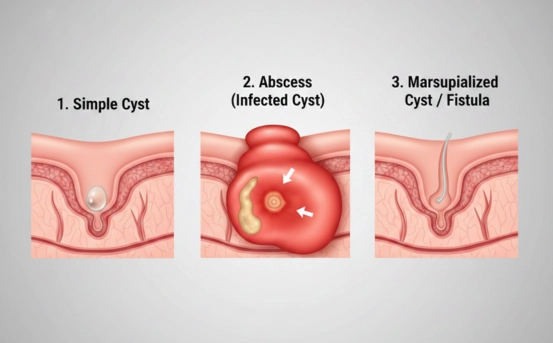
The Bartholin’s glands, located on either side of the vaginal opening, produce lubrication during intercourse. If the duct that drains these glands becomes blocked, fluid collects and forms a cyst. While some cysts are painless and small, others grow large or become infected, turning into an abscess.
When symptoms persist or the cyst keeps coming back, surgical procedures may be recommended to provide long-term relief.
Types of Bartholin Duct Cyst Surgery
- Incision and Drainage (I&D) :- Incision and drainage is the most basic and commonly performed procedure for a painful or infected Bartholin’s cyst or abscess. It provides immediate relief by releasing trapped fluid or pus.
How the Procedure Works :- A small incision is made in the cyst to allow the contents to drain out. The area is then cleaned, and a small catheter may be inserted temporarily to keep the incision open for proper drainage.
When It Is Recommended
- For painful cysts causing immediate discomfort
- For Bartholin’s abscesses filled with pus
- When quick and simple treatment is needed
Pros
- Fast
- Minimal recovery time
- Performed under local anesthesia
Cons
- Higher chance of recurrence
- Does not prevent future cyst formation
- Word Catheter Placement :- Word catheter placement is a simple but effective treatment used after drainage. It provides long-term relief by creating a new drainage pathway.
How the Procedure Works :- After the cyst is drained, a small balloon catheter called a “Word catheter” is inserted into the incision. The balloon is inflated to keep it in place for 2–4 weeks. This allows a new duct opening to form naturally.
When It Is Recommended
- For recurrent cysts
- For patients who want a minimally invasive option
- When creating a long-term drainage route is helpful
Pros
- Reduced recurrence rate
- Quick procedure
- Performed in an outpatient setting
Cons
- Minor discomfort while the catheter is in place
- Requires follow-up visits
- Marsupialization :- Marsupialization is a popular surgical option for chronic or recurrent Bartholin’s cysts. It permanently opens the gland and prevents future blockages.
How the Procedure Works :- After draining the cyst, the edges of the incision are stitched to the skin to form a small, pouch-like opening. This keeps the gland continuously draining, preventing fluid buildup.
When It Is Recommended
- For frequent recurrences
- When previous treatments like Word catheter placement have failed
- For cysts that do not respond to conservative management
Pros
- Very effective in preventing recurrence
- Long-term solution
- Performed under local or general anesthesia
Cons
- Slightly longer recovery
- Mild bleeding or discharge for a few days
- Silver Nitrate Ablation :- Silver nitrate is a chemical agent used to shrink and seal cyst walls, promoting drainage and preventing recurrence.
How the Procedure Works :- The surgeon inserts a silver nitrate stick into the cyst cavity after draining it. The chemical cauterizes the tissue, which helps form a new duct opening.
When It Is Recommended
- For recurrent cysts that require more than standard drainage
- When the patient wants a quick outpatient procedure
Pros
- Short procedure time
- Effective for chronic cysts
Cons
- Can cause temporary burning sensation
- Not suitable for infected cysts
- Laser Ablation :- Laser surgery is an advanced, minimally invasive approach used to treat persistent Bartholin’s duct cysts with high precision.
How the Procedure Works :- A medical laser is used to open and remove the cyst wall. The heat from the laser sterilizes the area and reduces bleeding.
When It Is Recommended
- For patients seeking minimal bleeding and faster healing
- For cysts that recur frequently
- When advanced surgical options are available
Pros
- Very low recurrence
- Quick healing
- Minimal scarring
Cons
- May not be available in all hospitals
- Slightly higher cost
- Bartholin Gland Excision :- Excision involves removing the entire Bartholin’s gland. This is the most definitive treatment for chronic, complex, or suspicious cysts.
How the Procedure Works :- Under general anesthesia, the gland and duct are removed through a surgical incision. Recovery takes a little longer, but recurrence is nearly impossible.
When It Is Recommended
- For recurrent cysts that do not respond to other surgeries
- For women over 40 (to rule out malignancy)
- When cysts have unusual features or persistent infection
Pros
- Eliminates recurrence
- Recommended when other treatments fail
Cons
- Longer recovery
- Requires anesthesia and skilled surgical care
Recovery After Bartholin’s Duct Cyst Surgery
Most patients recover within a few days to a couple of weeks depending on the type of procedure. Doctors often advise
- Sitz baths
- Avoiding intercourse temporarily
- Taking pain medications
- Keeping the area clean and dry
Regular follow-ups ensure proper healing and prevent complications.
Conclusion
Choosing the right type of Bartholin’s duct cyst surgery depends on the severity of symptoms, frequency of recurrence, and the patient’s overall health. From simple drainage to advanced gland removal, each procedure offers benefits tailored to different clinical situations. Consulting a gynecologist helps determine the safest, most effective option for long-term comfort and relief.