Introduction
Neuro ophthalmic disorders lie at the intersection of neurology and ophthalmology, affecting the visual pathways that connect the eyes to the brain. These conditions can cause a wide range of symptoms from double vision and visual field loss to difficulty moving the eyes or sudden vision impairment. Before any neuro-ophthalmic surgery is planned, accurate diagnosis plays a critical role. A clear and precise diagnosis not only ensures targeted treatment but also minimizes surgical risks and improves patient outcomes.
Understanding Neuro Ophthalmic Disorders
Neuro-ophthalmic disorders arise when there is a problem in the optic nerve, brain, or the muscles controlling eye movement. Some of the most common conditions that may require surgical management include
- Optic nerve compression (tumors, aneurysms)
- Cranial nerve palsies
- Thyroid eye disease (severe cases)
- Idiopathic intracranial hypertension
- Pituitary tumors affecting vision
- Orbital tumors or structural abnormalities
Because these disorders involve neurological pathways, their diagnosis requires a combination of neurological, ophthalmic, and imaging evaluations.
Why Diagnosis of Neuro Ophthalmic Disorder Surgery is Important
Surgery for neuro-ophthalmic disorders involves delicate structures the optic nerves, brain tissues, and ocular muscles. Therefore, identifying the exact cause and location of the problem is essential. Proper diagnosis allows surgeons to
- Understand the severity of nerve damage
- Identify compressive lesions or abnormalities
- Plan the best surgical approach
- Prevent unnecessary or incorrect surgery
- Predict postoperative recovery potential
Early and correct diagnosis also avoids delays that could lead to permanent vision loss.
Common Symptoms That Require Neuro-Ophthalmic Evaluation
Patients are typically referred for neuro-ophthalmic assessment when they exhibit symptoms such as
- Blurred or double vision
- Drooping eyelids
- Sudden loss of vision
- Visual field defects (e.g., tunnel vision)
- Difficulty moving one or both eyes
- Unexplained headaches with visual disturbances
- Abnormal pupil reactions
- Eye bulging or asymmetry
Recognizing these symptoms early can significantly improve treatment success rates.
Step by Step Diagnostic Approach
Diagnosing a neuro-ophthalmic disorder involves multiple steps. Below is a detailed look at the key diagnostic components used before surgery.
- Detailed Patient History :- A thorough history helps the specialist understand the root cause of visual symptoms. This includes
- Duration and progression of symptoms
- Presence of headaches, nausea, or neurological issues
- Any past trauma or surgery
- Pre-existing health conditions (diabetes, thyroid disease, hypertension)
- Medication history
This initial step helps guide subsequent diagnostic evaluations.
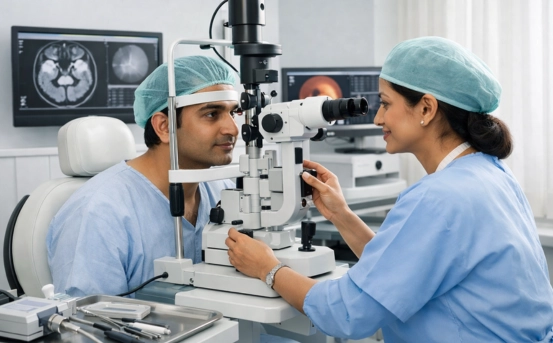
- Comprehensive Eye Examination :- A neuro-ophthalmologist performs detailed eye assessments to pinpoint abnormalities
- Visual Acuity Test :- Checks clarity of vision and identifies changes compared to previous records.
- Pupil Examination :- Irregularities in pupil size or response may indicate optic nerve damage.
- Color Vision Testing :- Optic nerve disorders often cause color desaturation, especially for red hues.
- Visual Field Testing :- Helpful for detecting blind spots (scotomas) or field deficits typical of brain or optic nerve problems.
- Eye Movement Evaluation :- Assesses whether cranial nerves III, IV, or VI are affected.
- Optical Coherence Tomography (OCT) :- OCT is a non-invasive imaging scan that provides cross-sectional images of the retina and optic nerve. It helps detect:
- Optic nerve swelling (papilledema)
- Nerve fiber layer thinning
- Retinal abnormalities
OCT is especially important when evaluating conditions like optic neuritis, glaucoma, or compressive optic neuropathy.
- Fundus Photography :- High-resolution images of the retina allow specialists to monitor
- Optic disc swelling
- Optic disc pallor
- Vascular abnormalities
These images are crucial for tracking disease progression.
- Neurological Examination :- Since neuro-ophthalmic disorders often have neurological origins, a detailed neurological exam may be performed. This can include
- Cranial nerve assessment
- Coordination and motor function tests
- Reflex evaluations
Advanced Imaging for Surgical Planning
When a structural or compressive cause is suspected, imaging becomes essential for accurate surgical evaluation.
- Magnetic Resonance Imaging (MRI) :- MRI is the gold standard imaging test for neuro-ophthalmic disorders. It provides high-resolution images of
- Optic nerves
- Brain tissues
- Tumors
- Inflammation
- Blood vessel abnormalities
Contrast-enhanced MRI is especially helpful in identifying:
- Pituitary tumors
- Optic nerve sheath lesions
- Demyelinating diseases like multiple sclerosis
- Computed Tomography (CT) Scan :- CT is recommended for
- Bony orbital abnormalities
- Trauma cases
- Calcified lesions
- Thyroid eye disease with bone remodeling
CT scans complement MRI and assist surgeons in planning complex orbital or skull base surgeries.
- MR Angiography and CT Angiography :- Used when a vascular cause is suspected such as an aneurysm, carotid artery compression, or arteriovenous malformations (AVMs).
Identifying vascular abnormalities early prevents surgical complications and helps decide whether neurosurgical intervention is needed.
Electrophysiological Tests
These tests evaluate how well the optic nerve and visual pathways are functioning.
- Visual Evoked Potential (VEP) :- Measures electrical activity in the brain in response to visual stimuli. Useful for diagnosing
- Optic neuritis
- Compressive optic neuropathy
- Demyelinating disorders
- Electroretinography (ERG) :- Assesses retinal function and helps differentiate retinal vs optic nerve disease.
Blood Tests and Systemic Evaluation
Systemic diseases often affect the optic nerves. Doctors may order
- Thyroid function tests (for thyroid eye disease)
- Autoimmune markers
- Infection panels (TB, syphilis, viral infections)
- Blood sugar and vascular risk assessments
These tests help ensure patient safety before undergoing surgery.
When Is Surgery Recommended?
Surgery is typically considered when
- There is optic nerve compression due to tumors, aneurysms, or bone deformities
- Eye muscles require correction to restore alignment
- Severe thyroid eye disease causes vision loss
- Intracranial pressure threatens optic nerve function
- Orbital tumors need removal
Diagnosis ensures that surgery is appropriate and that alternative treatments (like medication or steroid therapy) are not overlooked.
Conclusion
The diagnosis of neuro-ophthalmic disorders before surgery is a crucial, multi-step process involving clinical evaluations, imaging, neurological tests, and systemic assessments. Accurate diagnosis not only helps identify the root cause of visual symptoms but also guides surgeons in planning safe and effective treatment.
If you or someone you know is experiencing unexplained visual changes, double vision, or optic nerve swelling, immediate neuro-ophthalmic evaluation is essential. Early diagnosis can prevent irreversible damage and ensure the best possible surgical outcomes.