Introduction
Ptosis, commonly known as “drooping eyelids,” is a condition where the upper eyelid falls lower than its normal position. While it may seem like just a cosmetic issue, ptosis can also interfere with vision, affect eye health, and signal underlying medical problems. Because ptosis can develop gradually or suddenly, recognizing its symptoms of ptosis early is essential for timely diagnosis and treatment.
What Is Ptosis?
Ptosis (pronounced toe-sis) refers to the drooping of one or both upper eyelids. The eyelid may droop slightly or may cover the entire pupil, depending on severity. Ptosis can occur at any age children may be born with it (congenital ptosis), while adults often develop it due to aging, injury, nerve issues, or underlying diseases.
The most common reasons for ptosis includesymptoms of
- Weakening or stretching of the levator muscle
- Nerve damage affecting eyelid movement
- Age-related changes
- Trauma or surgery near the eye
- Neurological or muscular disorders
Understanding its symptoms of ptosis can help determine how far the condition has progressed and what type of treatment might be required.
Symptoms of Ptosis Explained
- Drooping of the Upper Eyelid :- The primary and most noticeable symptom of ptosis is the visible drooping of the upper eyelid. The degree of droop can vary
- Mild ptosis: Slight sagging that may not affect vision
- Moderate ptosis: Eyelid partially covers the pupil
- Severe ptosis: Eyelid obstructs vision completely
In some cases, the drooping may be barely noticeable at first but gradually worsens over months or years. Individuals with ptosis may appear sleepy, tired, or asymmetrical due to one eyelid sitting lower than the other.
- Reduced or Obstructed Vision :- When the eyelid droops enough to block part of the pupil, it can limit the upper field of vision. Patients often describe difficulty seeing objects above eye level or trouble keeping their eyes fully open. Over time, this limited vision can affect daily activities such as driving, reading, and working on a computer.
Children with congenital ptosis may face a risk of amblyopia (lazy eye) if the drooping lid obstructs vision for prolonged periods, making early detection crucial.
- Eyelid Fatigue or Eye Strain :- People with ptosis often must exert extra effort to lift their eyelids while performing routine tasks. This can lead to
- Aching around the eyes
- Muscle fatigue
- Feeling of heaviness in the eyelids
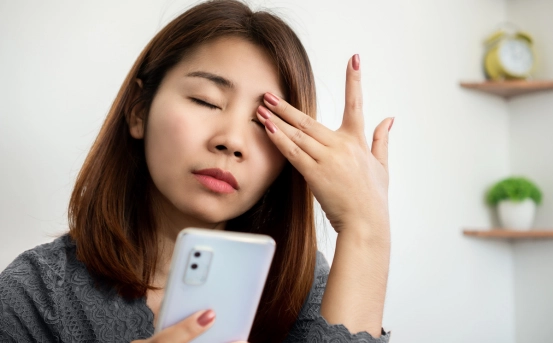
Eye strain becomes more noticeable at the end of the day or during activities that require intense focus, such as reading or screen time. Chronic strain may cause persistent discomfort and affect overall productivity.
- Raising Eyebrows Frequently to Improve Vision :- One of the tell-tale behavioral signs of ptosis is constant eyebrow lifting. As vision becomes obstructed, people subconsciously lift their brows to raise the eyelids. This compensation mechanism can lead to
- Forehead wrinkles
- Headaches from overused forehead muscles
- A strained or tired facial expression
If you notice yourself or someone else frequently lifting their eyebrows in an effort to see clearly, ptosis may be the cause.
- Tilting of the Head to See Better :- In moderate to severe cases, patients may develop unusual head positions to improve their visual field. Tilting the head backward allows better vision when the eyelid droops significantly. Over time, this posture can lead to
- Neck pain
- Shoulder stiffness
- Poor body alignment
Persistent head tilting is especially common in children, as they naturally adapt to see more clearly despite drooping eyelids.
- Dry or Watery Eyes :- Ptosis can influence how the eyelids close and how tears spread across the eye surface. As a result, patients may experience
- Dryness due to poor eyelid closure
- Excessive watering (reflex tearing)
- Irritation, redness, or foreign-body sensation
Because both dryness and excess tearing can occur simultaneously, many people mistake these symptoms for allergies or eye strain, delaying proper diagnosis.
- Double Vision or Difficulty Focusing :- In some cases, ptosis is associated with underlying neurological or muscular disorders such as myasthenia gravis or third nerve palsy. These can cause additional symptoms like
- Double vision
- Difficulty focusing
- Eye muscle weakness
If drooping eyelids occur together with these symptoms, it’s essential to seek medical attention immediately for a detailed neurological evaluation.
- Asymmetry Between Both Eyes :- Ptosis often affects one eye more than the other, creating noticeable facial asymmetry. Even mild asymmetry around the eyelids can significantly impact appearance. Patients may feel self-conscious or assume they appear tired or older than their age. Cosmetic concerns often lead individuals to seek evaluation even when vision isn’t severely affected.
- Frequent Headaches :- Constantly lifting the eyelids or raising the eyebrows forces the forehead muscles to work harder than usual. Over time, this strain can cause tension headaches, especially toward the end of the day. Many patients don’t recognize that their headaches stem from eyelid drooping until treated.
- Eyelashes Pointing Downward :- In some forms of ptosis, the drooping eyelid pushes the eyelashes downward, causing them to point toward the eye surface. This may lead to
- Irritation
- Redness
- Increased risk of infection
If you notice downward-pointing eyelashes accompanied by a droopy lid, it’s a sign that the eyelid muscle may be weakened.
When Should You See a Doctor?
While mild ptosis may not always require immediate treatment, you should consult an eye specialist if you experience
- Sudden onset of eyelid drooping
- Ptosis that interferes with daily activities
- Increasing vision problems
- Frequent headaches or eye strain
- Visible asymmetry or cosmetic concern
- Ptosis in a child, even if mild
A doctor will perform tests to evaluate muscle strength, nerve function, and overall eye health. Treatment may include ptosis surgery, use of ptosis crutches (eyeglass attachments), or treating underlying medical conditions.
Conclusion
Recognizing the symptoms of ptosis early helps prevent major complications and ensures better visual and cosmetic outcomes. Whether caused by aging, injury, or underlying health issues, ptosis is highly treatable once diagnosed. If you or a loved one notice drooping eyelids or difficulty keeping the eyes open, seek professional evaluation to explore the right treatment options.