Introduction
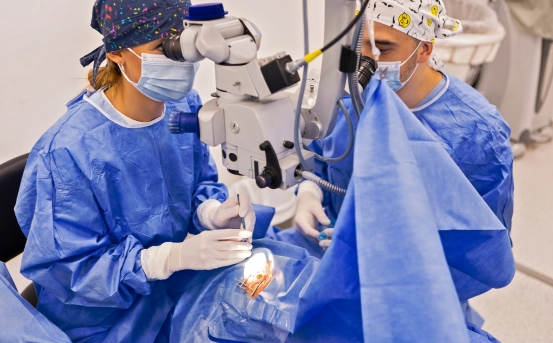
Trans PRK, or Transepithelial Photorefractive Keratectomy, is a modern, advanced laser eye surgery designed to correct vision problems such as myopia (nearsightedness), hyperopia (farsightedness), and astigmatism. Unlike traditional LASIK, Trans PRK does not require creating a corneal flap. Instead, it removes the corneal epithelium with a laser, making the procedure less invasive and reducing the risk of flap-related complications. This minimally invasive approach has gained popularity worldwide because it combines safety, precision, and faster healing with high-quality vision correction outcomes.
What is Trans PRK?
Trans PRK is a laser vision correction procedure where the outer layer of the cornea (epithelium) is removed by the excimer laser, followed by reshaping the underlying corneal tissue to correct refractive errors. Unlike traditional PRK or LASIK, Trans PRK eliminates mechanical scraping or alcohol-assisted epithelial removal, reducing patient discomfort and promoting faster recovery.
The procedure is completely bladeless and uses sophisticated laser technology to enhance accuracy, making it suitable for patients with thinner corneas or those prone to dry eyes.
How Trans PRK Works
The procedure involves three essential steps:
- Laser Removal of Epithelium :- The excimer laser precisely removes the corneal epithelium in a single step. This step eliminates the need for manual scraping, alcohol solutions, or corneal flaps.
- Corneal Reshaping :- After epithelial removal, the same laser reshapes the cornea to correct vision. The laser precisely adjusts the curvature of the cornea to correct myopia, hyperopia, or astigmatism.
- Healing and Recovery :- A protective contact lens is placed over the cornea to promote healing. Over the next few days, the epithelial layer regenerates naturally, while the cornea stabilizes to provide improved vision.
Who is a Candidate for Trans PRK?
Trans PRK is suitable for a wide range of patients, but not everyone qualifies. Ideal candidates typically have:
- Stable vision for at least one year
- Thin corneas that are unsuitable for LASIK
- Mild to moderate refractive errors
- No history of severe eye infections or diseases
- Realistic expectations regarding recovery and vision improvement
Patients with very high prescriptions or certain eye conditions may require alternative treatments such as LASIK or SMILE. A thorough eye examination and consultation with a qualified ophthalmologist are essential before deciding on Trans PRK.
Benefits of Trans PRK
Trans PRK offers several advantages over traditional vision correction procedures:
- No Corneal Flap Required :- Unlike LASIK, Trans PRK does not involve cutting a flap, which reduces the risk of flap complications and trauma.
- Suitable for Thin Corneas:
Patients with thinner corneas can safely undergo Trans PRK, as the laser reshaping is controlled and precise. - Reduced Risk of Dry Eyes :- Since no corneal flap is created, there is less disruption to corneal nerves, reducing the risk of post-operative dry eyes.
- Minimally Invasive :- The procedure is bladeless, fast, and more comfortable for patients, with minimal pain during the operation.
- High Precision and Visual Quality :- The laser treatment provides accurate correction, often resulting in sharper and more stable vision over time.
The Procedure Step by Step
- Preoperative Evaluation :- Comprehensive eye tests measure corneal thickness, curvature, pupil size, and refractive error to plan the laser treatment accurately.
- Anesthesia and Preparation :- Numbing eye drops are applied, ensuring a painless procedure.
- Laser Treatment :- The excimer laser removes the epithelial layer and reshapes the cornea. The entire process typically takes 10–15 minutes per eye.
- Postoperative Care :- A bandage contact lens is applied to protect the cornea. Eye drops are prescribed to prevent infection, reduce inflammation, and promote healing.
- Follow-Up :- Patients are monitored closely over several weeks to ensure proper healing and optimal vision outcomes. Most patients can return to normal activities within a few days, though complete visual stabilization may take a few weeks.
Recovery After Trans PRK
Recovery from Trans PRK differs from LASIK. Patients may experience:
- Mild eye discomfort, tearing, or sensitivity to light during the first few days
- Gradual improvement in vision over 3–7 days
- Temporary hazy vision until the epithelium fully regenerates
Proper postoperative care is essential to ensure smooth recovery. Patients must follow their doctor’s instructions, including:
- Using prescribed antibiotic and anti-inflammatory eye drops
- Wearing protective eyewear to avoid injury
- Avoiding eye rubbing, swimming, or dusty environments during healing
Despite slower initial recovery compared to LASIK, Trans PRK offers excellent long-term visual outcomes.
Risks and Considerations
While Trans PRK is generally safe, it carries some risks like any surgery:
- Mild discomfort or pain during the initial healing phase
- Temporary blurred vision or glare, particularly at night
- Risk of corneal haze (rare with modern laser technology)
- Infection (rare with proper post-op care)
Choosing an experienced ophthalmologist and following all postoperative instructions significantly reduces risks and ensures the best results.
Cost of Trans PRK
The cost of Trans PRK varies depending on factors like:
- Clinic reputation and location
- Technology and laser equipment used
- Surgeon experience
- Preoperative and postoperative care
While it may be slightly higher than traditional PRK, the safety, comfort, and visual quality justify the investment. Some clinics also offer financing options or insurance coverage for corrective laser surgery.
Long-Term Results
Most patients experience excellent visual outcomes, including:
- 20/25 or better vision without glasses or contact lenses
- Stable vision for many years
- Reduced dependence on corrective eyewear
Regular eye check-ups are recommended to monitor eye health, even after successful surgery.
Conclusion
Trans PRK is a safe, effective, and modern solution for correcting refractive errors without the need for a corneal flap. Its bladeless approach, suitability for thin corneas, and reduced risk of dry eyes make it an excellent choice for many patients seeking laser vision correction.