Introduction
Angioplasty is a widely used medical procedure designed to open narrowed or blocked blood vessels and restore healthy blood flow to vital organs such as the heart, brain, and limbs. However, angioplasty is not performed without a careful and thorough diagnostic process. Proper diagnosis plays a crucial role in determining whether a patient needs angioplasty, identifying the severity of arterial blockages, and selecting the most appropriate treatment approach.
The diagnosis of angioplasty involves a combination of clinical evaluation, imaging studies, laboratory tests, and functional assessments. These steps help doctors confirm the presence of arterial disease, evaluate blood flow, and decide whether angioplasty is the best option compared to medication or surgery.
Diagnosis of Angioplasty
- Clinical Evaluation and Medical History :- The diagnostic process begins with a detailed medical history and physical examination. Doctors assess symptoms that may suggest poor blood flow due to narrowed arteries. Common symptoms include chest pain (angina), shortness of breath, fatigue, dizziness, leg pain while walking (claudication), and numbness or weakness in the limbs.
During the physical examination, physicians look for:
- Abnormal heart sounds
- Reduced or absent pulses in the limbs
- Skin color changes
- Signs of swelling or ulcers
- Blood pressure differences between limbs
Medical history helps identify risk factors such as diabetes, high blood pressure, smoking, high cholesterol, obesity, and a family history of heart or vascular disease. This initial evaluation guides the need for further diagnostic testing.
- Blood Tests and Laboratory Investigations :- Blood tests are essential in diagnosing conditions that may lead to artery blockages. These tests do not directly diagnose the need for angioplasty but help assess cardiovascular risk and overall health.
Common blood tests include:
- Lipid Profile: Measures cholesterol and triglyceride levels.
- Blood Sugar Tests: Detect diabetes or poor glucose control.
- Kidney Function Tests: Important before contrast imaging studies.
- Cardiac Enzymes: Used in emergency cases to detect heart muscle damage.
- Inflammatory Markers: Indicate ongoing vascular inflammation.
These results help physicians determine disease severity and prepare the patient safely for angioplasty if required.
- Electrocardiogram (ECG) :- An electrocardiogram (ECG) records the electrical activity of the heart and is a basic yet crucial diagnostic test. It helps detect:
- Abnormal heart rhythms
- Evidence of reduced blood supply to the heart
- Signs of previous or ongoing heart attacks
While an ECG alone cannot confirm the need for angioplasty, abnormal findings often prompt further advanced testing.
- Stress Testing :- Stress tests evaluate how the heart responds to physical exertion or simulated stress. These tests help determine whether reduced blood flow is present during increased demand.
Types of stress tests include:
- Exercise Stress Test: Performed on a treadmill or stationary bike.
- Pharmacological Stress Test: Uses medications to mimic exercise effects.
- Stress Echocardiography: Combines ultrasound imaging with stress testing.
- Nuclear Stress Test: Uses radioactive tracers to visualize blood flow.
Abnormal stress test results suggest significant coronary artery narrowing and may indicate the need for angioplasty.
- Echocardiography :- Echocardiography uses ultrasound waves to create images of the heart. It helps assess:
- Heart muscle function
- Valve abnormalities
- Areas of poor blood supply
- Pumping efficiency of the heart
This test provides valuable information about the impact of blocked arteries on heart function and helps determine urgency for intervention.
- Imaging Studies for Vascular Assessment :- Imaging tests play a central role in diagnosing the need for angioplasty by directly visualizing blood vessels.
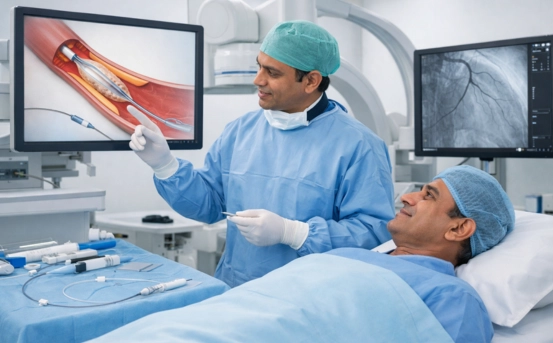
- Coronary Angiography :- Coronary angiography is considered the gold standard for diagnosing coronary artery disease. It involves injecting contrast dye into the coronary arteries and capturing real-time X-ray images.
This test shows:
- Exact location of blockages
- Degree of narrowing
- Number of affected arteries
- Blood flow patterns
Angioplasty is often performed immediately after angiography if significant blockages are identified.
- CT Angiography (CTA) :- CT angiography is a non-invasive imaging technique that uses CT scans and contrast dye to visualize blood vessels. It is commonly used for:
- Coronary arteries
- Peripheral arteries
- Carotid arteries
CTA helps detect narrowing, plaque buildup, and vessel abnormalities, especially in patients who are not immediate candidates for invasive procedures.
- Doppler Ultrasound :- Doppler ultrasound measures blood flow through arteries and veins. It is frequently used to diagnose peripheral artery disease, carotid artery narrowing, and vascular blockages in the limbs. This test helps assess blood flow velocity and identify areas of reduced circulation that may require angioplasty.
- Cardiac Catheterization :- Cardiac catheterization is both a diagnostic and therapeutic procedure. During this test, a catheter is inserted into an artery and guided to the heart.
It allows doctors to:
- Measure blood pressure within heart chambers
- Assess oxygen levels
- Visualize arteries in detail
- Decide instantly if angioplasty or stent placement is needed
This procedure provides precise information that guides treatment decisions.
Diagnosis in Emergency Situations
In emergency cases such as acute heart attack, diagnosis and angioplasty often occur rapidly. Patients undergo:
- Immediate ECG
- Blood tests for cardiac enzymes
- Emergency coronary angiography
If a blocked artery is identified, angioplasty is performed urgently to restore blood flow and limit heart damage.
Determining Candidacy for Angioplasty
Not all patients with artery disease require angioplasty. Doctors consider:
- Severity and location of blockages
- Symptoms and quality of life
- Response to medications
- Overall health and surgical risk
Patients with mild disease may be managed with medication and lifestyle changes, while those with significant blockages benefit most from angioplasty.
Conclusion
The diagnosis of angioplasty is a comprehensive and carefully structured process aimed at identifying arterial blockages, assessing their impact on blood flow, and determining the most effective treatment approach. Through clinical evaluation, laboratory tests, functional studies, and advanced imaging techniques, doctors can accurately diagnose conditions that require angioplasty.
Timely and accurate diagnosis not only ensures the success of angioplasty but also prevents serious complications such as heart attacks, strokes, and limb ischemia. With modern diagnostic tools and expert evaluation, angioplasty has become a safe and highly effective treatment option for patients with significant vascular disease.