Introduction
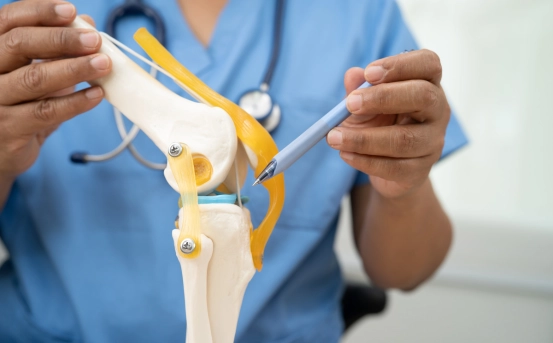
Knee replacement is one of the most successful orthopedic procedures, helping patients regain mobility, reduce pain, and return to normal activities. For individuals struggling with severe knee arthritis, injury-related damage, or long-term joint degeneration, knee replacement offers a reliable and long-lasting solution. This blog explains its meaning, what is knee replacement , why it’s needed, how it’s done, and what patients can expect.
Understanding What is Knee Replacement
Knee replacement, also called knee arthroplasty, is a surgical procedure where damaged or worn-out parts of the knee joint are replaced with artificial components. These components recreate smooth joint movement, reduce friction, and restore knee function. It is recommended when pain becomes severe, daily activities become difficult, and other treatments such as medicines or physiotherapy stop working.
Why Is Knee Replacement Needed?
Knee replacement becomes necessary when the knee joint becomes too damaged to function normally. Most commonly, this happens due to osteoarthritis, where the cartilage protecting the bones wears away. Other causes include rheumatoid arthritis, fractures, injuries, or long-term stress on the knee. When the pain becomes constant, mobility decreases, and the quality of life suffers, knee replacement provides relief and stability.
How Knee Replacement Works
During surgery, the damaged joint surfaces are carefully removed and replaced with metal, ceramic, or plastic components. These parts replicate natural movement and allow the knee to bend and straighten smoothly. The procedure may be done as partial knee replacement (only one side) or total knee replacement (the entire joint). Modern techniques make the surgery minimally invasive with faster recovery.
Benefits of Knee Replacement
Knee replacement offers several long-term benefits that significantly improve daily living:
- Pain Relief :- Most patients experience dramatic pain reduction, especially those previously suffering from continuous knee discomfort.
- Improved Mobility :- Patients regain the ability to walk, climb stairs, and perform routine activities with better stability and less stiffness.
- Better Quality of Life :- Reduced pain and enhanced movement restore confidence, allowing individuals to return to work, hobbies, or family activities.
- Long-lasting Results :- With advanced implants and surgical precision, knee replacements can last 15–20 years or more depending on care and lifestyle.
Types of Knee Replacement
Knee replacement procedures vary depending on the extent of joint damage:
- Total Knee Replacement (TKR) :- Replaces the entire knee joint. Recommended for severe arthritis affecting all compartments.
- Partial Knee Replacement (PKR) :- Only the damaged part of the knee is replaced. Offers faster recovery and more natural movement.
- Robotic-Assisted Knee Replacement :- Uses robotic technology for precise alignment, reducing complications and improving recovery.
- Revision Knee Replacement :- Performed when an old implant fails or loosens, requiring a new, more stable replacement.
Who Needs Knee Replacement?
Knee replacement is recommended for individuals experiencing:
- Severe knee pain during movement or rest
- Difficulty walking, bending, or climbing stairs
- Swelling, stiffness, or reduced knee flexibility
- Failed response to medicines, injections, or physiotherapy
- Advanced joint damage seen in X-rays or MRI
If these issues affect daily life, surgery may be the most effective option.
Diagnosis Before Surgery
Before recommending knee replacement, doctors perform:
- Physical examination to check movement and pain level
- X-rays to examine joint damage
- MRI if ligament or soft-tissue problems are suspected
- Blood tests to evaluate overall health
- Medical history review to identify underlying causes
This ensures the surgery is safe, accurate, and tailored to patient needs.
Recovery After Knee Replacement
Recovery depends on age, overall health, and physiotherapy commitment. Typically:
- Patients start walking within the first 24–48 hours
- Physiotherapy continues for several weeks
- Full recovery takes 6–12 weeks
- Long-term outcomes improve with regular exercise and care
Following medical advice ensures safe healing and long-lasting results.
Conclusion
Knee replacement is a highly effective and reliable solution for people suffering from severe knee pain and joint damage. With advancements in technology, modern implants, and skilled surgeons, the procedure offers pain relief, improved mobility, and long-lasting comfort. For many patients, it is the turning point that brings back independence and confidence.