





Introduction
Beating heart surgery, also known as off-pump cardiac surgery, is an advanced heart surgery technique performed without stopping the heart or using a heart-lung machine. Unlike conventional open-heart surgery, the heart continues to beat throughout the procedure, reducing stress on the body and lowering the risk of complications. Over the years, beating heart surgery has become a preferred option for many patients due to its faster recovery, fewer side effects, and improved outcomes.
What Is Beating Heart Surgery?
Beating heart surgery is a technique in which cardiac procedures are performed while the heart is still beating. Special stabilizing devices are used to keep the target area steady while surgeons operate. Since the heart-lung bypass machine is not required, this approach reduces inflammation, blood loss, and the risk of neurological and kidney complications. This method is especially beneficial for elderly patients, diabetics, and those with kidney or lung disease.
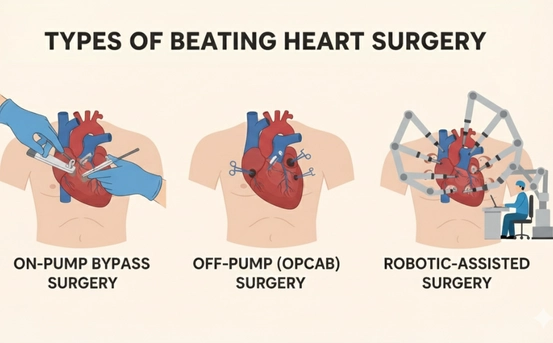
Types of Beating Heart Surgery
- Off-Pump Coronary Artery Bypass Grafting (OPCAB) :- Off-Pump Coronary Artery Bypass Surgery, commonly known as OPCAB, is the most widely performed type of beating heart surgery. It is used to treat coronary artery disease, where blocked arteries reduce blood flow to the heart muscle.
How It Works :- The surgeon grafts healthy blood vessels from the chest, arm, or leg to bypass blocked coronary arteries while the heart continues beating. Mechanical stabilizers help control movement in the surgical area.
Benefits
- Reduced risk of stroke
- Less blood loss and transfusion
- Shorter hospital stay
- Faster recovery
OPCAB is ideal for patients with multiple blockages and high surgical risk.
- Beating Heart Valve Repair Surgery :- Traditionally, valve surgeries required stopping the heart. However, advancements now allow selected valve repair procedures to be performed on a beating heart, particularly mitral valve repair.
Conditions Treated
- Mitral valve regurgitation
- Tricuspid valve disorders
- Early-stage valve dysfunction
Advantages
- Preserves heart function
- Lower risk of heart muscle injury
- Reduced post-operative complications
This technique is often used in minimally invasive cardiac surgeries, especially when precision repair is possible without full heart arrest.
- Beating Heart Coronary Revascularization Surgery :- This procedure restores blood supply to heart muscles by bypassing or opening blocked arteries without stopping the heart.
Key Features
- Performed using specialized stabilizers
- Suitable for patients with diffuse coronary disease
- Can involve single or multiple vessel grafting
Why It’s Chosen :- Patients who cannot tolerate cardiopulmonary bypass such as those with kidney disease or poor lung function benefit greatly from this approach.
- Minimally Invasive Beating Heart Surgery :- Minimally invasive beating heart surgery involves small incisions instead of a full sternotomy (chest opening). It is commonly used for bypass and valve procedures.
Techniques Used
- Keyhole incisions
- Robotic-assisted surgery
- Thoracoscopic instruments
Benefits
- Less pain and scarring
- Reduced infection risk
- Quicker return to daily activities
This type of surgery is especially appealing to younger patients and those seeking cosmetic and functional benefits.
- Beating Heart Surgery for High-Risk Patients :- Some patients are considered high-risk for conventional open-heart surgery due to age, prior surgeries, or chronic illnesses. Beating heart surgery offers a safer alternative.
Suitable For
- Elderly patients
- Diabetics
- Patients with kidney or liver disease
- Individuals with previous heart surgeries
Outcomes
- Lower mortality rate
- Reduced complications
- Better tolerance to surgery
Surgeons often prefer off-pump techniques when operating on patients with fragile health conditions.
- Hybrid Beating Heart Procedures :- Hybrid cardiac procedures combine beating heart surgery with catheter-based interventions such as angioplasty or stenting.
How It Works :- A surgeon performs limited bypass grafting on a beating heart, while an interventional cardiologist treats remaining blockages using catheter techniques.
Advantages
- Minimally invasive approach
- Reduced surgical trauma
- Shorter recovery time
Hybrid procedures are ideal for patients with complex coronary anatomy.
- Pediatric Beating Heart Surgery :- In select pediatric cases, beating heart techniques are used to treat congenital heart defects without stopping the heart.
Conditions Treated
- Small septal defects
- Minor valve abnormalities
- Coronary anomalies
Benefits for Children
- Reduced inflammation
- Faster healing
- Lower impact on developing organs
Pediatric beating heart surgery requires highly specialized expertise and advanced technology.
Advantages of Beating Heart Surgery Over Traditional Methods
- No heart-lung machine required
- Reduced risk of stroke and neurological complications
- Less bleeding and fewer transfusions
- Shorter ICU and hospital stays
- Faster recovery and rehabilitation
These advantages make beating heart surgery a preferred choice for many heart patients.
Who Is an Ideal Candidate for Beating Heart Surgery?
Not every patient is suitable for beating heart surgery. Ideal candidates include
- Patients with isolated coronary artery disease
- Individuals with high surgical risk
- Patients requiring fewer grafts
- Those with kidney or lung disorders
A thorough cardiac evaluation helps determine the best surgical approach.
Conclusion
Beating heart surgery has revolutionized modern cardiac care by offering safer, less invasive, and more patient-friendly alternatives to traditional open-heart surgery. With various types such as OPCAB, minimally invasive procedures, hybrid surgeries, and valve repairs, this approach caters to a wide range of heart conditions and patient profiles.
As technology and surgical expertise continue to advance, beating heart surgery is becoming increasingly accessible and successful, improving survival rates and quality of life for heart patients worldwide.



