Introduction
Blepharoplasty, commonly known as eyelid surgery, is a cosmetic and functional procedure designed to improve the appearance of the upper and/or lower eyelids. Over time, aging, genetics, and lifestyle factors can cause excess skin, fat, and muscle around the eyes, leading to droopy eyelids, under-eye bags, and a tired appearance. In some cases, sagging eyelids can even interfere with vision. Modern blepharoplasty techniques are highly advanced, safe, and customizable. Depending on the patient’s concern, different types of blepharoplasty can be performed.
What Is Blepharoplasty?
Blepharoplasty is a surgical procedure that removes or repositions excess skin, fat, and muscle from the eyelids. It can be performed for cosmetic reasons (to enhance appearance) or functional reasons (to improve vision affected by drooping eyelids). The surgery can involve the upper eyelids, lower eyelids, or both, depending on individual needs.
Types of Blepharoplasty
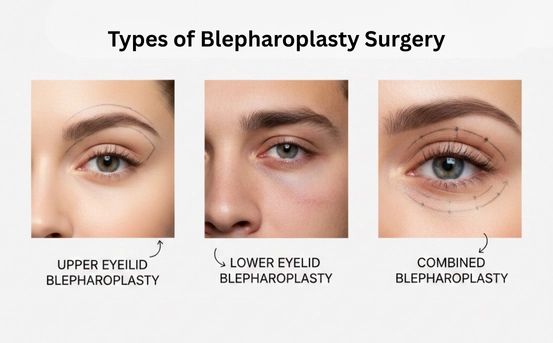
- Upper Eyelid Blepharoplasty :- Upper eyelid blepharoplasty focuses on correcting sagging or drooping upper eyelids caused by excess skin and fat.
Key Features
- Removal of excess skin and fat from the upper eyelid
- Improves a tired, aged, or heavy-eyelid appearance
- Can enhance peripheral vision if eyelids obstruct sight
Who Needs It?
- Patients with droopy upper eyelids (ptosis-like appearance)
- Individuals experiencing difficulty keeping eyes open
- People who look tired or older due to eyelid sagging
Benefits
- Brighter, more youthful eyes
- Improved vision in functional cases
- Natural-looking results with minimal scarring
- Lower Eyelid Blepharoplasty :- Lower eyelid blepharoplasty targets under-eye bags, puffiness, and wrinkles.
Key Features
- Removal or repositioning of fat deposits
- Tightening of loose skin
- Reduction of dark circles and eye bags
Who Needs It?
- People with puffy under-eye bags
- Patients with loose or wrinkled lower eyelid skin
- Individuals with a tired or aged under-eye appearance
Benefits
- Smooth, refreshed under-eye area
- Reduction in eye puffiness
- Younger and well-rested look
- Double Eyelid Blepharoplasty (Asian Blepharoplasty) :- Double eyelid blepharoplasty is commonly performed in individuals who do not naturally have a visible upper eyelid crease.
Key Features
- Creation of a natural-looking eyelid crease
- Preserves ethnic facial characteristics
- Can be done with incisional or non-incisional techniques
Who Needs It?
- Individuals seeking a defined eyelid crease
- Patients wanting symmetrical eyelids
- Common among Asian patients
Benefits
- Enhanced eye definition
- Balanced facial appearance
- Natural and subtle aesthetic improvement
- Transconjunctival Blepharoplasty :- This technique is mainly used for lower eyelid correction without external incisions.
Key Features
- Incision made inside the eyelid
- No visible external scar
- Fat is removed or repositioned, not skin
Who Needs It?
- Younger patients with eye bags but firm skin
- Individuals without excess lower eyelid skin
Benefits
- Scar-free procedure
- Faster healing time
- Lower risk of eyelid retraction
- Laser Blepharoplasty :- Laser blepharoplasty uses laser technology instead of a traditional scalpel to make incisions.
Key Features
- Laser reduces bleeding and swelling
- Precise tissue removal
- Faster recovery in many cases
Who Needs It?
- Patients seeking minimal downtime
- Individuals suitable for laser-based procedures
Benefits
- Reduced bruising and swelling
- Shorter recovery period
- Enhanced precision
- Functional Blepharoplasty :- Functional blepharoplasty is performed for medical reasons rather than cosmetic enhancement.
Key Features
- Corrects vision obstruction caused by drooping eyelids
- Often recommended after an eye exam
- May be covered by insurance in eligible cases
Who Needs It?
- Patients with visual field obstruction
- Individuals experiencing eye strain or headaches
- Elderly patients with severe eyelid drooping
Benefits
- Improved vision
- Reduced eye fatigue
- Enhanced quality of life
- Combination Blepharoplasty :- Some patients require correction of both upper and lower eyelids for complete rejuvenation.
Key Features
- Addresses multiple concerns in one surgery
- Balanced and harmonious results
- Single recovery period
Who Needs It?
- Patients with sagging upper lids and under-eye bags
- Individuals seeking full eye rejuvenation
Benefits
- Comprehensive facial enhancement
- Cost-effective in the long run
- Consistent and natural results
Recovery After Blepharoplasty
Recovery time varies based on the type of blepharoplasty performed. Most patients experience mild swelling and bruising for 1–2 weeks. Normal activities can usually be resumed within 7–10 days, while final results become visible over a few weeks.
Post-Surgery Care Includes
- Cold compresses
- Prescribed medications
- Avoiding strenuous activities
- Following surgeon’s instructions carefully
Are the Results Permanent?
Blepharoplasty results are long-lasting. While aging continues naturally, most patients enjoy improved eyelid appearance for many years. Maintaining a healthy lifestyle and proper skincare can further prolong results.
Conclusion
Blepharoplasty is a versatile and effective procedure that addresses both cosmetic and functional eyelid concerns. With multiple types of blepharoplasty available ranging from upper and lower eyelid surgery to laser and functional techniques patients can receive highly personalized treatment.