Introduction
The aorta is the largest artery in the body, responsible for carrying oxygen-rich blood from the heart to the rest of the body. An aortic aneurysm occurs when a section of the aorta weakens and bulges, increasing the risk of rupture, which can be life-threatening. Understanding the types of aortic aneurysms is crucial for early diagnosis and timely treatment.
What is an Aortic Aneurysm?
An aortic aneurysm is a localized dilation of the aorta caused by weakening of the arterial wall. The aneurysm may grow slowly over time, often without symptoms, making it difficult to detect until complications arise. Risk factors include high blood pressure, smoking, genetic conditions, and age. Early detection through regular screening can save lives.
Classification Types of Aortic Aneurysms
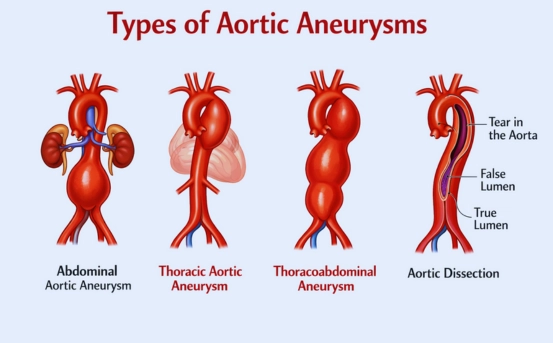
Aortic aneurysms are classified based on location and shape. Recognizing the type helps healthcare providers determine the most appropriate management strategy.
- Thoracic Aortic Aneurysm (TAA) :- A thoracic aortic aneurysm develops in the portion of the aorta that passes through the chest cavity. It can affect the ascending aorta, the aortic arch, or the descending aorta.
Causes:
- High blood pressure
- Atherosclerosis
- Genetic disorders like Marfan syndrome or Ehlers-Danlos syndrome
- Traumatic injury
Symptoms:
Many patients remain asymptomatic. When symptoms occur, they may include:
- Chest or back pain
- Shortness of breath
- Hoarseness or difficulty swallowing
Risks:
TAA is dangerous because rupture or dissection can cause severe internal bleeding. Regular imaging tests, like CT scans or MRIs, are essential for monitoring aneurysm growth.
- Abdominal Aortic Aneurysm (AAA) :- An abdominal aortic aneurysm occurs in the aorta as it passes through the abdomen. AAA is more common than thoracic aneurysms, especially in older adults.
Causes:
- Smoking
- High cholesterol
- Family history of aneurysms
- Chronic high blood pressure
Symptoms:
AAAs are often silent, but when they become large, symptoms may include:
- Pulsating abdominal mass
- Deep, persistent abdominal or back pain
- Nausea or vomiting
Screening:
Men over 65, particularly those with a history of smoking, are advised to undergo ultrasound screenings to detect AAA early. Surgery is recommended for aneurysms larger than 5.5 cm or those growing rapidly.
- Ascending Aortic Aneurysm :- The ascending aorta is the portion that rises from the heart. Aneurysms in this section are particularly dangerous because they may affect the aortic valve and coronary arteries.
Causes:
- Genetic disorders (Marfan syndrome, bicuspid aortic valve)
- High blood pressure
- Connective tissue disorders
Symptoms:
- Chest pain or tightness
- Shortness of breath
- Heart murmurs due to aortic valve involvement
Treatment:
Surgical repair is often required for ascending aortic aneurysms, as the risk of rupture is significant. Endovascular repair is less common due to the complex anatomy of this region.
- Descending Thoracic Aortic Aneurysm :- This aneurysm develops in the descending portion of the thoracic aorta, closer to the diaphragm. It is less common than ascending aortic aneurysms but can be serious if not monitored.
Causes:
- Atherosclerosis
- High blood pressure
- Trauma or injury to the chest
Symptoms:
- Upper back pain
- Pain between shoulder blades
- Cough or difficulty breathing if the aneurysm presses on nearby structures
Management:
Treatment depends on aneurysm size and growth rate. Small aneurysms may be monitored with imaging, while larger ones may require surgical or endovascular repair.
- Aortic Arch Aneurysm :- Aortic arch aneurysms occur in the curved section of the aorta between the ascending and descending portions. This type is particularly complex due to the branching arteries supplying the brain and arms.
Causes:
- Atherosclerosis
- Genetic conditions
- Infections or inflammation of the aortic wall
Symptoms:
- Chest pain
- Stroke-like symptoms if blood flow to the brain is affected
- Hoarseness or difficulty swallowing
Treatment:
Surgical intervention is complex but necessary in many cases. Endovascular stent grafting is a minimally invasive option for some patients.
- Fusiform vs. Saccular Aneurysms :- Aortic aneurysms are also classified by shape:
Fusiform Aneurysm:
- Symmetrical dilation along the circumference of the aorta
- Most common type
- Often grows slowly and uniformly
Saccular Aneurysm:
- Localized outpouching of the aortic wall
- Can grow quickly
- Higher risk of rupture than fusiform aneurysms
Understanding the shape is important for determining the urgency of treatment.
Risk Factors and Prevention
Several factors increase the likelihood of developing an aortic aneurysm:
- Age: Risk increases after 60 years
- Gender: Men are more prone than women
- Smoking: Strongly linked to aneurysm formation
- High blood pressure and cholesterol: Weaken arterial walls
- Genetics: Family history of aneurysms or connective tissue disorders
Prevention Tips:
- Quit smoking
- Maintain healthy blood pressure and cholesterol levels
- Regular screenings if you have risk factors
- Follow a heart-healthy diet and exercise routine
Treatment Options
Treatment depends on the aneurysm type, size, and growth rate:
- Medication: To manage blood pressure and slow aneurysm growth
- Endovascular repair: Minimally invasive procedure using a stent graft
- Open surgical repair: Recommended for large or rapidly growing aneurysms
Monitoring: Small aneurysms often require regular imaging every 6–12 months to track changes.
Conclusion
Aortic aneurysms are serious medical conditions that can remain silent until complications arise. Understanding the types—thoracic, abdominal, ascending, descending, and arch—is crucial for timely diagnosis and management. Awareness of risk factors, regular screenings, and proper treatment can significantly reduce the risk of rupture and improve patient outcomes. If you are at risk or have a family history of aneurysms, consult a cardiovascular specialist to ensure proper monitoring and preventive care.