Introduction
Axilla bulge, commonly referred to as underarm bulge, is a condition where excess tissue forms in the underarm area. This can be due to a variety of reasons, including excess fat accumulation, lymph node swelling, or accessory breast tissue, also known as axillary breast tissue. While axilla bulge is usually not life-threatening, it can cause discomfort, hinder arm movement, and affect self-confidence, particularly when wearing fitted clothing. Understanding the correct diagnosis of axilla bulge correction and treatment options is crucial for patients seeking relief from this condition.
Understanding Axilla Bulge
The axilla is the region located under the arm, commonly known as the armpit. The bulge in this area may be caused by multiple factors:
- Excess Fat Deposits: Some individuals accumulate fat in the underarm region due to genetics or weight gain.
- Accessory Breast Tissue: During embryonic development, breast tissue may extend beyond the usual chest area, sometimes forming a small additional breast near the armpit.
- Lymph Node Enlargement: Swelling of lymph nodes due to infection or other health conditions can mimic a bulge in the underarm.
- Skin Laxity: Aging or weight fluctuations can cause loose skin to sag, appearing as a bulge.
Proper diagnosis is key because treatment approaches differ depending on the underlying cause.
Symptoms of Axilla Bulge
Patients usually notice a visible swelling or fullness in the underarm area. Other common symptoms include
- Pain or tenderness, especially when pressure is applied.
- Limited range of motion in the shoulder or arm.
- Irritation or chafing from clothing.
- Occasionally, a noticeable lump that feels firm or soft depending on the tissue type.
Although most axilla bulges are benign, persistent lumps should always be evaluated to rule out serious conditions such as tumors or infections.
Diagnosis of Axilla Bulge Correction
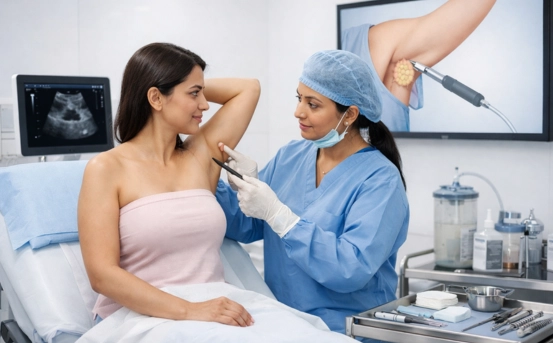
Diagnosis of axilla bulge correction involves a combination of medical history evaluation, physical examination, and imaging tests. Here’s how healthcare professionals typically approach the diagnosis:
- Medical History Review :- A detailed medical history is the first step. The doctor will inquire about
- Duration and progression of the bulge.
- Associated symptoms such as pain, redness, or fever.
- History of weight changes or hormonal fluctuations.
- Family history of breast or lymphatic disorders.
This information helps in narrowing down potential causes and guides the subsequent examination.
- Physical Examination :- A thorough physical examination of the axilla and surrounding areas is conducted. During this assessment, doctors check for
- Size, shape, and consistency of the bulge.
- Skin changes, such as dimpling or discoloration.
- Mobility of the tissue (whether it moves under the skin or feels fixed).
- Tenderness and signs of infection or inflammation.
The findings often indicate whether the bulge is fatty, glandular, or related to lymph nodes.
- Imaging Studies :- Imaging plays a pivotal role in confirming the diagnosis. Common imaging modalities include
- Ultrasound: Helps distinguish between solid tissue, cysts, or fat. It is a non-invasive, safe, and effective tool for initial evaluation.
- Mammography: Useful if accessory breast tissue is suspected, especially in patients with a family history of breast conditions.
- MRI (Magnetic Resonance Imaging): Provides detailed visualization of soft tissues, ideal for complex cases or pre-surgical planning.
- CT Scan: Occasionally used if deeper structures are involved or if lymph node pathology is suspected.
- Biopsy (If Needed) :- In cases where imaging raises suspicion of abnormal tissue, a biopsy may be performed. A small sample of tissue is taken and examined under a microscope to rule out malignancy. This is particularly important when the bulge is firm, irregular, or rapidly growing.
Treatment Options After Diagnosis
Once the diagnosis is confirmed, treatment is tailored according to the underlying cause. Common approaches include:
- Non-Surgical Management :- For minor fat deposits or mild skin laxity, non-surgical options may be sufficient:
- Diet and Exercise: Reducing overall body fat can sometimes decrease the size of the bulge.
- Physiotherapy: Strengthening exercises for the shoulder and chest muscles can improve the appearance and reduce discomfort.
- Compression Garments: Specially designed clothing can help flatten the bulge temporarily and prevent friction.
- Surgical Correction :- Surgical intervention is often considered when non-surgical methods fail or when the bulge is significant. Procedures include:
- Liposuction: Removes excess fat deposits from the axilla. It is minimally invasive and provides a contoured appearance.
- Excision of Accessory Breast Tissue: For patients with accessory breast tissue, removal through a small incision restores normal contour.
- Combination Procedures: Sometimes, liposuction and excision are combined for optimal results.
Surgical correction not only improves aesthetics but also alleviates discomfort and enhances mobility.
Post-Diagnosis Care
After surgical correction or treatment, proper post-procedure care ensures optimal recovery:
- Follow the surgeon’s instructions for wound care.
- Avoid heavy lifting or strenuous arm movements for a few weeks.
- Attend follow-up appointments to monitor healing and detect any complications early.
- Maintain a healthy lifestyle to prevent recurrence.
Importance of Early Diagnosis
Early diagnosis is critical because untreated axilla bulges can lead to several complications:
- Chronic irritation or infections due to friction.
- Psychological impact, including reduced self-confidence and body image concerns.
- Rarely, if lumps are malignant, delayed treatment may worsen prognosis.
Patients should consult a healthcare professional as soon as they notice persistent bulging or discomfort in the underarm region.
Choosing the Right Specialist
Axilla bulge correction involves a multidisciplinary approach. Specialists who typically manage this condition include:
- Plastic and Cosmetic Surgeons: Experts in contouring and aesthetic correction.
- General Surgeons: Particularly if lymph node or accessory tissue is involved.
- Endocrinologists or Oncologists: Consulted in cases of hormonal imbalance or malignancy suspicion.
Choosing an experienced specialist ensures accurate diagnosis, appropriate treatment, and a satisfactory outcome.
Conclusion
Axilla bulge, though often benign, can impact quality of life and self-esteem. Accurate diagnosis through medical history, physical examination, and imaging is essential to determine the underlying cause. Whether through lifestyle management or surgical intervention, effective correction improves aesthetics, comfort, and overall well-being. Early consultation with a qualified specialist is the key to safe, effective, and lasting results.