Introduction
Platelet-Rich Plasma (PRP) Therapy has gained immense popularity in recent years for its ability to accelerate healing, reduce pain, and restore natural function without major surgery. From chronic joint pain to hair loss and sports injuries, PRP therapy is being used across multiple medical fields due to its natural, minimally invasive approach. If you’re curious to know what PRP Therapy Surgery is, how it works, and whether it may be right for you, this guide breaks down everything you need to know.
What is Platelet Rich Plasma Therapy?
Platelet-Rich Plasma Therapy is a medical procedure that uses the healing power of your own blood. PRP is created by drawing a small amount of your blood, processing it in a centrifuge to separate platelets, and then injecting the concentrated platelets into the injured or affected area. Platelets contain powerful growth factors that help repair damaged tissues, promote cell regeneration, and reduce inflammation. Although PRP therapy is often referred to as “surgery,” it is actually a minimally invasive procedure rather than a traditional surgical operation.
How Does PRP Therapy Work?
The effectiveness of PRP comes from your body’s natural healing mechanism. When an injury occurs, your platelets rush to the site to start repairing the damaged tissues. By injecting a high concentration of these platelets directly into the affected area, doctors can significantly speed up this natural healing process.
The process typically includes:
- Blood Collection: A small amount (10–30 ml) of your blood is drawn.
- Centrifugation: The blood is spun at high speed to separate plasma and platelets.
- PRP Extraction: The platelet-rich portion is collected for treatment.
- Injection: The PRP is injected into the injured tissue, ligament, tendon, joint, or scalp, depending on the purpose.
The entire procedure usually takes 30–45 minutes and does not require hospitalization or anesthesia, except in some cases where local numbing may be used.
Conditions Treated with PRP Therapy
Thanks to its natural healing properties, PRP therapy is widely used in:
- Orthopedics & Sports Medicine
- Knee arthritis
- Tendonitis (Tennis elbow, Golfer’s elbow)
- Ligament injuries
- Rotator cuff problems
- Cartilage damage
Athletes often choose PRP because it helps repair tissues faster without long downtime.
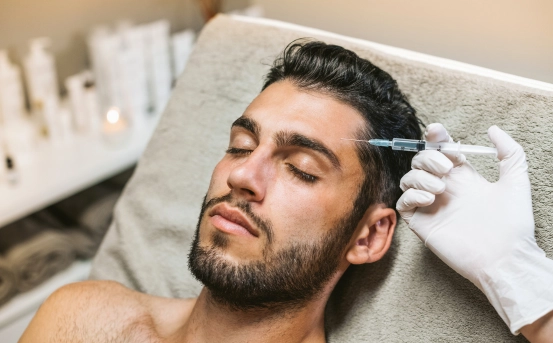
- Hair Restoration :- PRP injections into the scalp improve blood supply to hair follicles, strengthen roots, and promote natural hair regrowth. It is commonly used for androgenic alopecia, thinning hair, and early-stage hair loss.
- Skin Rejuvenation :- Known as the “vampire facial,” PRP for skin helps with:
- Fine lines and wrinkles
- Acne scars
- Uneven texture
- Dull skin
It stimulates collagen production, giving brighter and tighter skin.
- Dentistry & Wound Care :- PRP is also used in:
- Gum healing
- Jawbone regeneration
- Chronic wound treatment
Benefits of PRP Therapy
- Natural and Safe :- Since PRP is derived from the patient’s own blood, there is no risk of allergic reactions or rejection.
- Minimally Invasive :- There is no major incision, stitches, or long recovery period. Most patients return to routine activities within 24 hours.
- Faster Healing :- Growth factors in PRP accelerate tissue repair, helping individuals recover from injuries quicker than traditional treatment methods.
- Long-lasting Results :- While effects may vary, many patients experience sustained improvement for months or even years.
- Reduced Need for Medication :- PRP can decrease the need for steroids, painkillers, or other medications that may cause side effects.
What to Expect During PRP Therapy Surgery?
PRP therapy is a simple outpatient procedure. Here’s what typically happens:
- Consultation: Your doctor evaluates your injury or condition and confirms whether PRP therapy is suitable.
- Preparation: Your blood sample is taken.
- Processing: Platelet concentration is prepared using advanced centrifugation technology.
- Injection: PRP is injected with ultrasound guidance (in orthopedics) for accuracy.
- Post-care: Mild soreness or swelling may occur for a day or two, which is normal. Ice packs and rest may be recommended.
How Many PRP Sessions Are Required?
The number of sessions depends on the condition:
- Hair regrowth: 3–6 sessions
- Joint pain or injuries: 1–3 sessions
- Skin rejuvenation: 2–4 sessions
Your doctor will customize a treatment plan based on your progress and healing response.
Are There Any Side Effects?
PRP therapy is generally very safe. However, temporary side effects may include:
- Mild swelling
- Redness
- Tenderness at injection site
- Temporary soreness
Serious complications are extremely rare since your own blood is used.
Who Should Avoid PRP Therapy?
PRP therapy may not be suitable for individuals with:
- Platelet disorders
- Active infection
- Severe anemia
- Uncontrolled medical conditions
A detailed evaluation is necessary before treatment.
Conclusion
Platelet-Rich Plasma Therapy Surgery offers a natural, safe, and effective solution for people dealing with joint pain, injuries, hair loss, or skin issues. Its ability to harness the body’s own healing powers makes it a modern, regenerative treatment with minimal risk and impressive results. Whether you’re an athlete recovering from an injury or someone seeking hair restoration or skin rejuvenation, PRP therapy can be a powerful option worth considering.