Introduction
Venous tumours are an uncommon but important group of vascular growths that affect the veins. These tumours may be benign (non-cancerous) or, in rare cases, malignant. Understanding what venous tumours are, how they form, their symptoms, and available treatment options can help patients and caregivers make informed healthcare decisions. This comprehensive guide explains everything you need to know about venous tumours in a simple and reader-friendly way.
What Are Venous Tumours?
Venous tumours are abnormal growths that originate in the veins of the blood vessels responsible for carrying oxygen-depleted blood back to the heart. These growths may occur anywhere in the body, including the legs, arms, chest, abdomen, or even the brain. They are part of a larger category known as vascular tumours, which also includes arterial and lymphatic tumours.
Most venous tumours are benign, meaning they do not spread to other parts of the body. The most common benign venous tumour is a venous malformation, often present from birth but sometimes detected later in life. However, malignant venous tumours, such as angiosarcomas, can also occur but are extremely rare.
How Do Venous Tumours Form?
Venous tumours develop due to abnormal growth of vein walls or the surrounding vascular tissues. Several factors may contribute to their formation
- Congenital Factors :- Many venous malformations are present at birth and result from improper formation of blood vessels during fetal development. These may grow slowly as the person ages.
- Genetic Mutations :- Certain genetic mutations affect how veins develop and repair themselves. Some conditions, such as Klippel-Trenaunay syndrome, are linked to vascular malformations and venous abnormalities.
- Trauma or Injury :- In rare cases, injuries to the veins may lead to abnormal tissue healing and formation of benign venous tumours.
- Aging :- As veins weaken with age, abnormal vascular growth may occur, contributing to tumour formation.
- Inflammation or Infection :- Chronic inflammation may damage blood vessel walls and contribute to abnormal growth.
Types of Venous Tumours
Venous tumours can be classified into several categories, depending on their behaviour and appearance
- Venous Malformations (VMs) :- These are the most common venous tumours. They are soft, compressible, slow-growing lesions that may enlarge over time. They are usually benign and non-cancerous.
- Hemangiomas :- Hemangiomas occur more often in infants and children. Although technically arising from capillaries, some forms may involve vein structures.
- Angiosarcomas :- A rare malignant tumour arising from vascular tissues, including veins. These tumours are aggressive and need immediate medical intervention.
- Phlebectasia :- Also known as venous ectasia, this condition involves the abnormal dilation of veins and may appear as a localized swelling.
- Venous Aneurysms :- These are abnormal bulges in the vein wall that sometimes look like tumours but are technically dilation defects rather than true tumours.
Symptoms of Venous Tumours
Symptoms depend on where the tumour is located and how large it becomes. Common symptoms include
- Visible blue or purple swelling
- Soft, compressible mass under the skin
- Pain or discomfort, especially after physical activity
- Swelling of the affected limb
- Skin changes, including ulceration or thickening
- Reduced mobility if located near joints
- Cosmetic concerns, especially with facial or neck lesions
Malignant venous tumours may cause
- Persistent pain
- Rapidly increasing size
- Non-healing wounds
- Unexplained bleeding
How Are Venous Tumours Diagnosed?
Accurate diagnosis is essential to differentiate benign venous tumours from potentially harmful vascular growths. Doctors may use a combination of physical examination and imaging tests such as
- Doppler Ultrasound :- This helps check blood flow within the tumour and identify abnormalities.
- MRI Scan :- MRI provides detailed images of soft tissues and helps assess the extent of venous involvement.
- CT Scan :- Useful for deep or large tumours, especially those in the abdomen or chest.
- Venography :- A contrast dye test used to visualize the veins and detect malformations.
- Biopsy :- In rare cases, tissue sampling may be recommended to rule out cancerous growth.
Treatment Options for Venous Tumours
Treatment depends on the location, type, size, and symptoms of the tumour. Some small, asymptomatic venous tumours may only require monitoring. However, symptomatic or cosmetically concerning lesions need active treatment.
- Sclerotherapy :- A minimally invasive procedure in which a special solution is injected into the tumour to shrink it. Sclerotherapy is widely used for venous malformations.
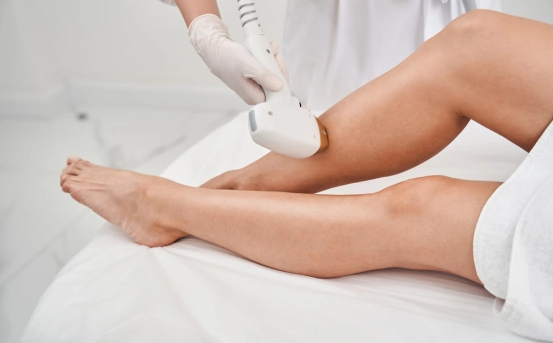
- Laser Therapy :- Laser energy is used to shrink or destroy abnormal veins. It is especially helpful for superficial tumours on the face and neck.
- Surgery :- Surgical removal may be necessary for large, painful, or complicated venous tumours. Surgery is also the main treatment for malignant venous tumours.
- Embolization :- A catheter-based procedure where blood flow to the tumour is blocked, causing it to shrink.
- Medications :- Certain medicines, including sirolimus, may help reduce the size of venous malformations in select cases.
- Radiation Therapy :- Used mostly for malignant venous tumours like angiosarcomas.
Complications of Venous Tumours
If left untreated, venous tumours may lead to
- Chronic pain
- Skin breakdown or ulceration
- Bleeding
- Infection
- Deep vein thrombosis (DVT)
- Cosmetic or functional impairment
Early diagnosis and treatment reduce the risk of long-term complications.
When Should You See a Doctor?
Seek medical attention if you notice
- A persistent swelling or lump
- A mass that changes colour or size
- Painful or warm swelling
- Bleeding or ulceration
- Any rapidly growing lesion
Timely evaluation ensures better outcomes and peace of mind.
Conclusion
Venous tumours are abnormal growths that arise within the veins and can range from harmless benign malformations to rare, aggressive cancers. While many venous tumours grow slowly and remain stable, others may cause pain, swelling, or cosmetic concerns. Modern diagnostic tools and treatment options such as sclerotherapy, laser therapy, embolization, and surgery allow effective management of these conditions.