Introduction
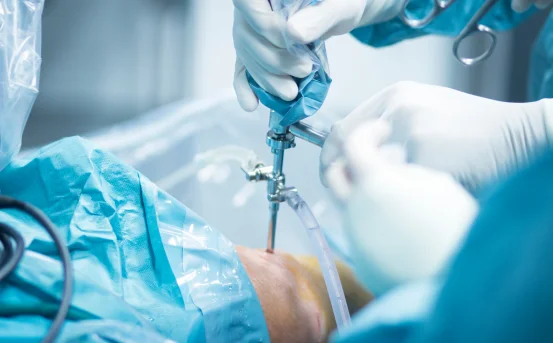
Arthroscopic debridement is a minimally invasive surgical procedure used to remove damaged, inflamed, or loose tissue from a joint. It is commonly performed to relieve pain, improve joint movement, and slow the progression of joint damage caused by injury, arthritis, or wear and tear. The procedure is done using an arthroscope, a small camera inserted through tiny incisions, allowing the surgeon to visualize and treat the joint without the need for open surgery.
Arthroscopic debridement can be performed in various joints such as the knee, shoulder, ankle, elbow, or hip. Depending on the condition and the type of damage present, different types of debridement techniques are used to restore joint function and comfort.
Arthroscopic Debridement Procedure
- Mechanical Debridement :- Mechanical debridement is the most commonly performed type of arthroscopic debridement. In this method, the surgeon uses specialized instruments such as shavers, cutters, or forceps to remove:
- Damaged cartilage
- Loose bone or cartilage fragments
- Inflamed synovial tissue
- Torn ligament or meniscus pieces
This technique is widely used in knee and shoulder arthroscopy, especially in cases of meniscal tears, cartilage damage, or early osteoarthritis. By clearing out rough or unstable tissue, mechanical debridement helps smooth joint surfaces and reduce irritation.
- Lavage (Joint Washing) :- Arthroscopic lavage is another important type of debridement. In this procedure, sterile fluid is used to wash out the joint thoroughly. The lavage helps remove:
- Inflammatory debris
- Blood clots
- Loose tissue particles
- Crystals or infection-related material
Lavage is often combined with mechanical debridement. It is particularly beneficial in patients with early arthritis or joint inflammation, as it helps reduce swelling and improves joint mobility.
- Synovial Debridement (Synovectomy) :- In some conditions, the lining of the joint (synovium) becomes inflamed and thickened, leading to pain and stiffness. Synovial debridement involves the removal of:
- Inflamed synovial tissue
- Excess joint lining causing swelling
This type of debridement is commonly performed in patients with:
- Rheumatoid arthritis
- Chronic synovitis
- Persistent joint swelling
By removing inflamed tissue, the procedure helps reduce pain, swelling, and joint stiffness.
- Cartilage Debridement (Chondroplasty) :- Cartilage damage is a common cause of joint pain. In cartilage debridement, also known as chondroplasty, the surgeon trims and smooths rough or damaged cartilage surfaces. This procedure is helpful when:
- Cartilage is frayed or uneven
- Small cartilage defects are present
- Early degenerative changes are seen
Smoothing the cartilage reduces friction within the joint and improves movement. Chondroplasty is frequently performed in knee and shoulder joints.
- Meniscal Debridement :- Meniscal injuries are common in the knee. When a meniscus tear cannot be repaired, the damaged portion is removed through arthroscopic debridement. This procedure:
- Removes torn or unstable meniscal fragments
- Preserves as much healthy meniscus as possible
- Reduces pain and joint locking
Meniscal debridement is often recommended for patients with persistent symptoms affecting daily activities.
- Bone Debridement and Removal of Osteophytes :- In conditions such as osteoarthritis or impingement syndromes, extra bone growths called osteophytes (bone spurs) may develop. Arthroscopic bone debridement involves:
- Removing bone spurs
- Smoothing rough bone surfaces
- Creating more space within the joint
This type is commonly performed in shoulder impingement, ankle arthritis, or elbow stiffness, helping restore range of motion and reduce pain.
- Thermal or Radiofrequency Debridement :- In some cases, surgeons use radiofrequency or thermal devices to remove or shrink damaged tissue. This technique allows:
- Precise removal of soft tissue
- Control of bleeding
- Smoothing of cartilage surfaces
Thermal debridement is often used in combination with mechanical methods for improved surgical accuracy.
- Joint-Specific Arthroscopic Debridement :- Arthroscopic debridement techniques may vary based on the joint involved:
- Knee – Meniscal trimming, cartilage smoothing, loose body removal
- Shoulder – Removal of inflamed tissue, bone spurs, or rotator cuff debris
- Ankle – Removal of scar tissue or impinging bone
- Elbow – Debridement for stiffness or arthritis
- Hip – Removal of labral tears or cartilage damage
Each joint requires a tailored approach depending on the patient’s condition.
Conclusion
Arthroscopic debridement is a versatile and effective minimally invasive procedure used to treat a wide range of joint problems. The different types—including mechanical debridement, lavage, synovectomy, cartilage smoothing, meniscal trimming, bone spur removal, and thermal debridement—are selected based on the nature and severity of joint damage. By removing damaged tissue and improving the internal joint environment, the procedure helps reduce pain, restore mobility, and enhance overall joint function.