Introduction
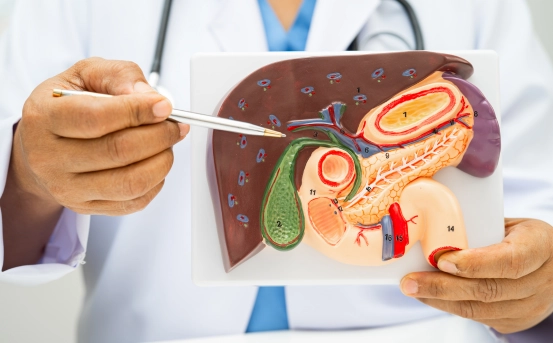
Hepatobiliary surgery refers to a group of surgical procedures performed on the liver, gallbladder, bile ducts, and sometimes the pancreas. These organs play a crucial role in digestion, detoxification, and metabolism. When they become diseased or damaged, surgery may be the most effective way to restore function, remove life-threatening growths, or treat complications that cannot be controlled with medicines alone.
Causes of Hepatobiliary Surgery
- Liver Tumors (Benign and Malignant) :- One of the most common reasons for hepatobiliary surgery is the presence of liver tumors. These may be
- Benign tumors such as hepatic adenomas or hemangiomas
- Malignant tumors such as hepatocellular carcinoma (HCC) or metastatic cancer that has spread from the colon, breast, or other organs
Surgery is recommended when tumors
- Are cancerous
- Grow rapidly
- Cause pain or internal bleeding
- Risk turning into cancer
- Block bile ducts or blood vessels
Removal of the tumor (liver resection) or liver transplantation may be needed depending on severity.
- Gallstones and Gallbladder Diseases :- Gallbladder problems are one of the most frequent causes requiring hepatobiliary surgery.
Common conditions include
- Gallstones (Cholelithiasis) :- Hardened deposits of bile that can block ducts and cause severe pain.
- Inflamed gallbladder (Cholecystitis) :- Often due to blockage from a gallstone.
- Choledocholithiasis :- Gallstones trapped in the common bile duct.
Why surgery becomes necessary
- Persistent abdominal pain
- Recurrent infections
- Fever and jaundice
- Risk of pancreatitis
- Gallbladder rupture (a serious emergency)
Most patients undergo laparoscopic cholecystectomy, a minimally invasive removal of the gallbladder.
- Bile Duct Obstruction or Injuries :- The bile ducts carry bile from the liver to the intestine. When they are blocked or damaged, bile cannot flow properly, leading to jaundice and dangerous infections.
Causes of obstruction
- Gallstones
- Tumors
- Scarring due to chronic inflammation
- Pancreatic disease
- Injury from previous surgeries
When surgery is required
- Persistent jaundice
- Recurrent cholangitis (bile duct infections)
- Bile leakage inside the abdomen
- Severe duct narrowing (strictures)
Surgical reconstruction of bile ducts (hepaticojejunostomy) or removal of blockages may be performed.
- Liver Cirrhosis and End-Stage Liver Disease :- Cirrhosis is irreversible scarring of the liver caused by
- Alcohol abuse
- Hepatitis B or C
- Fatty liver disease
- Autoimmune conditions
- Metabolic disorders
As the liver weakens, blood cannot flow properly through it, leading to complications like
- Internal bleeding
- Fluid buildup (ascites)
- Confusion from toxins (hepatic encephalopathy)
- Severe jaundice
Patients with end-stage cirrhosis often require liver transplantation, which is a major hepatobiliary surgery.
- Pancreatic Conditions Affecting the Hepatobiliary System :- Although the pancreas is not part of the hepatobiliary system directly, it is closely connected through ducts and blood vessels.
Conditions that lead to surgery
- Chronic pancreatitis
- Pancreatic tumors
- Blocked pancreatic-bile duct junction
- Pancreatic cysts or pseudocysts
These issues often cause bile flow obstruction or severe abdominal pain, making surgery necessary to remove diseased portions or relieve pressure.
- Liver Infections, Abscesses, and Cysts :- Untreated infections of the liver can create abscesses (pockets of pus) that may rupture or spread to other organs.
Common causes
- Bacterial infections
- Parasitic infections (e.g., hydatid cysts)
- Fungal infections
- Complications of cholangitis or gallstone disease
When abscesses are large or do not respond to antibiotics, surgical drainage is the safest treatment.
- Trauma or Injury to the Liver or Bile Ducts :- Accidents, falls, or sports injuries can damage the liver or bile ducts. The liver is a highly vascular organ, so trauma may cause life-threatening internal bleeding.
Types of injuries requiring surgery
- Liver lacerations
- Rupture after blunt injury
- Bile duct tears
- Bleeding that cannot be controlled by non-surgical methods
Emergency hepatobiliary surgery may be performed to stop bleeding, repair tissues, or remove damaged segments.
- Congenital (Birth-Related) Abnormalities :- Some people are born with structural problems in the liver, gallbladder, or bile ducts, including
- Biliary atresia (absence of bile ducts)
- Choledochal cysts
- Polycystic liver disease
- Abnormal bile duct junctions
These conditions may lead to jaundice, infections, growth delays, or chronic liver damage in children. Early surgery is often critical for long-term health.
- Primary Sclerosing Cholangitis (PSC) :- PSC is a chronic disease where the bile ducts become inflamed and scarred, gradually narrowing over time. Although the exact cause is unknown, it is often linked with inflammatory bowel disease.
Surgery may be needed when
- Bile ducts become severely blocked
- Liver failure develops
- Cancer risk increases
- Infections become frequent
Advanced PSC often results in the need for liver transplantation.
- Liver Failure Due to Toxins or Medication Overdose :- Exposure to harmful substances can damage liver cells rapidly.
Common triggers
- Alcohol toxicity
- Drug overdose (especially acetaminophen/paracetamol)
- Poisoning
- Chemical exposure
When the liver is unable to recover, transplantation becomes the only lifesaving treatment.
Symptoms That Indicate Need for Evaluation
Many hepatobiliary conditions show early signs such as
- Persistent upper abdominal pain
- Jaundice (yellow skin or eyes)
- Loss of appetite
- Nausea or vomiting
- Dark urine, pale stools
- Fatigue
- Itching
- Fever with abdominal discomfort
If these symptoms appear, timely testing ultrasound, CT scan, MRI, liver function tests helps detect liver or biliary problems early.
Importance of Early Diagnosis
Early detection significantly improves outcomes. Many hepatobiliary diseases progress silently until complications develop. When caught early
- Surgery may be minimally invasive
- Hospital stay becomes shorter
- Organ preservation is possible
- Long-term complications reduce
- Recovery becomes smoother
This is why regular checkups and prompt attention to symptoms are crucial.
Conclusion
Hepatobiliary surgery becomes necessary for a variety of reasons—ranging from gallstones and liver tumors to bile duct injuries, infections, trauma, or chronic liver diseases. Each condition has a unique progression, but most share one common truth: early diagnosis leads to better outcomes.