Introduction
Pilonidal disease is a painful and often recurring condition that forms near the tailbone, usually at the top of the buttocks crease. Many people try home remedies or delay treatment due to discomfort or embarrassment, but when the condition becomes severe, pilonidal surgery becomes the most effective solution. To understand why surgery is sometimes required, it’s important to dig deeper into the causes of pilonidal surgery disease and what triggers chronic infection or sinus formation.
What Is Pilonidal Disease?
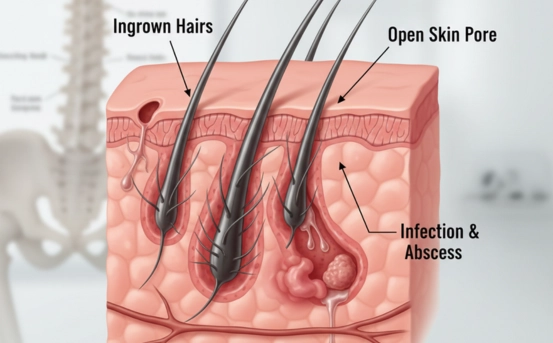
Pilonidal disease occurs when a small hole or tunnel forms in the skin, usually due to hair follicles becoming trapped under the skin. When dirt, debris, or bacteria enter the area, it can lead to inflammation, swelling, and infection. Over time, the infection may create an abscess or a sinus tract, causing pain and discomfort during sitting, walking, or daily activities. If the condition becomes recurrent or doesn’t respond to medications and drainage, pilonidal surgery is recommended to remove the infected tissue and prevent future episodes.
Key Causes of Pilonidal Surgery
Pilonidal disease is not caused by one single reason. Instead, several factors contribute to the formation and progression of the condition. Below are the most common causes that ultimately lead individuals toward pilonidal surgery.
- Ingrown Hair – The Primary Cause :- The most common cause of pilonidal disease is ingrown hair. The buttock cleft is a high-friction area, and hair can easily get pushed back into the skin. Once inside, it irritates the tissue and triggers inflammation.
If not treated in the early stage, the irritation can turn into infection and abscess formation. Repeated infections or continuous hair penetration make surgery the best long-term solution.
- Prolonged Sitting or Pressure on the Tailbone :- People who sit for long hours drivers, office workers, students apply constant pressure on the tailbone area. This pressure:
- Weakens the skin
- Allows hair to penetrate more easily
- Traps sweat and bacteria
Over time, these conditions contribute to sinus tract formation, requiring pilonidal surgery when the infection becomes persistent.
- Poor Hygiene and Excessive Sweating :- The buttock crease is naturally warm and moist. When sweat accumulates and the area isn’t cleaned properly, it becomes the perfect environment for bacteria to grow. Sweat softens the skin, making it more vulnerable to hair penetration. This combination of moisture + bacteria + trapped hair leads to repeated infections. When infection becomes chronic, surgical removal of the sinus or cyst becomes necessary.
- Hormonal Changes During Adolescence :- Pilonidal disease is most common in teenagers and young adults. During puberty, hormonal changes cause:
- Thicker body hair
- Increased oil production
- Higher sweat levels
These factors increase the chances of hair becoming embedded in the skin. If repeated infections occur, surgery becomes the final and best option for long-term relief.
- Friction and Tight Clothing :- Wearing tight clothing, tight jeans, or synthetic fabrics increases friction around the tailbone. This friction
- Breaks down the skin
- Pushes loose hairs inward
- Traps debris inside pores
Constant irritation from friction contributes significantly to pilonidal sinus formation. If the sinus becomes deep or multiple tracts develop, surgery is needed to prevent complications.
- Genetic Predisposition :- Some individuals have a natural tendency to develop pilonidal disease due to:
- Thick or coarse body hair
- A deeper buttock cleft
- Excessive sweating tendencies
- More active hair follicles
When the anatomy itself contributes to hair trapping, conservative treatment often isn’t enough, and surgical correction becomes necessary to prevent long-term recurrence.
- Past Skin Injuries or Trauma :- In some cases, pilonidal disease can develop after trauma to the tailbone area such as
- Falls
- Cycling injuries
- Skin irritation from friction
- Minor tears or wounds
These injuries weaken the skin barrier and allow hair and bacteria to enter easily. If this leads to repeated infections or chronic draining sinus, surgery is required.
When Does Pilonidal Disease Require Surgery?
Not everyone with a pilonidal cyst needs surgery immediately. But surgery becomes the recommended treatment in situations like
- Recurrent infections
- Persistent abscess
- Chronic draining sinus
- Severe pain or swelling
- Multiple sinus tracts forming
- Failure of antibiotics or drainage procedures
Surgery helps remove infected tissue, clean sinus tracts, and prevent future recurrence offering long-term relief and faster healing.
How to Prevent Pilonidal Disease
While not all cases are preventable, lifestyle adjustments can reduce the risk:
- Maintain good hygiene and keep the area dry
- Avoid tight clothing
- Remove excess hair if recommended
- Avoid sitting for long periods
- Wear clean, breathable cotton clothing
- Maintain a healthy weight
Taking these steps early can stop the condition from progressing to the point where surgery becomes necessary.
Conclusion
Pilonidal disease is a condition that develops due to hair penetration, friction, sweating, prolonged sitting, or genetic factors. When the infection becomes severe or keeps coming back, pilonidal surgery is often the most effective treatment for long-lasting relief.