Introduction
Brain and spinal cord cancers are among the most challenging and complex forms of cancer due to their location and potential impact on essential bodily functions. Early and accurate diagnosis is critical for effective treatment and improved outcomes. Understanding the diagnosis of brain and spinal cord cancer methods used to detect these cancers can empower patients and caregivers to recognize symptoms, seek timely medical attention, and make informed decisions.
Understanding Brain and Spinal Cord Cancer
Brain and spinal cord cancers, also known as central nervous system (CNS) cancers, occur when abnormal cells grow uncontrollably in the brain or spinal cord. These cancers may originate within the CNS (primary tumors) or spread from other parts of the body (secondary or metastatic tumors). Common types include gliomas, meningiomas, ependymomas, astrocytomas, and medulloblastomas. While primary CNS cancers are relatively rare, they can be aggressive and life-threatening if not diagnosed early.
Early Warning Signs and Symptoms
Recognizing symptoms is often the first step toward diagnosis. While these signs can vary depending on the tumor’s location and size, some common symptoms include
- Persistent headaches: Often worsening over time, especially in the morning or accompanied by nausea.
- Seizures: Sudden, unexplained episodes of convulsions or abnormal sensations.
- Vision or speech changes: Blurred vision, double vision, or difficulty speaking.
- Weakness or numbness: Especially on one side of the body.
- Balance and coordination problems: Difficulty walking, frequent falls, or unsteady movements.
- Cognitive and personality changes: Memory loss, confusion, or unusual behavior.
For spinal cord cancers, additional symptoms may include back pain, tingling in the limbs, and difficulty controlling bowel or bladder functions. Experiencing any of these symptoms warrants consultation with a neurologist or oncologist for further evaluation.
The Diagnostic Process
Diagnosing brain and spinal cord cancer involves multiple steps, combining clinical assessment, imaging studies, and laboratory tests. Each step helps doctors determine the presence, location, size, and type of tumor, which is crucial for planning treatment.
- Medical History and Physical Examination :- The first step in diagnosis is a thorough medical history and neurological examination. The doctor will ask about symptoms, their onset, progression, and any family history of cancer. During the neurological exam, reflexes, muscle strength, coordination, sensory perception, and cognitive functions are assessed to pinpoint the affected area.
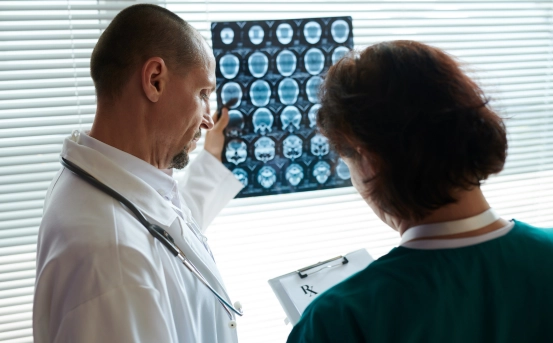
- Imaging Studies :- Imaging is central to diagnosing CNS cancers. The most commonly used imaging techniques include
- Magnetic Resonance Imaging (MRI): MRI uses magnetic fields and radio waves to produce detailed images of the brain and spinal cord. It is the gold standard for detecting tumors and understanding their size, shape, and relationship with surrounding tissues. Contrast agents may be used to enhance visibility.
- Computed Tomography (CT) Scan: CT scans provide cross-sectional images of the brain and spinal cord. While less detailed than MRI, CT scans are faster and helpful in emergencies, especially for detecting bleeding or swelling.
- Positron Emission Tomography (PET) Scan: PET scans detect cancerous activity by highlighting areas with high metabolic activity. They are often used alongside MRI or CT to provide more information about tumor aggressiveness.
- Biopsy :- A biopsy is essential for confirming the presence of cancer and identifying its type. There are several biopsy methods
- Stereotactic Needle Biopsy: A minimally invasive procedure where a small sample is removed using a needle guided by imaging technology.
- Open Surgical Biopsy: In some cases, surgeons may remove part or all of the tumor for examination.
- Endoscopic Biopsy: For tumors located in accessible areas through natural openings, a tiny camera and surgical tools may be used.
The collected tissue is analyzed by a pathologist to determine whether the tumor is benign or malignant and to identify the specific cancer subtype.
- Laboratory Tests :- Blood and cerebrospinal fluid (CSF) tests can provide supportive information. A lumbar puncture may be performed to analyze CSF for cancer cells, especially in cases where tumors may have spread along the spinal cord or brain.
- Molecular and Genetic Testing :- Advanced diagnostic techniques involve molecular profiling to understand genetic mutations associated with the tumor. This information can guide personalized treatment plans, such as targeted therapy or immunotherapy, which may be more effective for specific tumor types.
- Functional Tests :- Depending on tumor location, doctors may recommend additional tests
- Electroencephalogram (EEG): Monitors electrical activity in the brain, useful for patients experiencing seizures.
- Neuropsychological Testing: Assesses cognitive function to understand the impact of the tumor and plan rehabilitation.
Importance of Early Diagnosis
Early detection significantly improves treatment outcomes and quality of life. Tumors diagnosed at an early stage are often more responsive to surgery, radiation, or chemotherapy. Additionally, early diagnosis can help prevent irreversible neurological damage, preserve cognitive function, and reduce complications associated with tumor growth.
Challenges in Diagnosis
Diagnosing brain and spinal cord cancers can be complex due to
- Non-specific symptoms: Early symptoms may mimic migraines, stress, or other neurological conditions.
- Tumor location: Deep-seated or small tumors may be difficult to detect initially.
- Aggressive progression: Some tumors grow rapidly, requiring urgent intervention.
These challenges highlight the importance of consulting specialists in neurology and oncology and using advanced imaging techniques for accurate diagnosis.
Patient Experience and Support
Facing a potential diagnosis of brain or spinal cord cancer can be overwhelming. Emotional support, counseling, and patient education play vital roles in helping patients navigate the diagnostic journey. Support groups and healthcare providers can provide guidance on managing anxiety, understanding treatment options, and maintaining overall well-being during the process.
Conclusion
The diagnosis of brain and spinal cord cancer is a multi-step process that requires careful evaluation, advanced imaging, and precise laboratory testing. Awareness of early symptoms and timely consultation with medical specialists are crucial for detecting cancer at a stage when treatment is most effective. As medical technology advances, diagnostic accuracy continues to improve, offering hope for better outcomes and personalized care.