Introduction
Epidural Hematoma (EDH) is a serious, life-threatening condition that requires immediate medical attention and rapid diagnosis. When bleeding occurs between the skull and the dura mater (the outer protective covering of the brain), pressure builds up quickly, leading to severe neurological damage. Because timing is crucial, an accurate and fast diagnosis determines the chances of survival and recovery.
Understanding Epidural Hematoma: Why Accurate Diagnosis Matters
Epidural Hematoma often results from traumatic head injury such as falls, road accidents, sports impacts, or assault. What makes it extremely dangerous is the rapid collection of blood, which compresses the brain within minutes to hours.
A timely diagnosis helps doctors determine:
- The severity of the bleeding
- The exact location and size of the clot
- Whether emergency surgery is required
- The patient’s neurological condition
The sooner the condition is identified, the higher the success rate of the treatment.
Early Symptoms Doctors Look For
Before diagnostic tests are ordered, doctors first observe the patient’s initial symptoms. Some patients remain conscious after injury and later lose consciousness a typical “lucid interval,” which is a hallmark of Epidural Hematoma.
Common symptoms include:
- Severe headache after head trauma
- Confusion, irritability, or disorientation
- One-sided body weakness or numbness
- Nausea, vomiting, or dizziness
- Enlarged pupil on one side
- Seizures
- Sudden loss of consciousness
These red flags prompt immediate imaging tests to confirm the presence of EDH.
Step-by-Step Diagnosis of Epidural Hematoma Surgery
- Emergency Physical & Neurological Examination :- The diagnosis begins the moment the patient enters the emergency room. Doctors check:
- Level of consciousness using the Glasgow Coma Scale (GCS)
- Blood pressure, pulse, and breathing
- Pupil size and response to light
- Reflexes and body movement
- Any visible head injury, swelling, or skull deformity
A low GCS score often indicates serious brain pressure or bleeding, prompting urgent imaging.
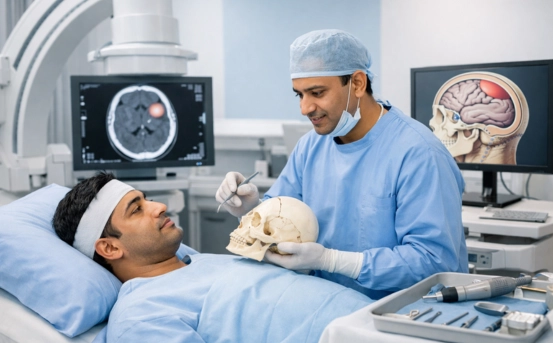
- CT Scan of the Brain :- A non-contrast CT scan is the most crucial test and is considered the fastest, most accurate tool for diagnosing Epidural Hematoma.
Why CT Scan is essential:
- It clearly shows the location of the bleeding
- Detects the characteristic biconvex (lentiform) shape of the hematoma
- Measures the size and volume of the clot
- Identifies midline shift or brain compression
- Helps doctors decide if emergency surgery is required
In most cases, CT results are available within minutes, allowing rapid decision-making.
- MRI Scan :- An MRI scan is not typically the first choice because it takes longer than CT, but it may be recommended when:
- The diagnosis remains unclear
- The injury is older or evolving
- There is suspicion of additional brain damage
- A follow-up evaluation is needed after treatment
MRI provides detailed images of soft tissues and small bleeds that CT might miss.
- Skull X-Ray :- Earlier, skull X-rays were used to detect fractures associated with Epidural Hematoma. Today, they are rarely required because CT scans give far more accurate information.
Doctors may still use X-rays when:
- A CT scan is unavailable in remote areas
- There is suspicion of skull fracture
However, X-rays cannot confirm the hematoma itself.
- Blood Tests and Additional Evaluations :- Although blood tests do not diagnose the hematoma, they help assess the patient’s overall condition and surgical readiness. Tests may include:
- Complete blood count
- Coagulation profile (to check bleeding tendency)
- Blood sugar and electrolyte levels
This information supports the treatment plan and reduces surgical risk.
How Doctors Decide If Surgery Is Needed
After diagnosis is confirmed through CT scan and neurological assessment, doctors evaluate:
- Size of the hematoma (usually >30 ml requires surgery)
- Thickness of the clot
- Midline shift of the brain
- Patient’s neurological condition
- Speed of symptom progression
If the hematoma is large or symptoms worsen quickly, emergency craniotomy or burr hole surgery is performed to remove the clot and relieve brain pressure.
Small, stable hematomas may be monitored through repeated scans and supportive treatment.
Importance of Fast Diagnosis in Saving Lives
Epidural Hematoma is one of the fastest-progressing brain injuries. Rapid imaging, neurological evaluation, and immediate intervention significantly improve survival and recovery rates.
Conclusion
The diagnosis of Epidural Hematoma relies heavily on rapid assessment, early symptom recognition, and immediate imaging tests—especially CT scan. Accurate diagnosis ensures timely surgical or medical management, preventing severe complications and saving the patient’s life.