Introduction
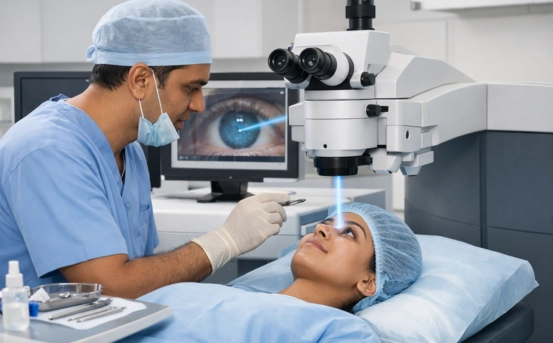
Trans PRK, or Transepithelial Photorefractive Keratectomy, is a modern laser eye surgery technique designed to correct refractive errors like myopia, hyperopia, and astigmatism. Unlike traditional PRK, Trans PRK removes the corneal epithelium using the laser itself, providing a smoother healing process and faster visual recovery. Accurate diagnosis of trans prk surgery before the procedure is critical to ensure safety, effectiveness, and optimal results.
Understanding the Need for Diagnosis
Not everyone is a candidate for Trans PRK. Factors like corneal thickness, refractive error magnitude, overall eye health, and medical history determine eligibility. The diagnosis process helps ophthalmologists identify risks, customize treatment plans, and predict visual outcomes. A proper diagnosis also ensures long-term eye health and reduces the likelihood of complications, such as haze formation, infection, or residual refractive error.
Diagnosis of Trans PRK Surgery
- Initial Consultation and Medical History :- The diagnosis process begins with a comprehensive eye consultation. During this stage, the ophthalmologist collects a detailed medical and ocular history, including:
- Past eye conditions like keratoconus, glaucoma, or retinal disorders.
- Previous eye surgeries or injuries.
- Family history of eye diseases.
- Use of contact lenses, as long-term use can affect corneal shape.
- General health issues like diabetes, autoimmune disorders, or medications that affect healing.
Understanding your medical history helps the surgeon determine whether Trans PRK is safe or if alternative procedures are more suitable.
- Visual Acuity Assessment :- One of the first diagnostic tests is a visual acuity assessment. This measures how well you can see at various distances using an eye chart. The results help identify the degree of refractive error. Both uncorrected visual acuity (UCVA) and best-corrected visual acuity (BCVA) are measured to understand the full potential of your vision with correction.
- Refraction Test :- Next, an eye specialist performs a refraction test, either manual using a phoropter or automated with a refractometer. This test determines:
- Myopia (nearsightedness) – difficulty seeing distant objects clearly.
- Hyperopia (farsightedness) – difficulty seeing close objects clearly.
- Astigmatism – uneven curvature of the cornea causing blurred or distorted vision.
The precise measurement of your refractive error is crucial for planning the laser ablation pattern during Trans PRK.
- Corneal Topography :- Corneal topography is a vital diagnostic tool for Trans PRK. It maps the curvature and shape of the cornea, helping detect irregularities that could affect surgery outcomes. Topography identifies conditions like keratoconus, which can make laser surgery unsafe. Advanced topographers can also detect subtle corneal thinning, steepening, or asymmetry, guiding the surgeon in creating a personalized treatment plan.
- Pachymetry :- Corneal thickness measurement, or pachymetry, is essential before Trans PRK. The procedure involves removing a thin layer of the cornea, so knowing the exact thickness ensures safety. Surgeons typically require a minimum corneal thickness to avoid weakening the eye. Pachymetry can be performed using ultrasound or optical devices, and the measurements guide the surgeon in determining whether enough corneal tissue remains for effective laser reshaping.
- Wavefront Analysis :- For a more advanced diagnosis, some clinics perform wavefront analysis. This technique measures higher-order aberrations subtle visual distortions that standard refraction tests might miss. Wavefront-guided Trans PRK can correct these aberrations, providing sharper, clearer vision and reducing post-surgery visual disturbances such as glare or halos.
- Dry Eye Evaluatio :- A critical part of preoperative diagnosis is assessing tear film quality and dry eye status. Dry eyes can interfere with healing after Trans PRK and may affect visual outcomes. Tests like Schirmer’s test, tear break-up time (TBUT), and ocular surface staining help determine if dry eye management is needed before surgery. Patients with severe dry eye may require treatment before being cleared for Trans PRK.
- Pupillometry :- The pupil size is another important diagnostic factor. Large pupils in low light conditions can increase the risk of postoperative halos and glare. Pupillometry measures pupil diameter under various lighting conditions, helping surgeons adjust the laser treatment zone and reduce night vision disturbances.
- Slit-Lamp Examination :- A slit-lamp examination allows ophthalmologists to inspect the front structures of the eye, including the cornea, conjunctiva, iris, and lens. This test helps detect corneal scars, infections, inflammation, or other abnormalities that could affect surgery. Any active ocular condition must be treated before proceeding with Trans PRK.
- Retinal Evaluation :- Although Trans PRK primarily focuses on the cornea, a complete retinal examination is recommended. Using tools like fundoscopy or OCT (Optical Coherence Tomography), doctors assess the retina, macula, and optic nerve. Pre-existing retinal conditions may influence surgical decisions or require simultaneous treatment.
- Psychological and Lifestyle Assessment :- Patient expectations and lifestyle considerations are also part of the diagnostic process. Surgeons discuss:
- Career requirements (e.g., pilots, drivers, or athletes)
- Hobbies and outdoor activities
- Willingness to comply with post-operative care
A clear understanding ensures patients are fully informed about recovery timelines and potential visual outcomes.
Conclusion
Accurate and thorough diagnosis is the cornerstone of successful Trans PRK surgery. From medical history evaluation and visual acuity tests to corneal topography, pachymetry, and wavefront analysis, each diagnostic step ensures the procedure is safe, precise, and effective. Proper preoperative assessment reduces the risk of complications, improves surgical outcomes, and enhances patient satisfaction.