Introduction
Urological cancers, which include cancers of the kidneys, bladder, prostate, and urinary tract, pose significant health challenges worldwide. Early detection is critical for effective treatment and better patient outcomes. Advances in medical diagnostics have revolutionized how urological cancers are identified, offering precise, minimally invasive, and reliable options for both clinicians and patients. This article explores the diagnosis of urological cancer, including signs, risk factors, and modern diagnostic techniques.
Understanding Urological Cancer
Urological cancers affect the urinary system and the male reproductive system. Common types include
- Prostate cancer is the most common cancer in men.
- Bladder cancer often presents with blood in urine (hematuria).
- Kidney cancer may show symptoms like back pain, weight loss, or blood in urine.
- Testicular cancer typically affects younger men, presenting as lumps or swelling.
Each type of urological cancer has unique risk factors, including age, family history, lifestyle habits, and environmental exposure. Understanding these risks is essential for early screening and timely diagnosis.
Early Warning Signs of Urological Cancer
Recognizing symptoms early can lead to prompt medical attention and improve treatment success. Common signs include
- Blood in urine or semen
- Frequent urination or urgency
- Difficulty starting or stopping urination
- Pain in the lower back, pelvis, or sides
- Swelling or lumps in the testicles
- Unexplained weight loss or fatigue
While these symptoms may indicate urological cancer, they can also result from infections or other non-cancerous conditions. Therefore, diagnostic tests are crucial to confirm the presence of cancer.
Risk Factors for Urological Cancer
Awareness of risk factors helps identify individuals who may benefit from regular screenings. Key risk factors include
- Age: Prostate and bladder cancers are more common in men over 50.
- Family history: A genetic predisposition increases cancer risk.
- Smoking: Strongly linked to bladder cancer.
- Chemical exposure: Industrial chemicals can raise the risk of kidney and bladder cancers.
- Lifestyle factors: Obesity, poor diet, and lack of exercise may contribute to kidney cancer.
Patients with these risk factors should discuss screening options with a urologist or oncologist to ensure early detection.
Diagnosis of Urological Cancer
Modern medicine offers a variety of diagnostic tools to detect urological cancers at early stages. These include
- Physical Examination :- For certain cancers, especially prostate and testicular cancer, a physical exam is the first step. This may involve
- Digital Rectal Exam (DRE): The doctor examines the prostate for irregularities.
- Testicular exam: The doctor checks for lumps, swelling, or abnormalities.
While simple, these exams are critical for detecting early signs of malignancy.
- Laboratory Tests :- Blood and urine tests play a significant role in urological cancer diagnosis. Common tests include
- Prostate-Specific Antigen (PSA) Test: Elevated PSA levels may indicate prostate cancer.
- Urine cytology: Examines urine for cancerous cells, especially useful for bladder cancer.
- Kidney function tests: Can detect changes caused by kidney tumors.
These tests are often combined with imaging studies for accurate diagnosis.
- Imaging Techniques :- Imaging is essential for locating tumors, assessing their size, and evaluating metastasis. Key imaging modalities include
- Ultrasound: Non-invasive and useful for detecting kidney and bladder masses.
- CT Scan (Computed Tomography): Provides detailed images of kidneys, bladder, and surrounding tissues.
- MRI (Magnetic Resonance Imaging): Offers high-resolution images for prostate and kidney tumors.
- PET Scan (Positron Emission Tomography): Detects cancer spread in advanced cases.
These imaging tests are often used in combination for a comprehensive assessment.
- Biopsy :- A biopsy involves taking a tissue sample from the suspected tumor for laboratory analysis. Types include
- Needle biopsy: Common for kidney and prostate cancers.
- Transurethral resection biopsy: Used for bladder tumors.
Biopsy remains the gold standard for confirming the presence of cancer and determining its type and aggressiveness.
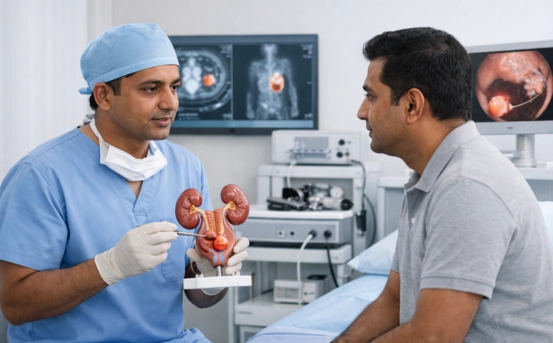
- Cystoscopy :- A cystoscopy is a minimally invasive procedure used to examine the bladder and urethra. A thin tube with a camera is inserted into the urethra to detect tumors or abnormalities. This procedure is particularly effective for early detection of bladder cancer.
- Genetic and Molecular Testing :- Advances in genetics allow doctors to detect mutations linked to urological cancers. Molecular tests help
- Identify hereditary cancer risk
- Guide personalized treatment options
- Monitor cancer progression
These tests are becoming increasingly important in precision oncology.
Importance of Early Diagnosis
Early detection of urological cancer significantly improves survival rates. For instance
- Localized prostate cancer has a 5-year survival rate close to 100%.
- Early-stage kidney or bladder cancer can often be treated successfully with surgery or minimally invasive techniques.
Delays in diagnosis can lead to metastasis, limiting treatment options and lowering survival chances. Regular screening for high-risk individuals is therefore essential.
Conclusion
The diagnosis of urological cancer has evolved with advancements in laboratory tests, imaging, and molecular diagnostics. Awareness of early signs, risk factors, and available diagnostic techniques is critical for timely detection and effective treatment.
Patients experiencing symptoms or with a family history of urological cancers should consult a specialized urologist or oncologist promptly. Early diagnosis not only improves survival but also enhances quality of life.