Introduction
Uterine cancer also known as endometrial cancer is one of the most common gynecological cancers affecting women worldwide. Early diagnosis of uterine cancer significantly improves treatment outcomes, making it essential to understand the signs, tests, and clinical procedures involved in detecting this condition.
Understanding Uterine Cancer
Uterine cancer originates in the uterus, most commonly in the lining called the endometrium. While it primarily affects women after menopause, it can also occur in younger women due to hormonal imbalances, obesity, genetic factors, or prolonged estrogen exposure. Recognizing early symptoms and undergoing timely diagnostic tests are crucial for confirming the condition and planning an effective treatment strategy.
Early Symptoms That Lead to Diagnosis
Most women are diagnosed after noticing unusual symptoms. Common warning signs include
- Abnormal uterine bleeding, especially after menopause
- Heavy menstrual periods or bleeding between cycles
- Pelvic pain or cramping
- Unexplained weight loss
- Pain during intercourse
- Watery or blood-tinged vaginal discharge
If any of these symptoms appear, a gynecologist will typically recommend immediate evaluation using a series of diagnostic tests.
Step-by-Step Diagnosis of Uterine Cancer
Diagnosing uterine cancer involves a combination of physical examinations, imaging tests, biopsies, and laboratory analysis. Below is the complete diagnostic pathway:
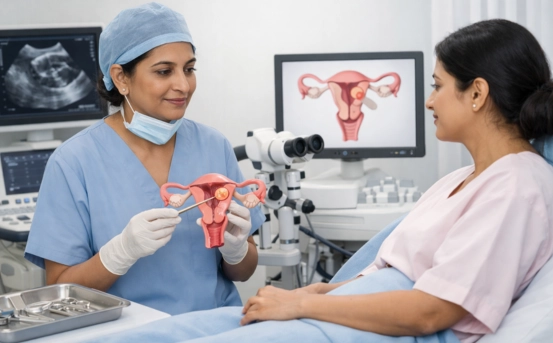
- Medical History and Pelvic Examination :- The diagnostic journey begins with a detailed consultation. Your gynecologist will discuss symptoms, menstrual history, hormonal treatments, and family history of cancers such as ovarian or colon cancer. A pelvic exam follows, where the doctor checks for abnormalities in the uterus, cervix, and ovaries. Although a pelvic exam cannot confirm cancer, it helps identify signs that require further testing.
- Transvaginal Ultrasound (TVUS) :- A transvaginal ultrasound is often the first imaging test ordered. It uses high-frequency sound waves to create detailed images of the uterus.
TVUS evaluates
- Endometrial thickness
- Polyps or abnormal growths
- Irregular uterine lining
Postmenopausal women with an endometrial thickness greater than 4 mm are usually recommended for additional evaluation, as this may indicate endometrial hyperplasia or cancer.
- Endometrial Biopsy :- An endometrial biopsy is the gold standard for diagnosing uterine cancer. It involves removing a small tissue sample from the lining of the uterus for laboratory analysis.
Benefits include
- Quick (usually 10–15 minutes)
- Minimally invasive
- Performed in the doctor’s office
- High accuracy
Pathologists examine the sample under a microscope to detect cancer cells, pre-cancerous changes, or atypical hyperplasia.
If the biopsy results are inconclusive or insufficient, further testing is recommended.
- Hysteroscopy :- A hysteroscopy allows doctors to visually examine the inside of the uterus using a thin, lighted telescope. This procedure helps identify abnormal tissue, polyps, or tumors directly.
During the exam, the doctor may also perform
- Directed biopsy (sampling a specific suspicious area)
- Dilation and curettage (D&C) for a more thorough tissue collection
Hysteroscopy is extremely useful when ultrasound images are unclear or when biopsy samples are inadequate.
- Dilation and Curettage (D&C) :- D&C is often done along with hysteroscopy. The cervix is gently dilated, and the endometrial tissue is scraped for laboratory testing.
This test provides larger and more accurate samples than a standard biopsy, improving detection rates in difficult cases.
- Imaging Tests for Staging :- If cancer is confirmed, imaging tests are used to determine how far it has spread. This is known as staging, and it guides treatment planning.
Common imaging tests include
CT Scan (Computed Tomography) :- Helps detect
- Tumor spread to lymph nodes
- Invasion into surrounding tissues
- Distant metastasis
MRI (Magnetic Resonance Imaging)
MRI provides superior soft-tissue contrast, making it ideal for assessing
- Depth of tumor invasion into the uterine wall
- Involvement of the cervix or myometrium
PET Scan :- A PET (Positron Emission Tomography) scan identifies metabolic activity of cancer cells and is useful for evaluating widespread disease.
- Blood Tests :- While no blood test can directly confirm uterine cancer, certain markers help during diagnosis and treatment monitoring.
CA-125 Blood Test :- Often elevated in advanced endometrial cancer, especially when it spreads to the ovaries or abdomen.
Routine Blood Tests :- These may include
- CBC (to check for anemia)
- Kidney and liver function tests
- Hormonal level assessments
Blood tests help evaluate overall health before planning surgery or treatments like chemotherapy.
- Genetic Testing (When Recommended) :- Some women are advised to undergo genetic screening, especially those with
- Family history of endometrial or colon cancer
- Early-onset uterine cancer
- Lynch syndrome suspicion
Testing identifies hereditary cancer risks and helps doctors customize treatment.
- Staging of Uterine Cancer :- After diagnostic testing, uterine cancer is staged from Stage I to Stage IV
- Stage I: Cancer confined to the uterus
- Stage II: Spread to the cervix
- Stage III: Spread to ovaries, lymph nodes, or pelvic tissues
- Stage IV: Spread to bladder, rectum, or distant organs
Accurate staging is essential for developing an effective treatment plan.
How Long Does Diagnosis Take?
The timeline varies based on the tests performed
- Initial evaluation and ultrasound: 1–2 days
- Biopsy results: 3–7 days
- Imaging and staging: 1–2 weeks
Early consultation with a gynecologist can significantly speed up diagnosis.
Importance of Early Detection
When diagnosed early, uterine cancer has a high treatment success rate. In fact, Stage I endometrial cancer has excellent outcomes with prompt surgical treatment. Recognizing symptoms early and undergoing timely evaluation can save lives.
Conclusion
The diagnosis of uterine cancer is a multi-step process involving clinical exams, imaging, biopsies, and laboratory tests. Understanding each step helps reduce anxiety and encourages early medical attention. If you experience unexplained bleeding or any concerning symptoms, consult a gynecologist immediately. Early diagnosis not only improves survival rates but also allows for more personalized and less aggressive treatment options.