Introduction
Raynaud’s disease, also known as Raynaud’s phenomenon, is a condition that affects blood flow to certain parts of the body, most commonly the fingers and toes. During an attack, the small blood vessels constrict excessively in response to cold or stress, limiting blood flow and causing discoloration, pain, numbness, or tingling. While mild cases are often managed through lifestyle modifications and medications, severe or chronic cases may require medical or surgical intervention.
The term “procedure of Raynaud’s disease” typically refers to the medical or surgical interventions used to treat severe Raynaud’s that does not respond to conservative therapy. The primary goal of these procedures is to improve blood flow, reduce pain, prevent tissue damage, and restore normal function in affected extremities.
Diagnosis Before Procedure
Before any procedure is performed, a thorough diagnosis is essential to confirm Raynaud’s disease and determine whether it is primary (idiopathic) or secondary (caused by an underlying condition).
The diagnostic process may include:
- Medical History and Physical Examination: Doctors evaluate the frequency, severity, and triggers of attacks, and look for signs of ulcers, tissue damage, or color changes.
- Nailfold Capillaroscopy: A microscope is used to examine small blood vessels near the fingernails for abnormalities, particularly in secondary Raynaud’s.
- Blood Tests: Tests for autoimmune or connective tissue disorders such as scleroderma, lupus, or rheumatoid arthritis are conducted to identify secondary causes.
- Cold Stimulation Test: The patient’s hands or feet may be exposed to controlled cold conditions to observe the reaction of blood vessels.
- Imaging Studies: Doppler ultrasound or angiography may be used to examine blood flow in the arteries and detect blockages or vascular abnormalities.
A proper diagnosis ensures that the chosen procedure targets the underlying cause and delivers optimal results.
Procedure of Raynaud’s Disease
In mild or moderate cases, non-surgical procedures may be recommended to manage symptoms and improve blood flow:
- Medication Administration :-
- Calcium Channel Blockers: These drugs relax and widen small blood vessels, reducing the frequency and severity of Raynaud’s attacks.
- Vasodilators: Medications such as nitroglycerin cream can be applied to affected areas to improve circulation.
- Alpha Blockers and Other Agents: These reduce blood vessel constriction and improve blood flow.
- Calcium Channel Blockers: These drugs relax and widen small blood vessels, reducing the frequency and severity of Raynaud’s attacks.
- Thermal Biofeedback Therapy :- Patients learn techniques to consciously warm their hands and toes using relaxation and feedback mechanisms.
- Botulinum Toxin (Botox) Injection :- Botox can be injected into the hands or feet to block the sympathetic nerves that cause excessive blood vessel constriction. This minimally invasive procedure can significantly reduce pain and improve circulation, particularly in patients with digital ulcers or severe pain.
While these procedures are effective for many patients, surgical intervention is considered when non-surgical options fail or when tissue damage is imminent.
Surgical Procedures for Raynaud’s Disease
Surgery is typically reserved for severe Raynaud’s disease, especially secondary cases that cause ulcers, gangrene, or persistent pain. Several surgical options are available:
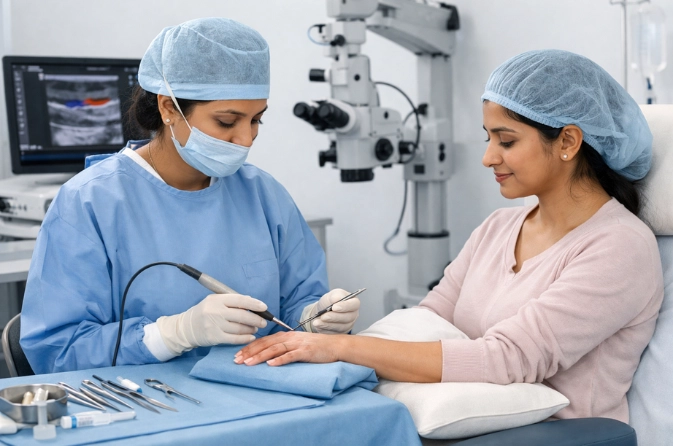
- Sympathectomy :- Sympathectomy is the most commonly performed surgical procedure for Raynaud’s disease. The procedure involves interrupting or removing parts of the sympathetic nerves that trigger excessive blood vessel constriction.
- Digital Sympathectomy: Targets nerves in the fingers or toes to improve localized blood flow.
- Thoracic Sympathectomy: Performed higher up in the chest to improve circulation in the hands.
By reducing nerve signals, sympathectomy allows blood vessels to remain open, decreasing the frequency and severity of attacks. The procedure can be done using open surgery or minimally invasive techniques like endoscopic thoracic sympathectomy. Recovery is usually quick, and most patients notice improvement within weeks.
- Vascular Reconstruction or Bypass Surgery :- In severe cases where Raynaud’s is complicated by arterial blockages, vascular reconstruction or bypass surgery may be performed. Surgeons reroute blood flow around narrowed or blocked arteries using grafts or artificial vessels. This type of procedure is recommended for patients with digital ischemia, non-healing ulcers, or advanced secondary Raynaud’s. Vascular reconstruction restores circulation to affected fingers or toes and prevents tissue loss.
- Digital Amputation (Last Resort) :- In cases of severe tissue death or gangrene, partial digital amputation may be necessary. This procedure removes the non-viable portion of the finger or toe to prevent infection from spreading. While amputation is a last-resort option, it can save surrounding tissue and prevent serious complications. Rehabilitation and protective care after surgery are essential for functional recovery.
- Endovascular Procedures :- Minimally invasive endovascular procedures may be used to treat blocked arteries in the hands or feet. Using catheters, balloons, or stents, surgeons can open narrowed vessels and restore blood flow. Endovascular interventions are usually combined with other procedures for optimal results.
Post-Procedure Care
After any Raynaud’s procedure, careful post-procedure care is essential:
- Keep affected areas warm and protected from cold exposure.
- Avoid smoking, as nicotine constricts blood vessels.
- Monitor for signs of infection, bleeding, or delayed healing.
- Follow prescribed medications and therapies to support circulation.
- Attend follow-up visits with the surgeon or vascular specialist to monitor recovery.
Patients may also benefit from physical therapy or occupational therapy to maintain hand or foot function.
Conclusion
The procedure of Raynaud’s disease encompasses a range of diagnostic, non-surgical, and surgical interventions designed to restore blood flow, reduce pain, and prevent tissue damage. From medications and Botox injections to sympathectomy, vascular reconstruction, and in extreme cases, digital amputation, each procedure is tailored to the severity and underlying cause of the condition.
Early diagnosis, careful evaluation, and appropriate intervention are crucial for managing Raynaud’s disease effectively. Consulting an experienced vascular or hand specialist ensures that the selected procedure provides the best possible outcomes, improves quality of life, and protects the extremities from long-term damage.