Introduction
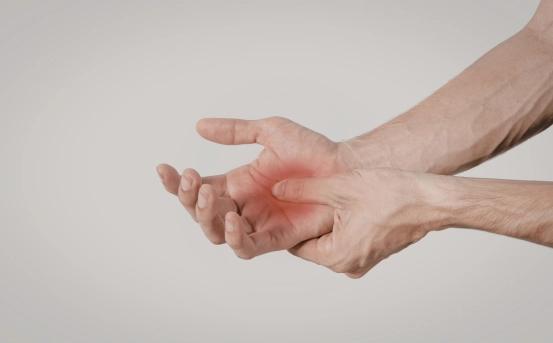
Ganglion cysts are among the most common benign (non-cancerous) lumps that appear around joints and tendons especially on the wrist, hand, ankle, or foot. Although they are harmless, they can still cause pain, discomfort, limited mobility, or cosmetic concern. Understanding the symptoms of ganglion cysts helps you identify the condition early and seek the right treatment before it affects your daily activities.
What Is a Ganglion Cyst?
A ganglion cyst is a fluid-filled sac that grows near a joint or tendon. The jelly-like fluid inside is similar to the fluid that lubricates joints. These cysts can vary in size some are pea-sized, while others grow large enough to restrict joint movement. They often appear suddenly but may also grow gradually over time.
Most commonly, ganglion cysts occur on:
- Back of the wrist
- Palm side of the wrist
- Base of the fingers
- Top of the foot
- Ankle or toe joints
Even though they are noncancerous and usually harmless, recognizing the symptoms is essential to prevent complications.
Common Symptoms of Ganglion Cysts
Below are the most frequent symptoms that help identify ganglion cysts.
- Visible Lump Near a Joint :- The most obvious sign of a ganglion cyst is a soft, round, or oval lump. Its size can change depending on the activity level. For example:
- It may grow when the joint is being used repeatedly.
- It may shrink or even disappear at rest.
The lump is usually smooth and filled with clear, thick fluid that resembles hair gel.
- Pain or Aching in the Affected Area :- Not all ganglion cysts hurt. Many are painless. But when pain does occur, it is usually due to:
- Pressure on surrounding nerves
- Irritation of nearby tissues
- Repetitive wrist or foot movements
The pain may feel like:
- A dull ache
- Sharp discomfort
- Pain that worsens with activity
If the cyst is pressing on a nerve, the discomfort may radiate to nearby fingers or toes.
- Tingling, Numbness, or Weakness :- When a ganglion cyst develops close to a nerve, it may cause:
- Tingling sensation
- Numbness
- Weak grip (in case of wrist cysts)
- Difficulty moving the joint
- Muscle weakness over time
This symptom should never be ignored, as nerve compression can worsen if the cyst continues to grow.
- Reduced Range of Motion :- A large ganglion cyst can physically block the joint or cause pain during movement. This leads to:
- Trouble bending the wrist
- Difficulty gripping objects
- Pain while walking (in foot cysts)
- Strain during lifting or turning
In athletes or active individuals, reduced flexibility can significantly affect performance.
- Tenderness When Pressed :- Some ganglion cysts are sensitive to touch. Pressing on the lump may cause:
- Sharp pain
- General tenderness
- Swelling sensation
This is usually due to inflammation around the cyst or irritation of nearby tissues.
- Changes in Size Over Time :- One unique symptom of ganglion cysts is their ability to change size:
- They may grow larger with continuous joint movement.
- They may shrink or disappear temporarily.
- Some come and go without treatment.
The unpredictable size change helps differentiate ganglion cysts from tumors.
- Cosmetic or Visible Swelling Concern :- Even when painless, ganglion cysts may cause cosmetic discomfort, especially when located on the wrist or hand. Many people notice:
- Visible bump on the skin
- Imbalance in the appearance of hands
- Swelling that becomes more prominent with certain wrist positions
This is often a primary reason patients seek treatment.
Less Common Symptoms of Ganglion Cysts
While ganglion cysts are generally simple in nature, a few rare symptoms may appear:
- Warmth or Rednes :- Although ganglion cysts are not infections, in rare cases, the surrounding tissue may become slightly warm or red due to irritation. This is not typical and should be checked by a doctor.
- Stiffness After Rest :- Some people experience stiffness after waking up or after long periods of not using the joint. This happens because the cyst presses against the joint capsule.
- Difficulty Wearing Footwear (for Foot Cysts) :- When cysts appear on the top of the foot or toes, they may cause:
- Shoe-fitting problems
- Irritation due to friction
- Pain while walking or running
The constant rubbing can make symptoms worse.
Who Is at Risk of Developing Ganglion Cysts?
Understanding the risk factors helps in early identification.
- Females aged 20–50 (higher likelihood)
- People who perform repetitive joint motions (typing, lifting, sports)
- History of wrist or joint injury
- Arthritis in finger joints
However, ganglion cysts can appear in anyone including children.
When Should You See a Doctor?
Not every ganglion cyst needs treatment, but you should seek medical help if:
- The cyst is painful or growing rapidly
- You feel numbness or tingling
- Your joint movement is restricted
- The cyst interferes with daily work or sports
- The lump keeps returning after home remedies
- You are unsure whether the lump is a cyst or something else
A doctor may recommend:
- Physical exam
- Ultrasound or MRI
- Needle aspiration (draining the cyst)
- Surgical removal in severe cases
Seeking timely care prevents further complications and helps maintain joint health.
Can Ganglion Cysts Be Prevented?
Although not entirely avoidable, you can reduce the chances by:
- Avoiding repetitive strain
- Using wrist supports during heavy work
- Taking frequent breaks while typing
- Strengthening the muscles around joints
However, cysts may still appear even with precautions especially if caused by underlying joint degeneration.
Home Care for Ganglion Cysts
Some people try natural or home-based relief methods:
- Warm compress
- Resting the joint
- Avoiding activities that worsen the pain
Never attempt to puncture or burst the cyst yourself. This can cause infection or permanent tissue damage.
Final Thoughts
Ganglion cysts are common, harmless lumps yet they can cause pain, numbness, movement restrictions, or cosmetic concerns. Knowing the symptoms of ganglion cysts helps you recognize the issue early and take appropriate action. If the cyst becomes painful, grows rapidly, or affects your daily routine, a medical professional can guide you with treatments such as aspiration or surgical removal.