Introduction
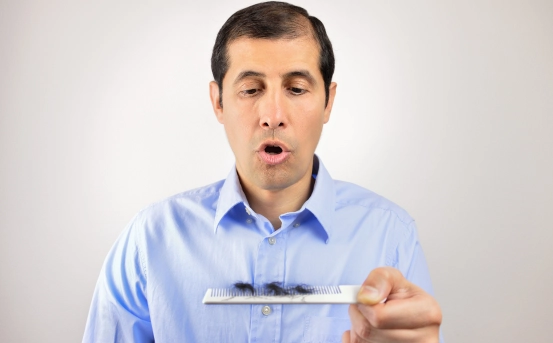
Hair loss affects millions of men and women worldwide, leading many to consider hair transplant surgery as a long-term solution. While the procedure is generally safe and highly effective, patients often wonder: What symptoms should I expect after a hair transplant? Understanding the normal symptoms of hair transplant, possible side effects, and warning symptoms can help you prepare better and enjoy a smooth recovery.
What Is a Hair Transplant?
A hair transplant is a minimally invasive cosmetic procedure in which healthy hair follicles are extracted from a donor area (usually the back of the scalp) and implanted into thinning or bald areas. Techniques like FUT (Follicular Unit Transplantation) and FUE (Follicular Unit Extraction) are widely used in India and globally.
Since the procedure involves both extraction and implantation of follicles, certain symptoms afterward are completely natural.
Common Symptoms After Hair Transplant (Normal & Expected)
Most symptoms after a hair transplant are temporary and part of the healing process. Here are the most common postoperative symptoms
- Mild Pain or Discomfort :- After the anesthesia wears off, you may feel slight discomfort or tightness in the donor and recipient areas.
This typically lasts 24–48 hours and can be easily managed with prescribed pain medications. - Swelling on the Forehead or Around the Eyes :- Swelling, also known as postoperative edema, is a common symptom, especially after FUE or FUT.
It may appear on the:
- Forehead
- Eyelids
- Between the eyebrows
Swelling usually peaks on Day 2–4 and gradually subsides without treatment.
- Redness and Tenderness :- Redness on the scalp is one of the first symptoms patients notice.
It occurs because the skin is healing from the extraction and implantation of grafts. Redness may stay visible for 7–10 days, depending on skin sensitivity.
- Scabbing or Crusting on the Scalp :- Tiny scabs form around each implanted graft, which is completely normal.
These scabs protect the new follicles while they settle into your scalp. They usually fall off naturally within 7–14 days. Patients are advised not to scratch or pick the scabs.
- Itching :- Itching is one of the most common symptoms of hair transplant recovery.
It occurs because
- New skin cells are forming
- Scabs are drying
- The scalp is adjusting to the implanted grafts
Mild itching is normal and improves within a week.
- Numbness or Tingling Sensation :- Some patients experience numbness in the donor or recipient areas.
This happens when tiny nerves are disturbed during the procedure.
Numbness can last from a few days to a few weeks, but it gradually improves as the nerves heal.
Symptoms That Occur During the Healing Stage
- Shock Loss (Temporary Hair Shedding) :- Shock loss is a natural part of the hair transplant recovery process. Around 2–4 weeks after surgery, the implanted hair may fall out. This is temporary and should not worry you. The roots remain secure, and new hair begins to grow within 3–4 months.
- Folliculitis (Small Pimples) :- Some patients notice tiny pimples in the transplanted area. This is known as folliculitis, a sign that new hairs are trying to grow through the skin. It usually resolves on its own, but warm compresses can help relieve discomfort.
- Dryness or Tightness of the Scalp :- You may feel your scalp is tighter or drier than usual. This is common because healing tissues may lose moisture temporarily. Hydrating sprays or doctor-recommended lotions can help.
Symptoms That Are Not Normal (Seek Medical Attention)
While most symptoms are mild and part of healing, some signs require prompt consultation with your hair transplant surgeon
- Persistent or Severe Pain :- If pain worsens over time instead of improving, it could indicate an issue such as infection.
- Excessive Bleeding :- Minor bleeding is expected, especially from the donor area.
However, continuous bleeding is not normal and needs medical care. - High Fever :- A fever after a hair transplant may be a sign of infection and requires timely evaluation.
- Pus-Filled Discharge :- A mild clear fluid is normal, but thick, yellowish pus indicates inflammation or infection.
- Spreading Redness :- If redness spreads beyond the transplant area or becomes increasingly warm or painful, consult your doctor immediately.
How to Manage Hair Transplant Symptoms Easily
Here are some quick ways to manage common symptoms and ensure a smooth recovery
- Sleep with your head elevated for the first 3–4 days to reduce swelling.
- Avoid touching, scratching, or rubbing the scalp.
- Use only doctor-recommended shampoos after the first wash.
- Avoid heavy exercise, sweating, and sun exposure for 10–14 days.
- Stay hydrated and maintain a healthy diet to support healing.
- Follow medication and post-care instructions diligently.
When Do Symptoms Completely Disappear?
While most symptoms fade within 7–14 days, the full recovery timeline is
- 2 weeks – Scabs and redness disappear
- 1 month – Shedding (shock loss) may occur
- 3–4 months – New hair growth begins
- 6–12 months – Visible improvement
- 12–18 months – Final results
Patience is essential, as hair growth is a gradual process.
Conclusion
Recognizing the normal symptoms of a hair transplant helps set the right expectations and reduces anxiety during recovery. Most symptoms such as mild pain, swelling, redness, and temporary hair shedding are part of the natural healing process. By following your surgeon’s instructions and monitoring for any unusual signs, you can ensure a smooth journey toward fuller, natural-looking hair.