Introduction
Treatment for knee replacement focuses on relieving severe knee pain, restoring joint function, and improving overall mobility when conservative methods no longer provide relief. Before surgery is considered, patients often undergo treatments such as pain medications, physiotherapy, weight management, lifestyle modification, and joint injections. When these options fail and joint damage becomes advanced, knee replacement surgery is recommended. The procedure involves removing damaged cartilage and bone surfaces and replacing them with artificial implants designed to mimic natural knee movement. Treatment planning includes selecting the appropriate type of knee replacement, assessing overall health, and preparing the patient physically and mentally for surgery. Postoperative treatment is equally important and includes pain management, early mobilization, physiotherapy, and rehabilitation exercises. These steps help restore strength, flexibility, and stability to the knee joint. A structured treatment approach ensures long-term pain relief, improved mobility, and a return to daily activities.
Treatment for Knee Replacement
- Pre-Surgical Treatment and Preparation :- Before surgery, doctors assess overall health and optimize patient readiness. This includes
- Reviewing medical history and current medications
- Treating any infections or underlying health conditions
- Pre-operative physiotherapy to strengthen muscles around the knee
- Planning implant type (total or partial) and surgical approach
Preparation ensures safer surgery, faster recovery, and better long-term outcomes.
- Surgical Treatment :- Knee replacement surgery involves removing damaged cartilage and bone from the knee joint and replacing it with metal, plastic, or ceramic implants.
- Total Knee Replacement: Replaces all three compartments of the knee.
- Partial Knee Replacement: Targets only the damaged compartment.
- Robotic-Assisted Surgery: Ensures precise implant alignment and joint function.
Surgery typically lasts 1–2 hours and is performed under general or spinal anesthesia.
- Post-Surgical Care :- After surgery, careful post-operative management is essential
- Pain management through medications and ice therapy
- Regular wound care to prevent infection
- Early mobilization with walking aids to prevent stiffness and blood clots
- Monitoring vital signs and overall health
This phase ensures proper healing and prevents complications.
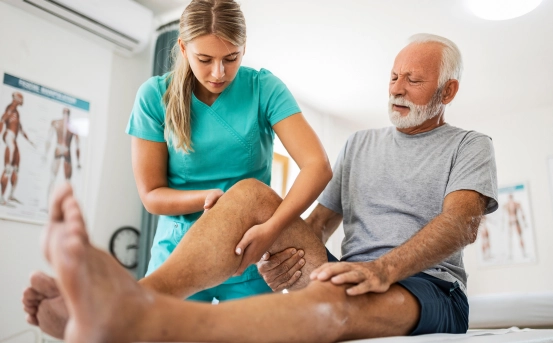
- Physiotherapy and Rehabilitation :- Physiotherapy is crucial for regaining strength, flexibility, and mobility
- Guided exercises to improve knee bending and straightening
- Gradual walking, stair climbing, and balance training
- Muscle strengthening around the knee for stability
- Long-term home exercise plan to maintain joint health
Successful rehabilitation accelerates recovery and improves surgical outcomes.
- Lifestyle Modifications :- Patients are advised to adopt healthy habits to protect the new knee
- Maintain a healthy weight to reduce joint stress
- Avoid high-impact activities immediately after surgery
- Use supportive footwear to enhance balance
- Follow medical advice and attend follow-up appointments
These measures ensure long-term success of knee replacement.
- Pain and Complication Management :- While knee replacement is generally safe, some patients may experience mild pain, swelling, or stiffness
- Pain medications help manage discomfort during the first few weeks
- Ice packs and elevation reduce swelling
- Regular follow-ups help identify and address complications early
Modern techniques and implants minimize long-term risks.
When to See a Doctor
Consult a specialist if
- Pain or swelling persists beyond expected recovery
- Limited movement or stiffness remains after physiotherapy
- Signs of infection appear around the surgical site
- Knee feels unstable or gives way unexpectedly
- Previous conservative treatments are ineffective
Early follow-up ensures proper healing and long-term knee function.
Conclusion
In conclusion, treatment for knee replacement is a comprehensive process that extends beyond surgery itself. Successful outcomes depend on proper patient selection, skilled surgical technique, and dedicated postoperative care. Knee replacement offers long-lasting pain relief and significantly improves joint function for individuals with advanced knee disease. Following surgery, consistent physiotherapy, adherence to rehabilitation programs, and lifestyle adjustments play a vital role in recovery. Early movement helps prevent complications and speeds up healing, while ongoing exercises strengthen muscles and improve balance. Regular follow-up appointments ensure implant stability and overall joint health. With appropriate treatment and commitment to recovery, most patients experience dramatic improvements in mobility, independence, and quality of life. Knee replacement treatment allows individuals to resume daily activities with confidence, reduced pain, and enhanced long-term joint performance.