Introduction
Omphalocele is a rare but serious congenital condition in which an infant is born with abdominal organs such as the intestines, liver, or stomach protruding outside the body through the belly button. These organs remain covered in a thin, protective sac. Since this condition appears at birth, timely diagnosis, careful planning, and proper surgical treatment play a crucial role in ensuring the child’s health and long-term development.
Understanding Omphalocele
An omphalocele occurs when the baby’s abdominal wall does not fully develop during pregnancy. The size of the condition varies some babies may have a small omphalocele containing only a portion of the intestine, while others may have a large defect that includes the liver or other organs. It is commonly detected during prenatal ultrasounds, allowing doctors and parents to plan the appropriate treatment before birth.
Babies with omphalocele often have associated conditions like heart defects, genetic abnormalities, or underdeveloped lungs. Therefore, a multidisciplinary medical team is essential for successful treatment and recovery.
Treatment of Omphalocele Repair
The treatment approach for omphalocele repair depends largely on its size, the baby’s overall health, and the presence of associated medical conditions. The main goal of the surgery is to place the exposed organs back into the abdomen and close the abdominal wall safely. Below are the primary treatment methods used by pediatric surgeons.
- Primary Surgical Repair :- For small omphaloceles, surgeons prefer a primary repair, often performed shortly after birth. Since the defect is small and fewer organs are exposed, the abdomen can usually accommodate them immediately.
How It Works:
- The baby is stabilized after birth.
- Surgeons carefully place the exposed organs back into the abdominal cavity.
- The abdominal wall opening is closed with sutures.
- The sac covering the organs is removed.
Benefits:
- Faster healing
- Lower risk of infection
- Shorter hospital stay
Primary repair is ideal for babies who do not have lung or heart complications.
- Staged Repair (Silo Treatment) :- For moderate to large omphaloceles, immediate closure is not possible because the abdominal cavity is too small to hold the organs all at once. In such cases, surgeons use a staged repair with a device called a silo.
How It Works:
- A sterile mesh-like pouch (silo) is placed over the exposed organs.
- Over several days to weeks, the organs are gradually guided into the abdomen.
- Once all organs are inside, surgeons perform the final closure.
Benefits:
- Prevents pressure on the baby’s organs and lungs
- Allows safe, gradual expansion of the abdomen
- Reduces risk of breathing difficulties
This technique is commonly used for larger defects and babies with underdeveloped lungs.
- Non-Surgical (Conservative) Management :- For very large omphaloceles, especially when the baby’s condition is unstable, doctors sometimes choose non-surgical management first. This involves strengthening the sac covering the organs so it becomes tougher and skin eventually grows over it.
How It Works:
- Special dressings or medications (such as silver nitrate or povidone-iodine) are applied to the sac.
- Over time, the sac becomes firm and skin starts to cover it.
- Surgical closure is planned months or years later when the baby is stronger.
Benefits:
- Less stress on newborn organs
- Allows time for lung growth
- Safer for babies with severe health complications
This approach is commonly known as the “paint and wait” method.
Before the Surgery: Preparing the Baby
Preparation for omphalocele repair begins immediately after birth—or even before, if detected during pregnancy.
Essential Pre-Surgery Care Includes:
- Stabilizing breathing and vital signs
- Preventing infection by covering the sac with sterile material
- Maintaining body temperature
- Providing IV fluids and nutrition
- Evaluating for heart or lung problems
A team of neonatologists, pediatric surgeons, anesthesiologists, and cardiologists work together to plan the safest corrective procedure.
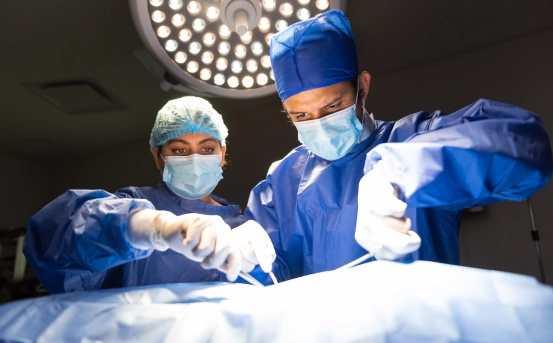
The Surgical Procedure: What Happens in the Operating Room
During the surgery:
- Anesthesia is given to keep the baby comfortable and stable.
- The surgeon gently handles the exposed organs to avoid complications.
- Organs are repositioned into the abdominal cavity with extreme precision.
- The abdominal wall is closed using sutures or mesh (if natural tissue is insufficient).
- The baby is moved to the NICU for monitoring and recovery.
The duration of surgery varies depending on the size of the omphalocele and the baby’s condition.
Post-Surgery Care and Recovery
Recovery from omphalocele repair requires attentive and specialized care in the Neonatal Intensive Care Unit (NICU).
Key Aspects of Post-Operative Care:
- Breathing support: Some babies may need a ventilator temporarily.
- Pain management: Medications are given to ensure comfort.
- Feeding: Initially through IV; later through a feeding tube until the digestive system adjusts.
- Infection prevention: Close monitoring of the surgical site.
- Growth monitoring: Ensuring healthy weight gain and body development.
Most babies need several weeks in the NICU, depending on the severity of the condition.
Possible Risks and Complications
Omphalocele repair is generally successful, but like all major procedures, it may involve some risks.
Common Risks Include:
- Infection at the surgical site
- Breathing difficulties
- Slow bowel movement or feeding intolerance
- Hernias or abdominal wall weakness
- Associated conditions such as heart defects
Early and continuous medical monitoring helps reduce these risks significantly.
Long-Term Outcomes After Omphalocele Repair
Most children treated for small or medium omphaloceles grow up to live healthy lives with minimal complications. Larger defects may require follow-up surgeries and long-term monitoring of abdominal strength, lung function, and digestive health.
Long-Term Care May Include:
- Regular follow-ups with a pediatric surgeon
- Therapy for feeding or developmental issues
- Lifestyle guidance to prevent abdominal strain
- Monitoring for hernias
Overall, early diagnosis, expert surgical care, and proper post-treatment support play the biggest roles in helping children recover fully.
Conclusion
Omphalocele repair is a life-saving treatment that aims to protect the baby’s organs and restore normal abdominal function. With advancements in neonatal surgery and intensive care, survival rates and outcomes have improved dramatically. Whether it involves primary repair, staged treatment, or conservative management, the goal is to ensure the child’s long-term health, development, and quality of life.