Introduction
In today’s world, clear vision is more than a luxury; it’s essential for daily life. While eyeglasses and contact lenses have long been the go-to solutions for vision problems, advancements in laser eye surgery have transformed how people correct refractive errors. One such procedure gaining popularity is Photorefractive Keratectomy (PRK). If you are considering long-term solutions for nearsightedness, farsightedness, or astigmatism, understanding the treatment of PRK surgery is crucial.
What is PRK?
Photorefractive Keratectomy, commonly known as PRK, is a type of laser eye surgery that reshapes the cornea to improve vision. Unlike LASIK, PRK does not involve creating a corneal flap. Instead, the surgeon removes the thin outer layer of the cornea (epithelium) and then uses a laser to precisely reshape the underlying corneal tissue. Over time, the epithelium regenerates, resulting in clearer vision. PRK is particularly suitable for patients with thin corneas, dry eyes, or those at higher risk for eye trauma who may not be ideal candidates for LASIK. While the recovery may be slightly longer compared to LASIK, the procedure has a proven track record of safety and effectiveness.
The PRK Procedure Step by Step
Understanding the PRK process can help patients feel more confident about the treatment. Here’s a detailed look at what happens during PRK:
- Initial Consultation and Eye Assessment :- Before undergoing PRK, patients undergo a comprehensive eye exam. This includes corneal mapping, pupil measurement, and assessment of overall eye health. The surgeon evaluates whether PRK is suitable for correcting your specific vision issues.
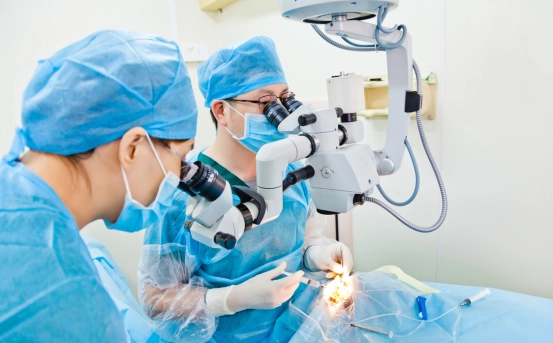
- Preparation for Surgery :- On the day of surgery, the eye is numbed using anesthetic eye drops. Patients are awake during the procedure, which typically takes around 15–30 minutes per eye.
- Removal of the Epithelium :- The surgeon carefully removes the corneal epithelium, either mechanically, chemically, or using a laser. This exposes the underlying corneal tissue, allowing the laser to reshape the cornea accurately.
- Laser Reshaping :- Using an excimer laser, the surgeon reshapes the cornea based on precise measurements taken during the consultation. This step corrects refractive errors, improving the eye’s ability to focus light correctly on the retina.
- Healing and Recovery :- After the procedure, a protective contact lens is placed over the eye to act as a bandage while the epithelium regenerates. Full vision recovery typically occurs within a few weeks, though some patients may notice improvement in a few days.
Benefits of PRK Treatment
PRK offers several advantages over other vision correction methods:
- No Corneal Flap Required :- Unlike LASIK, PRK does not involve creating a corneal flap, reducing the risk of flap-related complications.
- Suitable for Thin Corneas :- Patients with thinner corneas, who may not qualify for LASIK, can undergo PRK safely.
- Long-Term Stability :- PRK provides lasting vision correction, reducing dependence on glasses or contact lenses.
- Lower Risk of Post-Surgery Complications :- The absence of a flap means fewer structural changes to the cornea, which lowers certain surgical risks.
- Effective for Athletes and High-Risk Professions :- Since there’s no flap, PRK is ideal for people prone to eye injuries, including athletes and military personnel.
Recovery and Post-Operative Care
Recovery after PRK is gradual but manageable. Patients can expect the following:
- First Few Days: Mild discomfort, light sensitivity, and blurred vision are common. Prescription eye drops help reduce inflammation and prevent infection.
- First Week: Vision may fluctuate, but improvement is noticeable. Regular follow-ups ensure proper healing.
- First Month: Most patients achieve significant vision clarity. The protective contact lens is removed once the epithelium heals.
- Long-Term Care: Avoid rubbing eyes, follow prescribed medications, and attend all follow-up visits for optimal results.
It is important to note that full visual stabilization can take up to three months. During this period, patients should protect their eyes from UV exposure and maintain good eye hygiene.
Who Can Benefit from PRK?
PRK is effective for individuals with the following vision issues:
- Nearsightedness (Myopia) :- Difficulty seeing distant objects clearly can be corrected with PRK.
- Farsightedness (Hyperopia) :- Trouble focusing on nearby objects can also be treated with precise laser reshaping.
- Astigmatism :- Irregular corneal curvature causing blurred or distorted vision can be corrected with PRK.
PRK is particularly recommended for patients who are not suitable candidates for LASIK due to corneal thickness, dry eyes, or high-risk activities.
Risks and Considerations
While PRK is generally safe, potential risks include:
- Temporary discomfort and blurred vision
- Light sensitivity and glare
- Delayed visual recovery compared to LASIK
- Rare complications like infection or corneal haze
A thorough consultation with a qualified ophthalmologist helps minimize risks and ensures the best outcome.
Conclusion
Photorefractive Keratectomy (PRK) is a safe and effective vision correction procedure suitable for a wide range of patients. While recovery may take longer than LASIK, its long-term benefits, safety profile, and suitability for high-risk eyes make it an excellent choice for those seeking