Introduction
Anterior Cruciate Ligament (ACL) reconstruction surgery is performed to replace a torn ACL and restore stability to the knee. The procedure is not the same for every patient. Orthopedic surgeons choose the surgical method based on factors such as age, activity level, severity of injury, associated damage, and patient goals. The main difference between types of ACL reconstruction lies in the graft used to replace the torn ligament and the surgical technique.
Below are the major types of ACL reconstruction surgery explained in detail.
Types of ACL Reconstruction Surgery
- Autograft ACL Reconstruction :- Autograft reconstruction uses tissue taken from the patient’s own body to create a new ACL. This is the most commonly performed and preferred method, especially for young and active individuals.
Types of Autografts
- Patellar Tendon Autograft (Bone-Patellar Tendon-Bone Graft) :- In this technique, the surgeon removes the middle portion of the patellar tendon along with small pieces of bone from the kneecap (patella) and shinbone (tibia).
Advantages
- Strong and durable graft
- Excellent stability for athletes
- Faster bone-to-bone healing
- Lower risk of graft failure in high-demand activities
Limitations
- Pain in the front of the knee after surgery
- Difficulty kneeling
- Risk of patellar fracture (rare)
This option is often recommended for professional athletes or highly active patients.
- Hamstring Tendon Autograft :- In this method, the surgeon removes one or two hamstring tendons (usually semitendinosus and gracilis) and folds them to create a strong new ligament.
Advantages
- Smaller incision and less postoperative pain
- Less discomfort while kneeling
- Faster recovery of knee movement
- Reduced risk of front knee pain
Limitations
- Slightly slower graft healing compared to bone grafts
- Possible mild hamstring weakness
This is a popular choice for young adults and moderately active individuals.
- Quadriceps Tendon Autograft :- This technique uses a portion of the quadriceps tendon, sometimes along with a small bone piece from the kneecap.
Advantages
- Strong and thick graft
- Less anterior knee pain than patellar graft
- Good option for revision surgery
Limitations
- Temporary weakness in thigh muscles
- Less commonly used than other grafts
This method is often chosen for revision ACL surgery or patients with previous graft issues.
- Allograft ACL Reconstruction : –Allograft reconstruction uses donor tissue obtained from a tissue bank. The graft may come from the patellar tendon, Achilles tendon, or other soft tissues.
Advantages
- No need to remove tissue from the patient’s body
- Shorter surgery time
- Smaller incisions and less postoperative pain
- Faster early recovery
Limitations
- Slightly higher risk of graft failure in young or active patients
- Slower graft incorporation into the body
- Very minimal risk of disease transmission (rare due to screening)
Allografts are commonly recommended for:
- Older patients
- People with lower activity levels
- Patients undergoing revision surgery
- Those who want a less invasive procedure
- Single-Bundle ACL Reconstruction :- The natural ACL consists of two bundles (anteromedial and posterolateral). In single-bundle reconstruction, the surgeon replaces the ligament with one graft positioned to replicate the main function of the ACL.
Advantages
- Technically simpler and widely performed
- Reliable long-term outcomes
- Shorter surgical time
Limitations
- May not fully restore rotational stability in some high-demand athletes
This is the standard and most commonly performed ACL reconstruction technique.
- Double-Bundle ACL Reconstruction :- This advanced technique reconstructs both bundles of the ACL separately to more closely mimic natural anatomy.
Advantages
- Better rotational stability
- More natural knee movement
- Potentially improved performance for athletes
Limitations
- More complex surgery
- Longer operative time
- Not suitable for all patients due to bone size and anatomy
Double-bundle reconstruction is usually considered for young athletes or individuals involved in high-level sports.
- Revision ACL Reconstruction :- Revision surgery is performed when a previous ACL reconstruction fails due to graft re-tear, improper healing, or persistent instability.
Features
- Careful evaluation of previous surgery
- Removal of old graft and hardware if necessary
- Use of a different graft type (often quadriceps tendon or allograft)
- Correction of bone tunnel placement if required
Revision procedures are more complex and require experienced orthopedic surgeons.
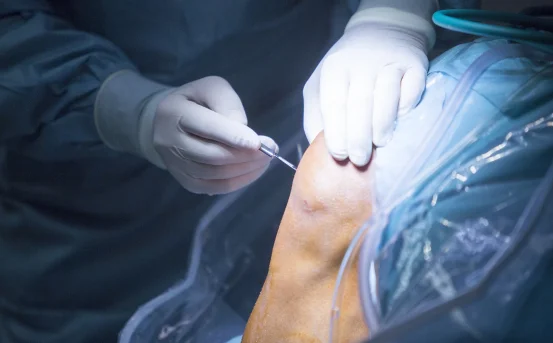
- Arthroscopic ACL Reconstruction :- Regardless of graft type, most modern ACL surgeries are performed using arthroscopy, a minimally invasive technique.
Procedure Overview
- Small incisions are made around the knee
- A camera (arthroscope) is inserted
- Surgical instruments are used to prepare bone tunnels
- The graft is placed and fixed using screws or other devices
Advantages
- Less tissue damage
- Reduced pain and swelling
- Faster recovery
- Minimal scarring
Arthroscopic surgery has become the gold standard for ACL reconstruction.
Choosing the Right Type of ACL Surgery
The best surgical option depends on several factors, including:
- Age and overall health
- Activity level and sports involvement
- Occupation and lifestyle
- Severity of ligament damage
- Associated injuries (meniscus, cartilage)
- Previous knee surgeries
- Surgeon’s expertise
A detailed evaluation by an orthopedic specialist helps determine the most suitable graft and technique for long-term success.
Conclusion
There are several types of ACL reconstruction surgery, each designed to restore knee stability and function based on individual needs. Options include autografts such as patellar, hamstring, or quadriceps tendons, as well as allografts from donor tissue. Surgical techniques like single-bundle, double-bundle, and revision reconstruction further tailor the procedure to the patient’s condition and activity level. With modern arthroscopic methods and personalized treatment planning, ACL reconstruction offers excellent outcomes, helping patients return to daily activities and sports safely and confidently.