Introduction
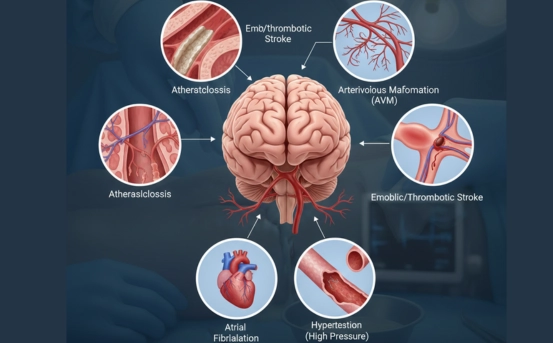
Cerebrovascular disorders are conditions that affect the blood vessels supplying the brain. These disorders such as aneurysms, strokes, arteriovenous malformations (AVMs), or carotid artery disease can lead to serious complications if not treated on time. Modern neurosurgery offers a wide range of advanced surgical and minimally invasive techniques to restore blood flow, prevent bleeding, and protect the brain from permanent damage.
What Are Cerebrovascular Disorder Surgeries?
Cerebrovascular surgeries involve treating abnormal or damaged blood vessels in the brain. These procedures aim to:
- Stop or prevent bleeding inside the brain
- Remove blockages or clots
- Repair weakened or abnormal arteries and veins
- Restore normal blood flow
- Lower the risk of stroke or recurrent stroke
Depending on the condition, surgeons may use open brain surgery, endovascular (minimally invasive) procedures, or hybrid techniques combining both.
Types of Cerebrovascular Disorder Surgery
- Aneurysm Clipping Surgery :- A brain aneurysm is a bulging or ballooning of a weakened artery wall. If it ruptures, it can cause a life-threatening brain bleed. Aneurysm clipping is a well-established surgery to prevent rupture or rebleeding.
How Aneurysm Clipping Works
A neurosurgeon makes an opening in the skull, locates the aneurysm, and places a tiny metal clip at its base. This clip blocks blood from entering the aneurysm, preventing further growth or rupture.
Benefits of Aneurysm Clipping
- Permanent closure of the aneurysm
- Ideal for large or complex aneurysms
- Lower risk of recurrence compared to some other treatments
- Highly effective for younger patients
When It’s Recommended
- For ruptured aneurysms
- For aneurysms located in specific areas of the brain
- When endovascular options are not suitable
- Endovascular Coiling :- Endovascular coiling is a minimally invasive alternative to open aneurysm surgery. It is one of the most common treatments for brain aneurysms today.
How It Works
A specialist inserts a thin catheter through the groin or wrist and guides it to the brain’s blood vessel. Soft platinum coils are placed inside the aneurysm sac, causing it to clot and seal off from the bloodstream.
Benefits
- No need for open skull surgery
- Faster recovery
- Lower postoperative discomfort
- Suitable for high-risk or elderly patients
When Recommended
- For small to medium aneurysms
- For patients who cannot undergo open surgery
- For aneurysms deep in the brain
- Carotid Endarterectomy :- Carotid arteries supply blood to the brain. When they become narrowed due to plaque buildup, it increases the risk of stroke. Carotid endarterectomy is a surgery to remove plaque and restore proper blood flow.
How It Works
A surgeon makes an incision in the neck, opens the carotid artery, and removes plaque deposits. The artery is then repaired and blood flow returns to normal.
Benefits
- Highly effective in preventing stroke
- Durable, long-term results
- Recommended for patients with significant artery narrowing
Ideal Candidates
- Those with severe carotid artery stenosis (narrowing)
- Patients who had a minor stroke or TIA (mini stroke)
- Carotid Artery Stenting :- Carotid stenting is a less invasive alternative to endarterectomy and is done using endovascular techniques.
How It Works
A catheter is inserted into the artery and a mesh-like stent is placed to widen the narrowed section. This improves blood flow and prevents the artery from narrowing again.
Benefits
- No neck incision
- Shorter hospital stay
- Suitable for patients who are not fit for surgery
When Recommended
- For patients with high surgical risk
- In cases of recurrent carotid stenosis
- Arteriovenous Malformation (AVM) Surgery :- An AVM is a tangled network of blood vessels that can rupture and cause bleeding in the brain. Surgery is often advised to prevent life-threatening hemorrhage.
Types of AVM Treatments
- Microsurgical Resection:- The surgeon removes the AVM completely through open surgery. Recommended for small-to-medium AVMs located in accessible regions.
- Endovascular Embolization :- A catheter injects glue-like material into AVM vessels to block blood flow. Often used before surgery or radiosurgery.
- Stereotactic Radiosurgery (Gamma Knife) :- A focused beam of radiation shrinks the AVM over time, ideal for small or deep AVMs.
Benefits
- Reduces risk of brain bleed
- Complete cure possible depending on size and location
- Mechanical Thrombectomy for Stroke :- This is a life-saving procedure performed for ischemic stroke caused by a large vessel blockage.
How It Works
Using a catheter, doctors guide a special stent retriever or suction device to physically remove the clot from the blocked artery.
Benefits
- Rapid restoration of blood flow
- Higher chances of recovery
- Reduced brain damage
- Effective when given within 24 hours of stroke symptoms
- Cerebral Bypass Surgery :- Cerebral bypass is similar to heart bypass but performed in the brain.
How It Works
A surgeon connects a blood vessel from outside the skull to a brain artery. This creates a new pathway for blood to reach areas that lack proper supply.
Benefits
- Prevents repeated strokes
- Helps in conditions like Moyamoya disease
- Improves blood supply to affected brain tissue
Conclusion
Cerebrovascular disorder surgeries play a crucial role in preventing strokes, repairing damaged blood vessels, and preserving brain function. With advancements in neurosurgery and endovascular techniques, patients today have access to safer, faster, and highly effective treatment options. If you or your loved one has been diagnosed with a cerebrovascular condition, early consultation with a neurosurgeon is essential.