Introduction
Gastrostomy is a medical procedure where a small opening is created directly into the stomach to allow feeding, medication delivery, or stomach decompression when oral intake is not possible. It is commonly recommended for patients with neurological disorders, swallowing difficulties, long-term critical illness, or certain cancers affecting the mouth or throat. Because each patient’s condition is unique, doctors choose from several types of gastrostomy procedures based on the clinical need, duration of feeding support, and overall health condition.
What Is Gastrostomy?
Gastrostomy involves inserting a feeding tube (called a G-tube) into the stomach through the abdominal wall. This tube helps ensure proper nutrition, hydration, and medication administration when swallowing is unsafe or impossible. A gastrostomy tube can be temporary or long-term, depending on the patient’s medical needs.
Various techniques are used to place the tube, each offering its own benefits. The major types of gastrostomy include
- Percutaneous Endoscopic Gastrostomy (PEG)
- Radiologically Inserted Gastrostomy (RIG)
- Surgically Placed Gastrostomy
- Button Gastrostomy (Low-Profile Devices)
Types of Gastrostomy
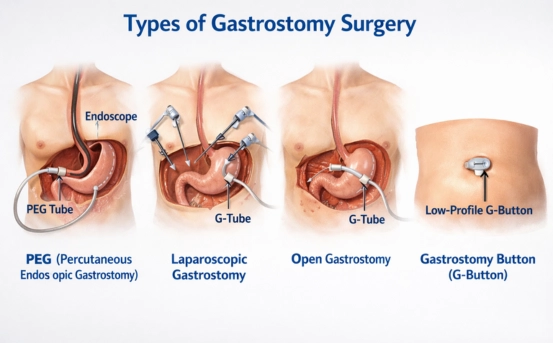
- Percutaneous Endoscopic Gastrostomy (PEG) :- Percutaneous Endoscopic Gastrostomy (PEG) is the most common and widely used type of gastrostomy. It is performed using an endoscope, a flexible tube with a camera which allows the doctor to view the stomach from the inside while guiding the placement of the G-tube. A small incision is made on the abdomen, and the tube is inserted under endoscopic guidance. Because only tiny cuts are made, PEG is considered a minimally invasive procedure.
Advantages
- Quick procedure, usually 20–30 minutes
- Performed under sedation, not general anesthesia
- Lower risk of complications
- Faster recovery time
- Often done on an outpatient basis
Ideal Candidates :- PEG is recommended for patients who need long-term enteral feeding due to stroke, neurological disorders, or head and neck cancers, provided their anatomy allows safe endoscopic access.
- Radiologically Inserted Gastrostomy (RIG) :- Radiologically Inserted Gastrostomy (RIG), also known as Percutaneous Radiologic Gastrostomy (PRG), is performed using imaging techniques such as fluoroscopy or ultrasound instead of an endoscope. This approach is especially useful for patients who cannot undergo endoscopy safely. Contrast dye is used to visualize the stomach on imaging. The stomach is then accessed through the abdominal wall, and the tube is guided into position using X-ray or ultrasound.
Advantages
- Ideal for patients with obstructed throat, esophageal cancer, or impaired airway
- No need for endoscope insertion through the mouth
- Minimally invasive with quick postoperative recovery
Ideal Candidates :- Patients with tumors or structural abnormalities of the upper digestive tract, or those who cannot tolerate endoscopy, benefit most from RIG.
- Surgical Gastrostomy (Open or Laparoscopic) :- Surgical gastrostomy involves placing a feeding tube directly into the stomach through a more traditional surgical approach. It can be done using open surgery or laparoscopy, depending on the patient’s condition and the surgeon’s recommendation.
Types of Surgical Gastrostomy
- Open Surgical Gastrostomy :- A single larger incision is made. This method is often used for patients already undergoing abdominal surgery.
- Laparoscopic Gastrostomy :- A minimally invasive method using small keyhole incisions and a camera.
Advantages
- Suitable for patients with complex anatomy
- Allows direct visualization of the stomach and surrounding organs
- Can be performed when PEG or RIG is not feasible
Ideal Candidates :- Patients requiring abdominal surgery for other reasons, or those with severe anatomical abnormalities, may benefit most from surgical gastrostomy.
- Button Gastrostomy (Low-Profile Gastrostomy Devices) :- Button gastrostomy, also known as a “low-profile device,” is a shorter and more discreet version of a traditional G-tube. It sits flush against the skin and is often preferred for long-term use. A button gastrostomy is usually placed after a PEG tube has been used for some time. Once the opening (stoma) has healed, the longer G-tube is replaced with a low-profile button device.
Advantages
- More comfortable and less visible
- Reduced risk of accidental pulling
- Easier for active individuals, including children
- Allows detachable feeding extensions only during feedings
Ideal Candidates :- Patients requiring long-term or permanent feeding support, particularly children or adults with active lifestyles, often prefer a button G-tube.
Choosing the Right Type of Gastrostomy
Selecting the appropriate type of gastrostomy depends on several factors, including
- Patient’s medical condition
- Duration of feeding support required
- Ability to tolerate endoscopy
- Presence of anatomical issues
- Risk factors and overall health
Doctors evaluate all these aspects before recommending the safest and most effective gastrostomy option.
Potential Risks and Recovery
While gastrostomy procedures are generally safe, potential risks may include infection, bleeding, or tube displacement. Recovery usually involves monitoring the incision site, managing tube care, and learning feeding techniques. Most patients can resume regular activities within a few days. Proper care of the gastrostomy tube, regular cleaning of the stoma, and timely follow-ups help ensure long-term success and prevent complications.
Conclusion
Understanding the different types of gastrostomy helps patients and caregivers make informed decisions about enteral feeding support. Whether it is PEG, RIG, surgical gastrostomy, or a button device, each method offers unique advantages tailored to specific medical needs. With modern minimally invasive techniques, gastrostomy has become safer, quicker, and more comfortable than ever.