Introduction
Gynecomastia commonly known as enlarged male breast tissue is a growing concern among men of all ages. Whether caused by hormonal imbalance, weight fluctuations, genetics, medications, or lifestyle factors, this condition can affect confidence, posture, and overall quality of life. Thankfully, modern gynecomastia surgery offers safe and effective solutions to achieve a flatter, firmer, and more masculine chest shape.
What Is Gynecomastia Surgery?
Gynecomastia surgery is a cosmetic procedure designed to reduce excess breast tissue, fat, and skin in men. The surgery aims to create a sculpted chest contour by removing glandular tissue (true gynecomastia), fatty tissue (pseudogynecomastia), or both.
Depending on the severity and composition of your chest area, surgeons use one or a combination of advanced surgical techniques. Choosing the right technique ensures better results, minimal scarring, and a quick recovery.
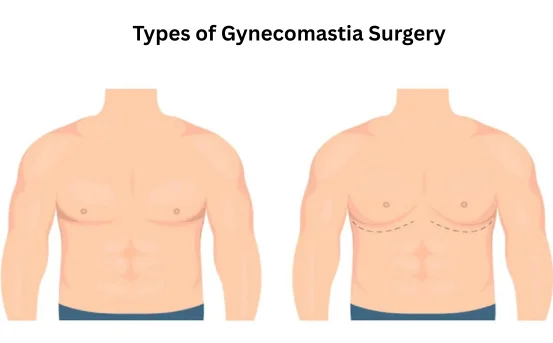
Types of Gynecomastia Surgery
Different grades and causes of gynecomastia require different surgical approaches. Below are the most widely performed and medically approved types of gynecomastia surgery.
- Liposuction Technique
Best for: Fat-dominant gynecomastia (pseudogynecomastia)
Liposuction is one of the most common and minimally invasive procedures used in mild to moderate gynecomastia where excess fat is the primary issue. In this technique, the surgeon makes tiny incisions near the chest crease and inserts a thin cannula to break down and suction out the fat.
Advantages of Liposuction Surgery
- Minimal scarring
- Shorter recovery time
- Natural-looking chest contour
- Suitable for many patients
It is ideal when breast enlargement is caused mostly by fatty deposits rather than glandular tissue. Liposuction provides excellent chest sculpting and is often combined with gland removal for best results.
- Excision Technique
Best for: Gland-dominant gynecomastia
When the enlargement is due to hard glandular tissue, liposuction alone may not be enough. In such cases, the excision technique is used, where the surgeon removes the firm gland directly through a small incision usually around the areola.
Benefits of Excision Surgery
- Precise removal of dense breast tissue
- Effective for severe gynecomastia cases
- Allows nipple repositioning (if required)
- Ensures a flatter and more defined chest
This method is ideal for men with long-standing or genetically firm glandular enlargement. Excision ensures complete tissue removal and long-term correction.
- Combination Surgery (Liposuction + Gland Excision)
Best for: Most gynecomastia cases (Grade 2 & Grade 3)
Many men have both fat and gland tissue contributing to chest enlargement. Combination gynecomastia surgery uses both liposuction and excision together to achieve the best aesthetic results.
Why Combination Surgery Works Best
- Removes both fat and gland for total correction
- Enhances chest shape and symmetry
- Reduces risk of recurrence
- Gives the most natural male chest contour
This is by far the most commonly recommended approach because it offers comprehensive correction, especially when the chest has mixed tissue composition.
- Skin Excision / Chest Lift Surgery
Best for: Severe gynecomastia with excess or sagging skin (Grade 3 & Grade 4)
In advanced gynecomastia, especially after massive weight loss, the chest may have stretched or loose skin. In such cases, surgeons perform skin excision, which involves removing extra skin and lifting the chest to restore firmness.
Key Advantages
- Tightens loose or sagging chest skin
- Restores chest firmness and masculine contour
- Can reposition the nipple-areola complex
Although this procedure leaves more visible scars compared to other techniques, the results are transformative for men with severe chest sagging.
- Laser-Assisted Gynecomastia Surgery
Best for: Mild to moderate gynecomastia with fat dominance
Laser-assisted lipolysis (LAL) uses controlled laser energy to melt fat, tighten the skin, and improve chest contour. It is minimally invasive and involves tiny incisions.
Benefits
- Faster recovery
- Less post-operative swelling
- Better skin tightening compared to traditional liposuction
Laser-assisted surgery is becoming popular for patients wanting a quicker recovery and enhanced skin tightening.
- Vaser Gynecomastia Surgery
Best for: High-definition chest contouring
Vaser (Ultrasound-Assisted Liposuction) is a technology-driven method that targets fat cells with ultrasound waves, making them easier to remove without damaging surrounding tissues.
Advantages
- High-definition sculpting for athletic chest look
- Minimal bleeding
- Better skin contraction
- Suitable for mild to moderate cases
This technique is especially preferred by fitness-conscious individuals looking for a leaner, sharper chest contour.
Which Type of Gynecomastia Surgery Is Right for You?
The best surgical approach depends on factors like:
- Type of tissue: fat, gland, or both
- Grade of gynecomastia
- Skin elasticity
- Body type and chest shape
- Patient goals
A qualified cosmetic surgeon evaluates these factors and recommends a customized treatment plan to help you achieve natural, long-lasting results.
Conclusion
Understanding the types of gynecomastia surgery helps you make a confident, informed decision. Whether you need liposuction, gland excision, a combination technique, laser-assisted correction, or skin tightening surgery, today’s advanced procedures offer safe, reliable, and highly successful outcomes.
If you’re considering Gynecomastia Surgery, consulting a certified plastic surgeon is the first step toward restoring your confidence and achieving the masculine chest you desire.