Introduction
The hepatobiliary system includes the liver, gallbladder, bile ducts, and pancreas organs responsible for digestion, detoxification, and essential metabolic functions. When diseases such as tumors, cysts, infections, gallstones, or bile duct obstructions affect this system, specialized surgical procedures become necessary. Hepatobiliary surgery is a highly advanced field focused on treating complex conditions with precision, often using minimally invasive or robotic-assisted techniques that improve recovery and reduce complications.
Types of Hepatobiliary Surgery
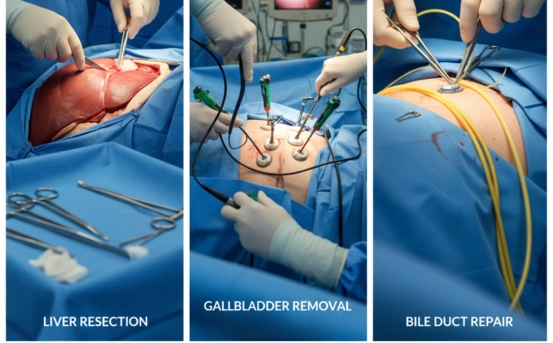
- Liver Resection (Hepatectomy) :- Liver resection, also known as hepatectomy, is one of the most common hepatobiliary surgeries. It involves removing a portion of the liver affected by tumors, cysts, or other diseases. Since the liver has the natural ability to regenerate, removing a diseased segment allows healthy liver tissue to grow back and take over normal function.
When It Is Needed
- Liver cancer (hepatocellular carcinoma)
- Metastatic liver tumors (spread from colon or other cancers)
- Benign liver tumors like adenomas or hemangiomas
- Liver abscesses or cysts that do not respond to treatment
- Trauma-related liver damage
Types of Liver Resection
- Partial Hepatectomy: Removal of a small liver segment.
- Lobectomy: Removal of an entire lobe of the liver.
- Segmentectomy: Removing specific liver segments based on anatomy.
- Extended Hepatectomy: Larger resections for extensive tumors.
Advanced methods such as laparoscopic and robotic liver resection are becoming popular due to smaller incisions, less pain, and faster recovery.
- Gallbladder Removal (Cholecystectomy) :- Cholecystectomy is the surgical removal of the gallbladder, most commonly performed to treat gallstones. It is one of the safest and most frequently performed surgeries worldwide.
When It Is Needed
- Symptomatic gallstones
- Gallbladder inflammation (cholecystitis)
- Polyps in the gallbladder
- Pancreatitis triggered by gallstones
- Gallbladder dysfunction
Types of Cholecystectomy
- Laparoscopic Cholecystectomy: Gold standard; minimally invasive with quick recovery.
- Robotic Cholecystectomy: Enhanced precision using robotic tools.
- Open Cholecystectomy: Required in complex or emergency cases.
Most patients resume daily activities within a few days after laparoscopic removal.
- Bile Duct Surgery :- The bile ducts carry bile from the liver to the small intestine. Any blockage or damage can affect digestion and cause severe complications such as jaundice or infection.
Common Conditions Treated
- Bile duct stones (choledocholithiasis)
- Bile duct strictures (narrowing)
- Bile duct injuries from previous surgeries
- Cholangiocarcinoma (bile duct cancer)
- Congenital abnormalities like choledochal cysts
Types of Bile Duct Surgeries
- Bile Duct Exploration: Removal of stones causing obstruction.
- Biliary Reconstruction: Repair of damaged or narrow ducts.
- Roux-en-Y Hepaticojejunostomy: Creating a new connection between the bile duct and the intestine.
- Bile Duct Resection: Removal of cancerous or diseased ducts.
In many cases, endoscopic techniques are used, reducing the need for major surgery.
- Pancreatic Surgery (Part of Hepatobiliary System) :- Because the pancreas shares ducts with the liver and gallbladder, pancreatic surgeries are often included in hepatobiliary procedures.
Common Reasons for Pancreatic Surgery
- Pancreatic tumors (benign or malignant)
- Chronic pancreatitis
- Pancreatic cysts
- Trauma or injury to the pancreas
Types of Pancreatic Surgeries
- Whipple Procedure (Pancreaticoduodenectomy) :- A complex surgery used to treat pancreatic head cancer and bile duct tumors.
- Distal Pancreatectomy :- Removal of the tail or body of the pancreas.
- Total Pancreatectomy :- Complete removal of the pancreas in rare cases.
- Pancreatic Cyst Drainage :- Draining or removing symptomatic cysts.
These surgeries require high expertise and are typically performed in advanced hepatobiliary centers.
- Liver Transplant :- Liver transplantation is a life-saving procedure for patients with end-stage liver disease or certain types of liver cancer. It involves replacing a diseased liver with a healthy one from a donor.
When It Is Needed
- Cirrhosis
- Acute liver failure
- Hepatocellular carcinoma
- Genetic metabolic diseases
Types of Liver Transplants
- Deceased Donor Transplant: Liver from a brain-dead donor.
- Living Donor Transplant: A portion of the liver taken from a living donor.
- Split Liver Transplant: Dividing one donor liver for two recipients.
Post-transplant recovery includes lifelong medication and regular follow-up.
- Minimally Invasive Hepatobiliary Surgery :- Thanks to technological advancements, many hepatobiliary surgeries can now be performed using minimally invasive techniques.
Methods Used
- Laparoscopy
- Robotic Surgery
- Endoscopic retrograde cholangiopancreatography (ERCP)
- Image-guided ablation (RFA, microwave ablation)
Benefits
- Smaller incisions
- Reduced pain
- Shorter hospital stay
- Faster return to normal activities
These options are preferred whenever possible due to patient comfort and improved recovery outcomes.
- Ablation Therapies for Liver Tumors :- Ablation is a non-surgical treatment used especially for small liver tumors in patients who cannot undergo resection.
Types of Ablation Techniques
- Radiofrequency Ablation (RFA): Uses heat to destroy tumor cells.
- Microwave Ablation: Delivers stronger, quicker heat energy.
- Cryoablation: Freezes cancer cells.
- Alcohol Injection Therapy: Injecting ethanol into the tumor.
Ablation is effective for small tumors and often used alongside other treatments.
- Portal Hypertension Surgeries :- Portal hypertension occurs when the pressure in the portal vein increases, usually due to cirrhosis. Surgery becomes essential when medication or non-invasive treatments fail.
Common Surgeries
- Portosystemic Shunts: Redirecting blood to reduce vein pressure.
- Devascularization Procedures: Removing or tying off varices to prevent bleeding.
- Splenectomy: Removing the spleen when enlarged due to portal hypertension.
These procedures prevent complications like internal bleeding and improve quality of life.
Conclusion
Hepatobiliary surgery is a highly specialized area that includes a broad range of procedures on the liver, gallbladder, bile ducts, and pancreas. From common surgeries such as gallbladder removal to complex operations like liver transplants and Whipple procedures, each type is designed to treat specific diseases and restore healthy organ function.
With the rise of minimally invasive and robotic techniques, patients today experience safer surgeries, faster recovery, and improved outcomes. If you or someone you know is dealing with hepatobiliary issues, consulting an experienced specialist is essential for accurate diagnosis and the right surgical plan.