Introduction
Hysteroscopy is a minimally invasive procedure that allows doctors to examine the inside of the uterus using a thin, lighted tube called a hysteroscope. This procedure is widely used for both diagnostic and therapeutic purposes, helping in identifying and treating various uterine problems. Hysteroscopy is safe, effective, and often eliminates the need for more invasive surgeries. Here will understand about the types of hysteroscopy.
What is Hysteroscopy?
Hysteroscopy is a medical procedure performed to look inside the uterine cavity. It helps in diagnosing abnormal uterine bleeding, fibroids, polyps, adhesions, and other uterine conditions. During a hysteroscopy, the doctor inserts a hysteroscope through the vagina and cervix into the uterus. This allows for a clear view of the uterine lining and can be used to perform minor surgical procedures. Hysteroscopy is generally safe, with minimal risks and a quick recovery time compared to traditional surgery.
Types of Hysteroscopy
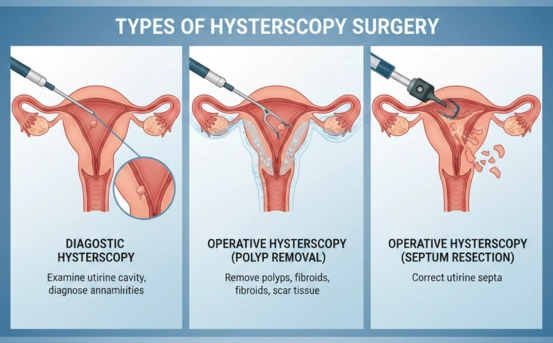
Hysteroscopy can be broadly categorized based on the purpose of the procedure: diagnostic hysteroscopy and operative hysteroscopy. Each type serves a specific function and is chosen based on the patient’s condition.
- Diagnostic Hysteroscopy :- Diagnostic hysteroscopy is primarily performed to investigate problems inside the uterus. It is a minimally invasive way to examine the uterine cavity without performing major surgery. The main purposes of diagnostic hysteroscopy include:
- Investigating abnormal bleeding – Women experiencing heavy menstrual bleeding or postmenopausal bleeding may undergo this procedure to determine the cause.
- Identifying uterine abnormalities – It helps detect polyps, fibroids, adhesions (Asherman’s syndrome), or congenital uterine anomalies.
- Evaluating infertility issues – In cases of unexplained infertility or recurrent miscarriages, diagnostic hysteroscopy can help assess the uterine cavity for structural problems.
This type of hysteroscopy uses a thin, flexible hysteroscope that allows the doctor to inspect the uterine lining in real-time. It is usually performed under local anesthesia, sedation, or light general anesthesia depending on the patient’s comfort and the complexity of the procedure.
- Operative Hysteroscopy :- Operative hysteroscopy is performed when a therapeutic intervention is required inside the uterus. Unlike diagnostic hysteroscopy, it allows the doctor to not only view the uterine cavity but also perform surgical procedures simultaneously. Common procedures include:
- Removal of uterine polyps – Polyps are growths on the inner uterine wall that may cause bleeding or fertility issues. Operative hysteroscopy allows their removal without open surgery.
- Fibroid removal – Small to medium-sized fibroids can be removed during hysteroscopy, reducing symptoms like heavy bleeding or pain.
- Adhesion treatment – In cases of uterine adhesions, operative hysteroscopy helps to cut and remove scar tissue, improving fertility outcomes.
- Septum resection – Some women are born with a septum (a partition in the uterus) that can cause miscarriages; hysteroscopic surgery can correct this defect.
- Endometrial ablation – This procedure helps treat heavy menstrual bleeding by removing or destroying the uterine lining.
Operative hysteroscopy generally requires anesthesia and specialized instruments like scissors, electrosurgical devices, or laser tools that can be passed through the hysteroscope.
- Office Hysteroscopy :- Office hysteroscopy is a modern variation that is increasingly popular due to its convenience. It is performed in an outpatient setting without the need for full anesthesia, allowing patients to return home the same day. Key features of office hysteroscopy include:
- No hospital stay – The procedure is quick and often completed within 15-30 minutes.
- Minimally invasive – A thin, flexible hysteroscope is used, reducing discomfort and recovery time.
- Diagnostic and minor therapeutic procedures – Small polyps or minor adhesions can be treated immediately during office hysteroscopy.
- Patient-friendly approach – It is less intimidating for patients, with minimal pain and fewer complications.
Office hysteroscopy is ideal for women who need a quick diagnostic evaluation or minor surgical intervention without undergoing full operative hysteroscopy in a hospital setting.
- Operative Hysteroscopy Under General Anesthesia :- Some complex uterine conditions require a more controlled environment and complete anesthesia. In these cases, operative hysteroscopy is performed under general anesthesia in a hospital operating room. This allows the doctor to:
- Remove large fibroids or multiple polyps
- Treat severe uterine adhesions
- Perform complicated reconstructive procedures
- Ensure complete patient comfort during longer procedures
This type of hysteroscopy may require a brief hospital stay depending on the complexity of the surgery. It is highly effective for women with severe uterine abnormalities or those who have not benefited from simpler hysteroscopic procedures.
- Hysteroscopic Myomectomy :- Hysteroscopic myomectomy is a specialized type of operative hysteroscopy focused on the removal of fibroids (myomas) from inside the uterus. Fibroids are non-cancerous growths that can cause heavy bleeding, pelvic pain, and fertility issues. Hysteroscopic myomectomy involves:
- Inserting a hysteroscope into the uterine cavity
- Using surgical tools or laser devices to cut and remove fibroids
- Minimizing damage to surrounding tissue for faster recovery
This procedure is highly effective, preserves the uterus, and is often preferred over open surgery for eligible patients.
Benefits of Hysteroscopy
Hysteroscopy, regardless of type, offers several benefits over traditional surgical methods:
- Minimally invasive :- Reduced pain, bleeding, and scarring compared to open surgery.
- Quick recovery :- Most women resume normal activities within 24-48 hours.
- Accurate diagnosis :- Direct visualization provides a precise assessment of uterine conditions.
- Immediate treatment :- Many therapeutic procedures can be performed during the same session.
- Fertility-friendly :- Preserves the uterus, improving chances for conception.
Conclusion
Hysteroscopy is a versatile procedure that has transformed the diagnosis and treatment of uterine problems. Understanding the different types of hysteroscopy—diagnostic, operative, office-based, general anesthesia-based, and hysteroscopic myomectomy helps patients make informed decisions with their healthcare providers. Whether for investigation, treatment, or both, hysteroscopy offers a safe, effective, and minimally invasive option to manage various gynecological conditions.