





Introduction
Mastoidectomy is a critical ear surgery performed to remove infected mastoid air cells located behind the ear. These cells may get damaged due to chronic ear infections, cholesteatoma, or other middle-ear conditions. Understanding the different types of mastoidectomy surgery helps patients and caregivers make better treatment decisions.
What Is Mastoidectomy?
A mastoidectomy is a surgical procedure designed to remove diseased or infected cells from the mastoid bone, which is part of the temporal bone behind the ear. The mastoid contains air-filled spaces that can get inflamed due to repeated infections, leading to severe complications if untreated. Mastoidectomy helps prevent:
- Persistent ear infections
- Hearing loss
- Spread of infection to surrounding bones
- Formation of cholesteatoma (abnormal skin growth)
Doctors usually recommend this surgery when medication no longer works or when a cholesteatoma threatens ear structures.
Types of Mastoidectomy Surgery
There are several types of mastoidectomy procedures, each performed based on the severity of infection, presence of cholesteatoma, and hearing condition. The main types include:
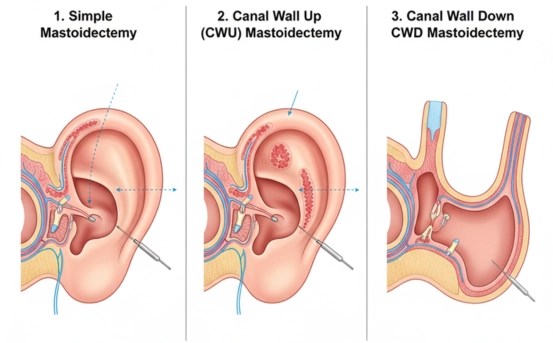
- Simple Mastoidectom :- A simple mastoidectomy, also called closed mastoidectomy, is the most basic form of the surgery. During this procedure, the surgeon removes the infected mastoid air cells while keeping the bony wall between the mastoid and ear canal intact.
When is it recommended?
- Persistent mastoid infections
- Early-stage cholesteatoma
- Chronic otitis media not responding to treatment
Benefits:
- Preserves the natural ear structure
- Faster recovery
- Less long-term care required
Simple mastoidectomy is ideal for patients whose ear disease has not spread extensively and can be treated without altering the ear canal structure.
- Radical Mastoidectomy :- A radical mastoidectomy is a more extensive surgery used in severe or long-standing infections. In this procedure, the surgeon removes the mastoid air cells, the posterior ear canal wall, and sometimes the middle ear structures to create a single open cavity.
When is it recommended?
- Advanced cholesteatoma
- Severe ear infections spreading inside the bone
- Cases where hearing mechanism is already damaged
Benefits:
- Eliminates widespread disease
- Prevents life-threatening complications
- Long-term control of chronic ear infection
This type is usually chosen when preserving hearing is not possible because the infection has already damaged the ear deeply.
- Modified Radical Mastoidectomy :- A modified radical mastodiectomy is a balance between simple and radical procedures. It involves removing infected mastoid cells and the canal wall but preserving as much of the middle ear hearing mechanism as possible.
When is it recommended?
- Extensive cholesteatoma but with some hearing preserved
- Recurring chronic otitis media
- When disease affects both the mastoid and middle ear
Benefits:
- Better hearing preservation than radical surgery
- Complete disease removal
- Reduced risk of future recurrences
This approach allows surgeons to clear the infection effectively while still maintaining important hearing structures.
- Canal Wall Down Mastoidectomy (CWD) :- In Canal Wall Down Mastoidectomy, the surgeon removes the posterior canal wall, creating an open cavity that connects the ear canal and mastoid. It is often performed for significant cholesteatoma or recurring infections.
When is it recommended?
- Large or aggressive cholesteatoma
- Recurrent ear discharge
- Repeated failures of previous ear surgeries
Benefits:
- Better visibility and access for removing disease
- Low chance of recurrence
- Safe option for complicated infections
Patients may need periodic cleaning of the cavity, but overall, CWD offers excellent long-term infection control.
- Canal Wall Up Mastoidectomy (CWU) :- In Canal Wall Up Mastoidectomy, the surgeon preserves the ear canal wall. This keeps the natural ear anatomy intact while removing the diseased mastoid cells.
When is it recommended?
- Smaller cholesteatoma
- When hearing preservation is a priority
- Children requiring long-term ear development
Benefits:
- More natural ear canal structure
- Better hearing outcomes
- Quicker recovery compared to CWD
However, CWU may require a follow-up “second-look” surgery to ensure no cholesteatoma has returned.
How Surgeons Choose the Right Type
The ideal type of mastoidectomy surgery depends on several factors:
- Degree of infection or cholesteatoma
- Patient’s hearing condition
- Previous surgeries
- Age and overall health
- Risk of recurrence
ENT specialists evaluate CT scans, hearing tests, and infection history before selecting the appropriate procedure.
Recovery After Mastoidectomy
Recovery varies depending on the type of surgery. Most patients experience mild discomfort, drainage, or dizziness for a few days. Full healing may take weeks. Key aftercare steps include:
- Keeping the ear dry
- Using prescribed ear drops
- Avoiding heavy lifting
- Regular ENT follow-up visits
Proper aftercare ensures faster healing and prevents the return of infection.
Conclusion
Understanding the types of mastoidectomy surgery helps patients make informed decisions and prepare mentally for treatment. Whether it’s a simple mastoidectomy or a more extensive canal wall down procedure, the goal is always the same—removing disease, restoring ear function, and preventing serious complications. If you or someone you know is dealing with chronic ear issues, consulting an ENT specialist for timely evaluation can protect hearing and overall health.



