Introduction
Mesenteric ischemia is a serious medical condition that occurs when blood flow to the small or large intestine is reduced, leading to inadequate oxygen supply to the intestinal tissues. This can result in severe complications, including tissue death, sepsis, and even life-threatening situations if not diagnosed and treated promptly. Understanding the different types of mesenteric ischemia is crucial for early detection, effective treatment, and better patient outcomes.
What is Mesenteric Ischemia?
The term “mesenteric” refers to the mesentery, the fold of tissue that attaches the intestines to the abdominal wall and contains arteries, veins, and lymph nodes supplying the intestines. “Ischemia” refers to a restriction in blood flow, usually due to blockage or narrowing of blood vessels. In mesenteric ischemia, reduced blood supply prevents the intestines from receiving sufficient oxygen, which can lead to inflammation, tissue damage, or necrosis.
Patients with mesenteric ischemia may experience abdominal pain, nausea, vomiting, diarrhea, or even sudden onset of severe abdominal distress. Risk factors include advanced age, atherosclerosis, heart disease, blood clots, and low blood pressure episodes.
Types of Mesenteric Ischemia
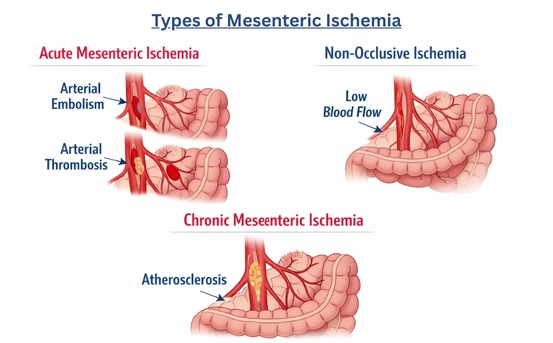
Mesenteric ischemia can be broadly categorized into acute and chronic types, each with unique causes, symptoms, and treatment approaches.
- Acute Mesenteric Ischemia (AMI) :- Acute mesenteric ischemia develops suddenly and progresses rapidly. It is a medical emergency that requires immediate intervention to prevent intestinal tissue death.
Causes of Acute Mesenteric Ischemia
- Arterial Embolism: Blood clots originating from the heart or large arteries can travel to the mesenteric arteries, causing sudden blockage. This is common in patients with atrial fibrillation or recent heart attack.
- Arterial Thrombosis: Narrowing or hardening of the arteries due to atherosclerosis can lead to clot formation within the mesenteric arteries. This type often affects older adults with existing cardiovascular disease.
- Non-Occlusive Mesenteric Ischemia (NOMI): Reduced blood flow without a physical blockage can occur due to low blood pressure, heart failure, or shock. NOMI is more common in critically ill patients.
- Mesenteric Venous Thrombosis: Blood clots forming in the mesenteric veins can restrict blood drainage, increasing pressure and reducing arterial blood flow.
Symptoms of Acute Mesenteric Ischemia
- Sudden and severe abdominal pain, often disproportionate to physical findings
- Nausea and vomiting
- Diarrhea or bloody stools in some cases
- Abdominal bloating
- Rapid heartbeat and low blood pressure
Diagnosis and Treatment :- Diagnosis involves imaging tests such as CT angiography, MRI angiography, and Doppler ultrasound. Blood tests may indicate elevated white blood cells or metabolic acidosis. Treatment is urgent and may include
- Surgical intervention: Removal of necrotic intestinal tissue or bypass of blocked arteries
- Endovascular procedures: Angioplasty or stenting to restore blood flow
- Medication: Anticoagulants or thrombolytic therapy in select cases
Prompt diagnosis and treatment significantly improve survival rates in acute cases.
- Chronic Mesenteric Ischemia (CMI) :- Chronic mesenteric ischemia develops gradually, often due to long-term narrowing of the mesenteric arteries. It is less dramatic than acute ischemia but can lead to significant health issues over time.
Causes of Chronic Mesenteric Ischemia
- Atherosclerosis: The most common cause, leading to gradual narrowing of the superior mesenteric artery, inferior mesenteric artery, or celiac artery
- Fibromuscular Dysplasia: Rare arterial wall abnormality causing vessel narrowing
- Post-Surgical Complications: Scar tissue from previous surgeries can reduce blood flow
Symptoms of Chronic Mesenteric Ischemia
- Postprandial Abdominal Pain: Pain occurs after eating due to increased blood demand by the intestines
- Unintended Weight Loss: Avoidance of meals due to fear of pain
- Diarrhea or Constipation: Digestive irregularities are common
- Abdominal Bruit: Some patients may have audible vascular sounds during examination
Diagnosis and Treatment :- Diagnostic tools include CT or MR angiography, duplex ultrasonography, and endoscopy to evaluate intestinal health. Treatment options often include
- Lifestyle Modifications: Diet changes and management of cardiovascular risk factors
- Endovascular Therapy: Angioplasty with or without stenting to restore blood flow
- Surgical Revascularization: Bypass surgery in severe cases
Early recognition of chronic mesenteric ischemia can prevent progression to acute ischemia and intestinal infarction.
- Special Considerations: Non-Occlusive Mesenteric Ischemia (NOMI) :- Non-occlusive mesenteric ischemia (NOMI) deserves special attention as it occurs without a clear blockage. This type is frequently seen in patients in intensive care, those with low cardiac output, or after major surgeries. NOMI is particularly dangerous because its subtle symptoms can delay diagnosis, yet intestinal tissue can rapidly deteriorate.
Risk Factors Common to All Types
Certain conditions increase the risk of both acute and chronic mesenteric ischemia
- Atherosclerosis or peripheral artery disease
- Heart conditions, especially atrial fibrillation
- Recent heart attack or heart surgery
- Low blood pressure episodes
- Blood clotting disorders
- Advanced age
Prevention and Lifestyle Management
While some causes of mesenteric ischemia cannot be avoided, lifestyle and medical interventions can reduce risk
- Maintain a heart-healthy diet low in saturated fats
- Avoid smoking and excessive alcohol consumption
- Regular cardiovascular check-ups
- Proper management of diabetes, high blood pressure, and cholesterol
- Prompt medical attention for abdominal pain or digestive issues
Conclusion
Mesenteric ischemia is a potentially life-threatening condition that requires early recognition and timely treatment. Understanding its types acute, chronic, and non-occlusive helps patients and healthcare providers identify risk factors, recognize symptoms, and implement effective interventions. While acute mesenteric ischemia is a medical emergency, chronic ischemia often allows for preventive strategies and elective treatments. Awareness, early diagnosis, and appropriate treatment can save lives and improve intestinal health.