Introduction
Photorefractive Keratectomy (PRK) is one of the most trusted and time-tested laser vision correction procedures. It has been a reliable option for people who are not suitable candidates for LASIK due to thin corneas, dry eyes, or certain corneal surface issues. Over the years, PRK has evolved into several advanced techniques that offer increased precision, faster healing, and better comfort.
What is PRK?
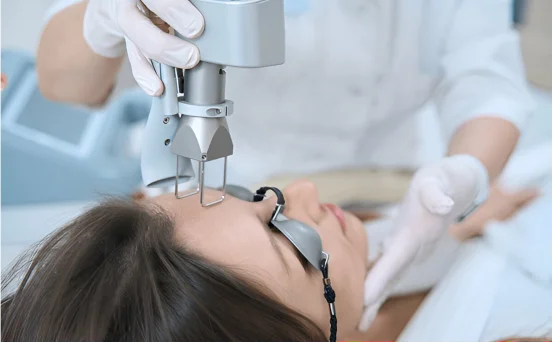
PRK is a laser eye surgery where the outer surface layer of the cornea (epithelium) is removed. An excimer laser is then used to reshape the corneal tissue and improve how light enters the eye. The epithelium naturally regenerates within a few days. Compared to LASIK, PRK does not involve creating a corneal flap, making it a safer option for individuals with thin corneas or those involved in contact sports.
Types of PRK Surgery
PRK has evolved into several modified and advanced forms. Though the core principle remains the same, each type offers unique advantages based on technology, precision, comfort, and healing time.
Below are the major types of PRK:
- Conventional PRK (Standard PRK) :- Conventional PRK is the original method of the procedure. The ophthalmologist manually removes the epithelial layer using a surgical instrument or a rotating brush. Then, the excimer laser reshapes the cornea to correct refractive errors such as myopia, hyperopia, and astigmatism.
Key Features:
- Manual removal of the epithelial layer
- Highly accurate laser correction
- Best suited for mild to moderate refractive errors
Advantages:
- Cost-effective
- Widely available
- Proven track record of safety
Who Should Choose It?
Patients with normal corneal thickness, mild surface irregularities, or those looking for a budget-friendly option.
- Advanced Surface Ablation (ASA) :- ASA is an upgraded version of standard PRK. Instead of using alcohol to loosen the epithelial layer, the surgeon uses gentle mechanical removal or laser-assisted removal. This technique reduces corneal irritation and speeds up recovery.
Key Features:
- No alcohol is used
- Less inflammation and postoperative discomfort
- Faster epithelial healing
Advantages:
- Better comfort compared to standard PRK
- Reduced risk of corneal haze
- Ideal for patients with sensitive corneas
Who Should Choose It?
People looking for quicker healing and minimal discomfort after surgery.
- TransPRK (No-Touch PRK) :- TransPRK, also known as “No-Touch PRK,” is one of the most advanced surface treatments. Here, the laser performs both tasks: removing the epithelial layer and reshaping the cornea. The surgeon does not physically touch the eye during the procedure.
Key Features:
- Entirely laser-based
- No instruments or alcohol used
- Shorter procedure duration
Advantages:
- Excellent for patients with fear of instruments
- Highly precise and uniform removal
- Reduced chance of human error
- Smooth surface healing
Who Should Choose It?
Patients with high anxiety, irregular corneas, athletes, or those preferring the latest technology.
- Wavefront-Guided PRK :- Wavefront-guided PRK uses 3D corneal mapping technology to create a personalized treatment plan. Instead of applying the same correction to everyone, it analyzes how light travels through your eye and corrects microscopic imperfections (higher-order aberrations).
Key Features:
- Customized based on individual optical fingerprint
- Uses advanced mapping systems
- Superior vision quality outcomes
Advantages:
- Reduces glare, halos, and night-vision issues
- Better contrast sensitivity
- Ideal for people who drive at night or work in low-light environments
Who Should Choose It?
Patients with irregular vision, higher-order aberrations, or those wanting the highest quality visual sharpness.
- Topography-Guided PRK :- This type is specially designed for people with irregular corneal surfaces. Using detailed corneal topography maps, the laser reshapes the surface to make it smoother and more symmetrical.
Key Features:
- Uses topographic maps of the cornea
- Corrects surface irregularities
- Improves both visual acuity and corneal shape
Advantages:
- Great for patients with prior corneal injuries
- Useful for post-surgery irregularities (post-LASIK, post-RK, etc.)
- Enhances clarity and reduces distortion
Who Should Choose It?
Patients with irregular corneas, keratoconus-suspect cases, or those needing improvement after previous refractive surgeries.
- Customized PRK (Personalized PRK) :- Customized PRK is a combination approach where the ophthalmologist uses both wavefront technology and topographic maps to create a fully personalized correction plan.
Key Features:
- Combination of multiple mapping technologies
- Highly individualized laser treatment
- Corrects refractive error + higher-order aberrations + corneal irregularities
Advantages:
- Premium results
- Improves visual sharpness and clarity
- Minimizes dependence on glasses even in challenging cases
Who Should Choose It?
Patients with complex refractive errors, demanding visual tasks, or those seeking the most precise outcome.
- Alcohol-Assisted PRK :- This traditional method uses diluted alcohol to loosen the epithelial layer before removal. Although older, it is still used because of its simplicity and effectiveness.
Key Features:
- Alcohol helps separate epithelium
- Easy to perform
- Allows quick exposure of corneal surface for laser treatment
Advantages:
- Reliable and predictable
- Useful when mechanical removal may be difficult
Who Should Choose It?
Patients without sensitivity to alcohol-based removal or those wanting a cost-effective solution.
How to Choose the Right Type of PRK?
Selecting the right technique depends on several factors such as:
- Corneal thickness
- Refractive error type and degree
- Surface irregularities
- Dry eye issues
- Lifestyle (sports, military, night driving)
- Budget and available technology
Your ophthalmologist will conduct detailed tests like corneal topography, pachymetry, and wavefront analysis to guide you toward the best option.
Conclusion
PRK has come a long way since its early days. Today, with multiple advanced variations such as TransPRK, Wavefront-Guided, and Customized PRK patients can expect safer procedures, faster recovery, and exceptional visual outcomes. Whether you have thin corneas, irregular surfaces, or want the most precise vision correction, there is a PRK type tailored for your needs.