Introduction
Raynaud’s phenomenon is a condition in which the small blood vessels in the fingers, toes, and sometimes other extremities constrict excessively in response to cold or stress. This reduced blood flow can cause the skin to turn white, blue, or red, accompanied by pain, tingling, or numbness. While mild cases are managed with lifestyle changes, medications, and protective measures, severe Raynaud’s can lead to non-healing ulcers, tissue damage, or even gangrene. When conservative treatments fail, surgical intervention may be necessary to restore blood flow, relieve pain, and prevent long-term complications. There are several types of Raynaud’s surgery, each designed to target specific underlying mechanisms of the disease. Understanding these types helps patients and families make informed decisions about treatment.
Types of Raynaud’s Surgery
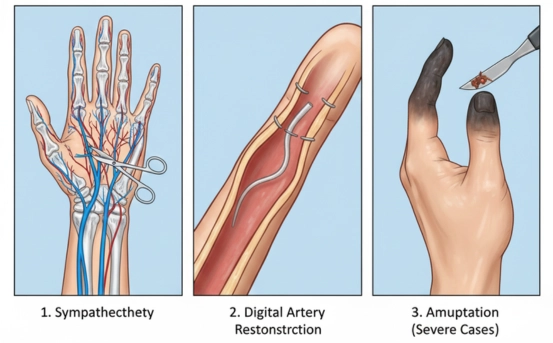
- Sympathectomy :- Sympathectomy is the most common type of surgery for severe Raynaud’s phenomenon. It involves interrupting or removing parts of the sympathetic nerves that trigger excessive blood vessel constriction in the fingers or toes. By reducing the nerve signals that cause blood vessels to spasm, sympathectomy improves blood flow, reduces the frequency of attacks, and relieves pain. Sympathectomy can be performed using different approaches:
- Digital Sympathectomy: Targeted at the nerves in the fingers or toes to relieve localized symptoms.
- Thoracic Sympathectomy: Involves interrupting nerves higher up in the chest to improve circulation in the hands. This procedure is typically considered for patients with persistent pain, recurrent ulcers, or tissue damage due to poor blood flow. Recovery is usually quick, and most patients notice significant improvement in symptoms within weeks.
- Vascular Reconstruction or Bypass Surgery :- In rare and severe cases, Raynaud’s can be caused or worsened by blockages in the larger arteries supplying the fingers or toes. Vascular reconstruction or bypass surgery is performed to restore proper blood flow to the affected extremities. This procedure involves rerouting blood around a blocked or narrowed artery using a graft or artificial vessel. It is most often recommended for patients with digital ischemia (severely reduced blood flow to the fingers) or non-healing ulcers. While more complex than sympathectomy, this surgery can save tissue and prevent amputation in advanced cases.
- Digital (Finger or Toe) Amputation :- When tissue death or gangrene occurs due to severe, untreated Raynaud’s, digital amputation may be necessary. The procedure involves removing the dead portion of the finger or toe to prevent infection from spreading. Although considered a last resort, amputation helps protect overall hand or foot function and prevents serious complications. Following surgery, patients may require rehabilitation and protective measures to prevent recurrence in other digits.
- Botulinum Toxin (Botox) Injection :- Botulinum toxin injections are a minimally invasive surgical approach that has gained popularity for Raynaud’s treatment. Botox blocks nerve signals that cause blood vessels to constrict, similar to sympathectomy but without permanent nerve removal. The injections are usually administered into the hands or feet under local anesthesia. Botox is particularly helpful for patients with digital ulcers or severe pain. The effects are temporary, often lasting a few months, so repeated treatments may be required. This procedure is beneficial for patients who may not be candidates for more invasive surgery.
- Arterial Repair and Endovascular Procedures :- In select cases, minimally invasive endovascular procedures may be used to open narrowed blood vessels using catheters, balloons, or stents. These procedures are often combined with surgical or medical treatment to improve blood flow in the fingers or toes. While less common, endovascular techniques are considered when patients have severe arterial blockages contributing to Raynaud’s symptoms.
Conclusion
Raynaud’s surgery is recommended for severe or complicated cases where conservative treatments fail to control symptoms or prevent tissue damage. The main types of surgical intervention include sympathectomy, vascular reconstruction, digital amputation, botulinum toxin injections, and endovascular procedures. Each type is tailored to the patient’s condition, severity, and overall health.
Choosing the right surgical approach requires consultation with an experienced vascular surgeon, hand surgeon, or specialist in peripheral circulation disorders. With timely surgical care, patients can experience improved blood flow, reduced pain, prevention of tissue damage, and a better quality of life.