Introduction
Valve sparing surgery is a revolutionary heart procedure designed to repair and preserve the aortic valve instead of replacing it with an artificial one. This approach ensures that patients maintain their natural valve function, avoid lifelong anticoagulation therapy, and enjoy a better quality of life. Over the years, advancements in cardiac surgery have led to several specialized techniques for valve sparing, each tailored to the patient’s unique condition.
What is Valve Sparing Surgery?
Valve sparing surgery is a heart surgery technique primarily used for patients with aortic root aneurysms or aortic valve diseases. Unlike traditional valve replacement, this surgery focuses on repairing and retaining the patient’s own valve. The main objective is to restore normal blood flow while avoiding potential complications associated with prosthetic valves, such as blood clots, infections, or mechanical valve noise. This surgery is most commonly performed on patients with conditions like Marfan syndrome, connective tissue disorders, or aortic root aneurysms where the valve is still healthy but the surrounding aorta needs repair.
Benefits of Valve Sparing Surgery
- Preserves natural valve function: Maintains the patient’s own valve for optimal performance.
- Avoids lifelong blood thinners: Reduces dependency on anticoagulants required for artificial valves.
- Lower risk of infections: Less chance of endocarditis compared to prosthetic valves.
- Better long-term outcomes: Reduced need for repeat surgeries.
- Improved quality of life: Natural valve function allows better physical activity and heart performance.
Types of Valve Sparing Surgery
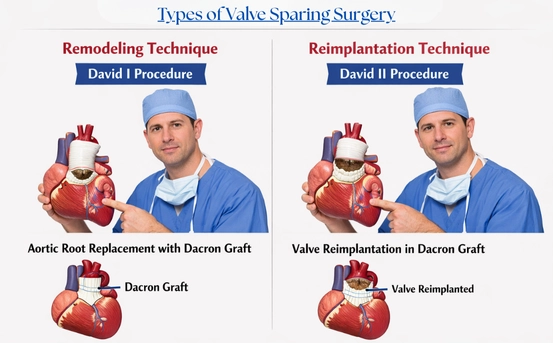
Valve sparing surgeries are broadly categorized into two main types: David Procedure (Valve Reimplantation) and Yacoub Procedure (Valve Remodeling). Both methods aim to preserve the natural valve but differ in technique and suitability.
- David Procedure (Valve Reimplantation) :- The David procedure, named after Dr. Tirone David, is the most widely performed type of valve sparing surgery. It is particularly effective for patients with aortic root aneurysms.
How it works:
- The surgeon removes the dilated section of the aorta while leaving the aortic valve intact.
- The aortic valve is then reimplanted into a synthetic graft, which replaces the weakened aortic root.
- The graft provides support and prevents future dilation, ensuring long-term valve stability.
Advantages:
- Excellent long-term durability for patients with connective tissue disorders.
- Very low risk of valve leakage after surgery.
- Suitable for patients of all ages, including young adults.
Ideal candidates:
- Patients with aortic root dilation or aneurysm.
- Individuals with genetically mediated aortic disorders like Marfan syndrome.
- Patients whose valve leaflets are still healthy and functional.
- Yacoub Procedure (Valve Remodeling) :- The Yacoub procedure, also known as the remodeling technique, is named after Dr. Magdi Yacoub. Unlike reimplantation, this procedure reshapes the aortic root to restore valve function.
How it works:
- The surgeon removes the diseased portion of the aorta surrounding the valve.
- A synthetic graft is used to remodel the aortic root without fully reimplanting the valve.
- The natural valve leaflets are retained, and the graft supports the valve function by reshaping the root.
Advantages:
- Less invasive compared to the David procedure.
- Preserves the natural flexibility of the aortic root.
- Shorter surgery time in certain cases.
Ideal candidates:
- Patients with mild aortic root dilation.
- Those whose aortic valve leaflets are healthy but need supportive remodeling.
- Adults without connective tissue disorders.
Limitations:
- Slightly higher risk of late valve leakage compared to the David procedure.
- Long-term durability may be less in patients with genetic aortic conditions.
- Partial Valve Repair Techniques :- In addition to the David and Yacoub procedures, surgeons may use partial valve repair methods for specific cases. These techniques focus on repairing only the damaged parts of the valve while maintaining its overall structure.
Examples include:
- Leaflet Repair: Corrects valve leaflet prolapse or thickening to prevent regurgitation.
- Commissuroplasty: Repairs the junctions where valve leaflets meet to ensure proper closure.
- Annuloplasty: Strengthens or reduces the size of the valve annulus to prevent leakage.
Advantages:
- Minimally invasive compared to full aortic root surgery.
- Allows patients with mild valve disease to avoid full valve replacement.
- Can be combined with other valve sparing procedures.
Ideal candidates:
- Patients with localized valve leaflet damage.
- Individuals with mild regurgitation without major aortic root dilation.
- Minimally Invasive Valve Sparing Surgery :- Recent advancements in cardiac surgery have introduced minimally invasive valve sparing techniques. These involve smaller incisions, robotic assistance, or endoscopic approaches to reduce recovery time.
Advantages:
- Reduced hospital stay and faster recovery.
- Less post-operative pain and scarring.
- Lower risk of infection compared to open-heart surgery.
Ideal candidates:
- Patients with isolated valve or root issues.
- Individuals seeking faster recovery with lower surgical trauma.
Limitations:
- Not suitable for complex aortic root aneurysms.
- Requires highly specialized surgical expertise.
Choosing the Right Type of Valve Sparing Surgery
Selecting the most appropriate valve sparing procedure depends on multiple factors:
- Valve condition: Whether the leaflets are healthy or diseased.
- Aortic root size and shape: Determines whether reimplantation or remodeling is preferable.
- Patient age and health: Younger patients often benefit more from durable techniques.
- Genetic factors: Conditions like Marfan syndrome may favor the David procedure.
A thorough evaluation by a skilled cardiac surgeon is essential to determine the best approach. Advanced imaging, such as echocardiography or CT scans, helps assess valve anatomy and aortic structure before surgery.
Recovery and Post-Surgery Care
After valve sparing surgery, patients generally stay in the hospital for 5–7 days, depending on the complexity of the procedure. Recovery includes:
- Gradual return to physical activity and cardiac rehabilitation.
- Routine echocardiograms to monitor valve function.
- Temporary medications to support heart function and prevent complications.
- Regular follow-ups with a cardiac specialist.
With modern techniques, most patients regain normal heart function and can lead active lives without the restrictions associated with artificial valves.
Conclusion
Valve sparing surgery represents a major advancement in heart surgery, offering patients the opportunity to preserve their natural valves while treating serious aortic and valve conditions. The main types David procedure, Yacoub procedure, partial repairs, and minimally invasive techniques provide tailored solutions depending on valve health, aortic anatomy, and patient needs. Choosing the right type of surgery can ensure long-term durability, improved quality of life, and reduced risk of complications. Patients should consult experienced cardiac surgeons to understand the best option for their condition.