Introduction
Blepharoplasty, commonly known as eyelid surgery, is a cosmetic and functional surgical procedure designed to improve the appearance and performance of the eyelids. Over time, aging, genetics, and lifestyle factors can cause excess skin, fat deposits, and muscle weakness around the eyes, leading to droopy eyelids, puffiness, and a tired or aged look. Understanding what is Blepharoplasty helps restore a youthful, refreshed appearance while also improving vision in cases where sagging eyelids interfere with sight.
Understanding What Is Blepharoplasty
Blepharoplasty is a surgical technique that removes or repositions excess skin, fat, and sometimes muscle from the upper eyelids, lower eyelids, or both. The goal is to correct drooping upper eyelids, reduce under eye bags, and smooth wrinkles around the eyes.
There are two main types of blepharoplasty
- Upper eyelid blepharoplasty :– Removes loose skin and fat from the upper eyelids
- Lower eyelid blepharoplasty :– Targets puffiness, bags, and wrinkles under the eyes
In some cases, both procedures are performed together for comprehensive eye rejuvenation.
Why Is Blepharoplasty Needed?
Blepharoplasty may be performed for cosmetic reasons, medical reasons, or both. As we age, eyelid skin becomes thinner and loses elasticity. Fat that once supported the eye may shift, creating bulges or hollows.
Common Reasons for Blepharoplasty
- Droopy or sagging upper eyelids
- Puffy eyelids or under-eye bags
- Excess eyelid skin affecting vision
- Tired, angry, or aged appearance
- Difficulty applying makeup due to loose skin
When excess skin obstructs peripheral vision, blepharoplasty is considered a functional surgery and not just cosmetic.
Who Is an Ideal Candidate?
Blepharoplasty is suitable for healthy individuals who have realistic expectations about the outcome. Ideal candidates include
- Adults over 30 with drooping eyelids or eye bags
- People experiencing vision obstruction from sagging lids
- Non-smokers or those willing to stop smoking before surgery
- Individuals without serious eye conditions
A detailed consultation with a qualified surgeon is essential to determine suitability.
The Blepharoplasty Procedure Explained
Blepharoplasty is usually performed as an outpatient procedure under local anesthesia with sedation or general anesthesia, depending on the case.
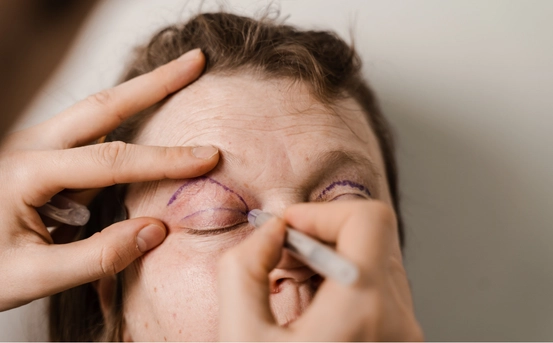
- Upper Eyelid Surgery :- The surgeon makes a small incision along the natural crease of the eyelid. Excess skin, fat, and muscle are carefully removed or repositioned, and the incision is closed with fine sutures.
- Lower Eyelid Surgery :- The incision is made either just below the lash line or inside the eyelid (transconjunctival approach). Fat deposits are removed or redistributed to create a smoother, youthful contour.
The surgery typically lasts 1–2 hours.
Recovery After Blepharoplasty
Recovery from blepharoplasty is generally smooth, with minimal downtime.
What to Expect During Recovery
- Mild swelling and bruising for 7–10 days
- Temporary dryness or sensitivity in the eyes
- Stitches removed within 5–7 days
- Most patients return to normal activities in 10–14 days
Cold compresses, prescribed eye drops, and proper rest help speed up healing.
Benefits of Blepharoplasty
Blepharoplasty offers both aesthetic and functional benefits, making it one of the most satisfying facial procedures.
Key Benefits
- Brighter, more youthful appearance
- Reduction of under-eye bags and puffiness
- Improved field of vision
- Enhanced facial harmony
- Boost in self-confidence
Results are long-lasting and can make the face appear refreshed without looking overdone.
Are the Results Permanent?
The results of blepharoplasty are long-lasting, often for 10–15 years or more. While aging continues naturally, most patients never need a repeat procedure. Maintaining a healthy lifestyle, protecting skin from sun damage, and following post-surgery care instructions help preserve results.
Risks and Safety of Blepharoplasty
Blepharoplasty is considered a safe procedure when performed by an experienced surgeon. However, like any surgery, it carries some risks.
Possible Risks Include
- Temporary swelling or bruising
- Dry eyes
- Infection or bleeding (rare)
- Scarring (usually minimal and hidden)
Choosing a skilled surgeon and following pre- and post-operative instructions greatly reduces risks.
Blepharoplasty vs Non-Surgical Treatments
Non-surgical treatments such as fillers, Botox, or laser therapy can improve fine lines and mild puffiness but cannot remove excess skin. Blepharoplasty is the most effective solution for significant drooping and eye bags.
Your surgeon may recommend combining eyelid surgery with other procedures for optimal results.
Conclusion
Blepharoplasty is a highly effective eyelid surgery that rejuvenates the eyes, restores a youthful appearance, and improves vision in some cases. Whether performed for cosmetic enhancement or functional improvement, this procedure delivers natural-looking and long-lasting results.
If droopy eyelids or under-eye bags make you look tired or affect your confidence, blepharoplasty may be the right solution. A professional consultation with an experienced surgeon is the first step toward brighter, refreshed eyes and renewed self-assurance.