Introduction
Dacryocystorhinostomy, commonly known as DCR, is a surgical procedure performed to treat blockage of the tear drainage system. Tears normally drain from the eyes through small openings into the nose. When this pathway becomes blocked, tears overflow onto the face and may lead to repeated infections. DCR surgery creates a new passage between the tear sac and the nasal cavity, allowing tears to drain normally and relieving symptoms. This procedure is widely recommended for patients suffering from chronic watery eyes (epiphora) or recurrent eye infections caused by nasolacrimal duct obstruction.
Understanding the Tear Drainage System
To understand Dacryocystorhinostomy, it is important to know how the tear drainage system works. Tears produced by the lacrimal glands wash the surface of the eye and then drain through tiny openings called puncta, located at the inner corners of the eyelids. From there, tears pass through small canals into the lacrimal sac and then down the nasolacrimal duct, which empties into the nose. When any part of this drainage pathway becomes blocked, tears cannot flow properly. As a result, tears spill over the eyelids, causing constant watering, irritation, and sometimes infection.
What Causes Tear Duct Blockage?
Tear duct blockage can occur due to several reasons. One of the most common causes is age-related narrowing of the nasolacrimal duct. In some cases, infections, inflammation, trauma, or nasal conditions such as polyps or sinusitis may contribute to blockage. Other causes include congenital blockage (present from birth), facial injuries, tumors, previous nasal surgeries, or chronic eye infections. Regardless of the cause, a blocked tear duct can significantly affect daily comfort and eye health.
Symptoms That May Require DCR Surgery
Patients with a blocked tear duct often experience persistent and bothersome symptoms. These symptoms usually worsen over time if left untreated.
Common symptoms include
- Continuous watering of one or both eyes
- Recurrent eye infections or discharge
- Swelling or pain near the inner corner of the eye
- Redness and irritation of the eye
- Blurred vision due to excessive tearing
If conservative treatments such as medications or massage fail to relieve these symptoms, Dacryocystorhinostomy is often recommended.
What is Dacryocystorhinostomy?
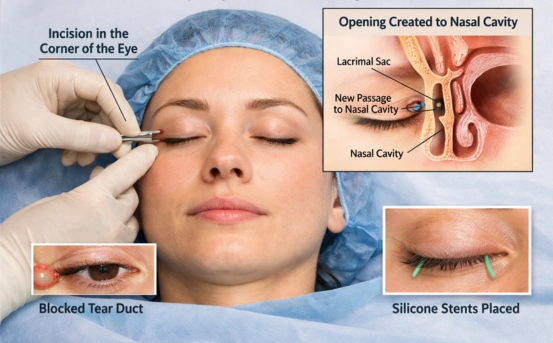
Dacryocystorhinostomy is a procedure that bypasses the blocked tear duct by creating a direct opening between the lacrimal sac and the nasal cavity. This new pathway allows tears to drain freely into the nose, restoring normal tear flow. The surgery can be performed using two main approaches: external DCR and endoscopic DCR. Both methods are effective, and the choice depends on the patient’s condition, anatomy, and surgeon’s expertise.
Types of Dacryocystorhinostomy
- External DCR :- External DCR involves making a small incision on the side of the nose near the inner corner of the eye. Through this incision, the surgeon creates a new drainage opening. This method has a high success rate and is often used in complex cases.
- Endoscopic DCR :- Endoscopic DCR is a minimally invasive technique performed through the nose using an endoscope. There is no external scar, and recovery is usually faster. This approach is increasingly popular due to improved technology and patient comfort.
How is the DCR Procedure Performed?
DCR surgery is typically performed under local or general anesthesia. The procedure usually takes about 45 minutes to one hour. During the surgery, the surgeon creates a new opening for tear drainage and may place a temporary silicone stent to keep the passage open during healing. Most patients can return home the same day, making it a day-care procedure in many cases.
Recovery After Dacryocystorhinostomy
Recovery after DCR surgery is generally smooth. Patients may experience mild swelling, nasal congestion, or slight discomfort for a few days. These symptoms usually subside with prescribed medications. Doctors often recommend avoiding heavy physical activity, nose blowing, and dusty environments during the initial healing period. Regular follow-up visits ensure proper healing and successful outcomes. Most patients notice significant improvement in tearing within a few weeks after surgery.
Benefits of DCR Surgery
Dacryocystorhinostomy offers long-term relief from symptoms caused by tear duct blockage. The procedure has a high success rate and significantly improves quality of life.
Key benefits include
- Permanent relief from watery eyes
- Reduced risk of recurrent eye infections
- Improved eye comfort and vision clarity
- Enhanced daily confidence and hygiene
Risks and Complications
Like any surgical procedure, DCR carries minimal risks. These may include bleeding, infection, scarring (in external DCR), or failure of the new drainage passage. However, complications are rare when the procedure is performed by an experienced specialist. Proper post-operative care and follow-up greatly reduce these risks.
Who is an Ideal Candidate for DCR?
Dacryocystorhinostomy is suitable for patients with confirmed nasolacrimal duct obstruction who do not respond to non-surgical treatments. It is commonly performed in adults but may also be recommended in children in select cases. An ophthalmologist or ENT specialist will evaluate the condition through clinical examination and imaging tests before recommending surgery.
Conclusion
Dacryocystorhinostomy is a safe and effective surgical solution for treating blocked tear ducts. By restoring proper tear drainage, it relieves chronic watering, prevents infections, and improves overall eye health. With advances in surgical techniques, DCR has become a highly successful procedure with minimal discomfort and quick recovery.