Introduction
Gynecomastia has become one of the most commonly discussed men’s health concerns today, affecting confidence, lifestyle, and overall well-being. But what exactly is gynecomastia surgery, and why do so many men choose it as a permanent solution? In this detailed guide, we break down what the surgery is, how it works, and why it is considered one of the most effective treatments for male chest enlargement.
Gynecomastia often referred to as “male breast enlargement” or “enlarged male chest” is a condition where excess glandular tissue and sometimes stubborn fat accumulates in the chest area. This can happen due to hormonal imbalance, genetics, medications, obesity, puberty, or certain lifestyle habits. While weight loss and exercise help to some extent, true gynecomastia cannot be treated with workouts alone, which is why gynecomastia surgery has become a reliable and long-lasting solution.
What Is Gynecomastia Surgery?
Gynecomastia surgery, medically known as male breast reduction surgery, is a cosmetic surgical procedure designed to reduce excess breast tissue in men. The goal is simple: create a flatter, firmer, and more masculine chest contour. It is performed by a qualified plastic surgeon who removes extra glandular tissue, fatty deposits, and occasionally excess skin.
This surgery is a blend of two key techniques liposuction and gland excision which together help reshape the chest. Liposuction removes fat, while excision removes dense gland tissue that cannot be eliminated otherwise. Depending on the severity of the gynecomastia and the patient’s chest structure, the surgeon customizes the method for the best possible natural-looking result.
Gynecomastia surgery is typically a safe, day-care procedure. Patients can usually go home the same day, making it convenient for working professionals and college students. With improved technology, smaller incisions, and faster recovery methods, it has become one of the most popular aesthetic procedures for men globally.
How Gynecomastia Surgery Works
Although every doctor personalizes the approach, the surgery generally follows a clear and effective process:
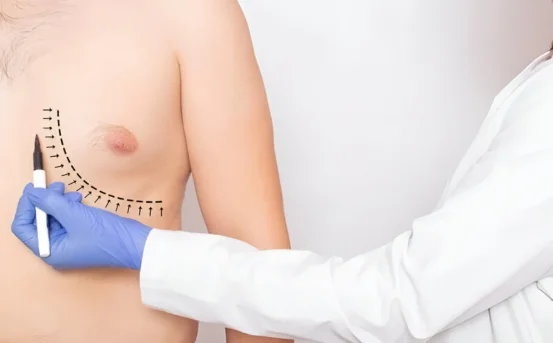
- Examination & Chest Grading :- The surgeon evaluates whether the swelling is due to gland, fat, or both. Gynecomastia is classified into grades ranging from mild chest puffiness to severe enlargement with sagging.
- Use of Local or General Anesthesia :- Depending on the complexity, the procedure can be performed under local anesthesia with sedation or general anesthesia. The aim is to ensure comfort and a painless experience.
- Liposuction for Fat Removal :- Small, hidden incisions are made near the chest. A cannula is inserted to break down and suction out excess fat. This step helps sculpt the chest and improve contour.
- Gland Removal (Excision) :- This is the most crucial step. Since gland tissue is firm and fibrous, it doesn’t respond to liposuction. A small incision around the nipple is made to remove the gland. This prevents recurrence and gives a permanent result.
- Contouring and Stitching :- Once the gland and fat are removed, the chest is shaped naturally. Stitches are placed carefully to minimize scarring.
- Compression Garment :- Patients are advised to wear a compression garment for a few weeks to support healing, reduce swelling, and enhance the final shape.
Why Gynecomastia Surgery Is Performed
Gynecomastia does not just affect appearance it impacts emotional well-being too. Many men experience self-consciousness, hesitation to wear fitted clothes, avoid gym workouts, swimming, or even social gatherings. Gynecomastia surgery becomes an ideal choice because:
- It provides permanent removal of gland tissue.
- It restores a flat and masculine chest shape.
- It boosts body confidence and improves lifestyle.
- It eliminates discomfort or pain caused by glandular enlargement.
- It helps remove stubborn fat that doesn’t respond to exercise.
For many, this surgery is not just cosmetic it is a transformation of self-image and everyday confidence.
Recovery After Gynecomastia Surgery
One of the reasons gynecomastia surgery is so popular is its smooth and predictable recovery. Most patients can resume office work within 2–3 days and light exercise in about two weeks. Swelling gradually reduces, and the final chest shape becomes visible within 6–8 weeks.
During recovery:
- Wear the compression garment as advised.
- Avoid heavy lifting for 3–4 weeks.
- Follow medication and care guidelines.
- Attend all follow-up visits to ensure proper healing.
With modern techniques, scarring is minimal and strategically hidden around the areola or chest crease, making it almost invisible over time.
Is Gynecomastia Surgery Safe?
Yes, gynecomastia surgery is considered one of the safest cosmetic procedures when performed by an experienced plastic surgeon. With advanced technology, high-precision instruments, and improved surgical techniques, risks are very low. Complications, if any, are rare and manageable.
Before surgery, a detailed consultation and necessary medical tests ensure that the patient is fit and ready for the procedure.
Conclusion
Gynecomastia surgery is a highly effective, permanent, and confidence-boosting treatment for men dealing with enlarged chest tissue. It helps achieve a flatter, sculpted chest and improves emotional well-being, self-esteem, and daily lifestyle. With expert surgeons and advanced techniques, the procedure has become safer, quicker, and more accessible than ever.
Whether caused by hormones, genetics, or stubborn fat, gynecomastia can be corrected giving men the freedom to feel comfortable in their own skin.