Introduction
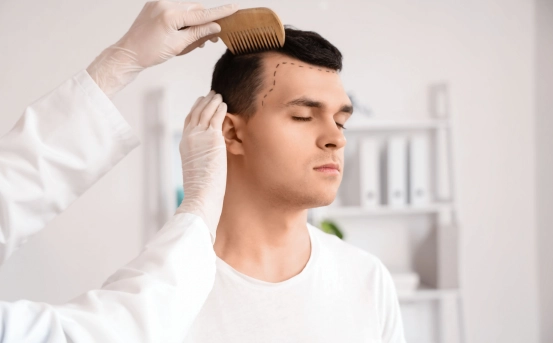
Hair loss can affect anyone, men and women, leading to a loss of confidence and a desire to restore a fuller hairline. One of the most effective and long-lasting solutions available today is a hair transplant. But what is hair transplant surgery? How does it work, who is it for, and what results can you expect? This detailed guide explains everything you need to know.
What is Hair Transplant Surgery?
A hair transplant is a surgical procedure where a specialist moves healthy hair follicles from a “donor area” (usually the back or sides of the scalp) to bald or thinning areas known as the “recipient site.” The goal is to restore natural-looking hair growth that lasts a lifetime.
Hair transplants are popular because the transplanted hair is your own, making the results natural, permanent, and easy to maintain.
How Does a Hair Transplant Work?
The procedure is typically performed using two advanced techniques
- FUE (Follicular Unit Extraction) :- FUE is the most modern and widely used method. In this technique, individual hair follicles are extracted directly from the donor area and implanted into the thinning region.
Benefits of FUE
- Minimal pain and scarring
- Faster recovery
- Natural-looking results
- Ideal for people who prefer short hairstyles
- FUT (Follicular Unit Transplantation) :- FUT involves removing a small strip of skin from the donor area. Hair follicles are then separated and implanted into the bald area.
Benefits of FUT
- More grafts can be transplanted in one session
- Often recommended for people with advanced hair loss
- Cost-effective compared to FUE
Both techniques are safe when performed by a skilled hair transplant surgeon.
Who is an Ideal Candidate for Hair Transplant?
You may be a good candidate if
- You have permanent hair loss, such as male pattern baldness or female pattern baldness
- You have enough donor hair at the back or sides of your scalp
- Your hair loss has stabilized
- You want a long-term, natural-looking solution
Hair transplants also help with
- Scalp injury scars
- Eyebrow restoration
- Beard or moustache enhancement
- Hairline reshaping
Step by Step Hair Transplant Procedure
A typical hair transplant includes the following stages
- Consultation :- The surgeon evaluates your scalp, discusses your goals, and recommends the best technique (FUE or FUT).
- Preparation :- The donor area is trimmed and numbed using local anesthesia to ensure a painless experience.
- Extraction :- Hair follicles are carefully removed from the donor site using advanced tools.
- Recipient Site Creation :- Tiny incisions are made where the hair will be implanted. The angle and direction are designed to ensure natural growth.
- Graft Implantation :- Individual grafts are placed into the recipient area with precision.
- Post-Procedure Care :- The surgeon provides instructions for washing, medication, and follow-up visits.
Recovery After Hair Transplant
Recovery time is usually quick, especially with FUE.
What to Expect After the Procedure
- Mild swelling or redness for 2–3 days
- Small scabs that fall off within a week
- Transplanted hair sheds after 2–4 weeks (normal process called “shock loss”)
- New growth starts from the 3rd month
- Full results appear in 9–12 months
Most people return to work within 2–5 days.
Benefits of Hair Transplant
Hair transplants offer several long-term benefits
- Permanent Results :- Because transplanted hair comes from genetically stronger areas, it continues to grow naturally for years.
- Natural Appearance :- Modern techniques ensure natural density, direction, and hairline design.
- Minimal Maintenance :- Transplanted hair doesn’t require any special treatment just normal washing and grooming.
- Boosted Confidence :- A fuller, healthier hairline significantly improves your self-image.
- Cost-Effective Over Time :- Unlike temporary solutions, hair transplants require only a one-time investment.
Possible Side Effects
Hair transplants are safe, but minor side effects may include
- Temporary swelling
- Mild discomfort
- Scabbing
- Redness
These are normal and usually resolve quickly.
Why Choose a Professional Hair Transplant Clinic?
A successful hair transplant depends on
- Experienced hair transplant surgeon
- Advanced technology
- Hygienic and certified clinic
- Personalized treatment plan
Choosing the right clinic ensures higher graft survival, natural results, and long-lasting growth.
Conclusion
A hair transplant is one of the most effective and permanent solutions for restoring hair naturally. With advanced techniques like FUE and FUT, you can enjoy fuller, thicker hair without noticeable scars or long downtime. If you’re experiencing hair loss and want a safe, reliable, and long-term solution, a hair transplant could be the perfect option.