Introduction
Moles are extremely common skin growths that appear anywhere on the body. While most are harmless, many people consider mole removal either for cosmetic reasons or medical necessity. With modern dermatology offering safe, painless, and quick treatment options, mole removal has become one of the most frequently performed skin procedures.
Understanding What is Mole Removal
Mole removal is a medical procedure performed to eliminate unwanted or suspicious moles from the skin. These moles may be present from birth or develop over time due to genetics, sun exposure, or hormonal changes. While many moles are non-cancerous, dermatologists may recommend removal if a mole shows abnormal behavior or changes in size or color.
People also choose mole removal for cosmetic enhancement when the mole affects their appearance or confidence. The process is simple, safe, and usually performed under local anesthesia to ensure maximum comfort.
Why Is Mole Removal Important?
There are two major reasons people opt for mole removal:
- Medical Reasons :- Sometimes a mole can show signs of potential skin cancer (melanoma). Dermatologists follow the ABCDE rule:
- A – Asymmetry: One half doesn’t match the other
- B – Border: Irregular or blurred edges
- C – Color: Multiple shades or sudden color change
- D – Diameter: Larger than 6mm
- E – Evolving: Changing shape, size, or bleeding
If a mole shows any of these signs, removal becomes important for accurate diagnosis and prevention.
- Cosmetic Reasons :- Some moles appear on visible areas like the face, neck, or arms. If a mole affects your confidence, snagging on clothing, or causes discomfort, removing it can enhance appearance and ease daily life.
Common Methods of Mole Removal
Dermatologists use different techniques depending on the type, depth, and size of the mole. Here are the most commonly used procedures:
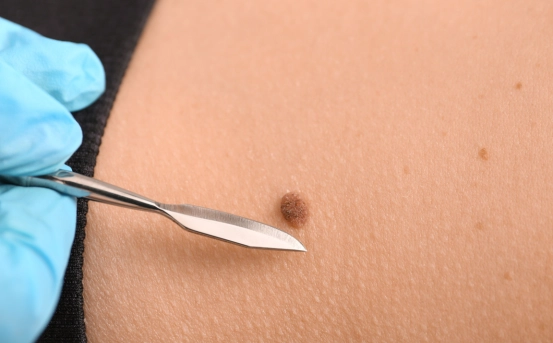
- Shave Excision :- This method is used for raised moles. The doctor gently shaves off the mole using a sterile blade. It is quick, minimally invasive, and leaves minimal scarring.
- Surgical Excision :- For deeper moles or those suspected of cancer, the doctor removes the entire mole along with a small surrounding skin margin. Stitches may be applied. This method ensures complete removal and is suitable for biopsy.
- Laser Mole Removal :- A popular cosmetic approach, laser removal uses high-intensity light beams to break down mole pigment. It is painless, has no stitches, and is ideal for small, flat, non-cancerous moles.
- Cryotherapy :- Liquid nitrogen is applied to freeze off the mole. It is used occasionally for non-cancerous raised growths but is less common for pigmented moles.
Each method has its own benefits, and a dermatologist will guide you to the safest option based on your skin condition.
What Happens Before the Procedure?
Before mole removal, a dermatologist will evaluate the mole to understand whether it is benign or requires a biopsy. This includes:
- Visual examination
- Dermatoscope analysis
- Medical history discussion
- Skin type evaluation
If cancer is suspected, the doctor may perform a biopsy before removal. Clear communication and proper diagnosis ensure the right treatment approach.
The Mole Removal Process: Step-by-Step
Although the exact steps vary based on the type of procedure, the general process involves:
- Cleansing the Area :- The skin around the mole is cleaned thoroughly to avoid any infection.
- Local Anesthesia :- A small injection numbs the area, ensuring the process is painless.
- Mole Removal :- Depending on the method chosen (shave, excision, or laser), the doctor removes the mole with careful precision.
- Dressing the Area :- The treated site is covered with a sterile dressing to protect it during healing.
The entire process typically takes 10–30 minutes and requires no hospitalization.
Aftercare and Recovery
Good aftercare helps ensure faster healing and minimal scarring. Here’s what patients can expect:
- Keep the area clean and dry
- Use prescribed ointments to aid healing
- Avoid sun exposure on the treated site
- Follow the doctor’s wound-care instructions
- Avoid scratching or touching the scab
Most people recover within 1 to 2 weeks, depending on the removal technique.
Is Mole Removal Safe?
Yes, mole removal is considered very safe when performed by a qualified dermatologist. Advanced techniques, sterile environments, and localized anesthesia make the procedure comfortable and low-risk. Complications like infection or scarring are rare and mostly preventable with proper aftercare.
Benefits of Mole Removal
- Removes suspicious or potentially cancerous moles
- Enhances facial or body aesthetics
- Prevents irritation caused by friction
- Boosts confidence and comfort
- Allows early detection of skin conditions
When Should You Consult a Doctor?
You should seek professional advice if your mole:
- Changes shape or color
- Starts bleeding or itching
- Grows rapidly
- Causes discomfort
- Looks unusual compared to other moles
Early evaluation ensures timely treatment and peace of mind.
Conclusion
Mole removal is a simple, effective, and safe procedure performed for both medical and cosmetic reasons. With modern dermatology techniques, patients can enjoy minimal discomfort, quick recovery, and excellent results. If you notice any suspicious mole changes or wish to enhance your appearance, consulting a dermatologist is the first step toward clear, healthy skin.