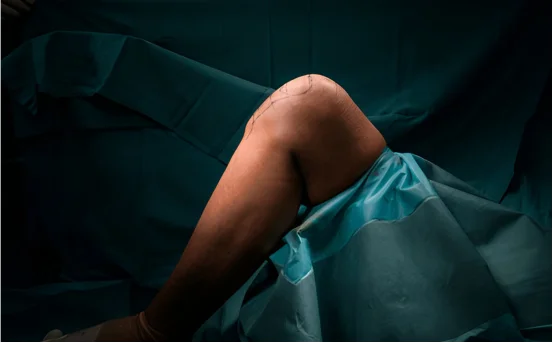
Osteotomy is a form of orthopedic surgery that is utilized to shift the alignment of bones and correct skeletal anomalies, typically alleviating discomfort or enhancing functionality. It is most frequently performed on the knee, hip, or jaw, and serves to protect the joints from further damage while postponing the necessity of a joint replacement surgery.
What Is Osteotomy Surgery?
Osteotomy is defined by the Greek terms “osteon” for bone and “tome” for cut. To put it simply, the procedure known as osteotomy surgery involves cutting bones and then reshaping them to the optimal anatomical structure.
This surgical procedure is commonly utilized for:
- Redistributing weight from overloaded joints
- Correcting alignment issues or deformities of bones
- Postponing or preventing the need for joint replacement surgeries in younger individuals
- Enhancing function of a joint and alleviating associated pain
Osteotomies are applicable in the following body regions:
- Kne ‘high tibial osteotomy’
- Hip ‘periacetabular osteotomy’
- Spine ‘spinal osteotomy’
- Jaw ‘mandibular or maxillary osteotomy’
- Foot ‘bunions and flatfoot corrective osteotomies’
Osteotomy surgery is performed when less invasive intervention strategies such as medications, exercises, and supports do not lead to favorable outcomes. This procedure is most effective during the initial to mid stages of osteoarthritis or joint degeneration.
Osteotomy is recommended for the following conditions:
- Knee osteoarthritis, particularly affecting the medial compartment
- ia or underdeveloped acetabulum
- Bone malalignment secondary to trauma or congenital abnormality
- Atypical bone union following previous fracture
- Jaw deformities with functional and aesthetic implications
To illustrate, in high tibial osteotomy, the surgeon either removes or adds a wedge of bone on the upper portion of the shinbone to offload weight-bearing from the inner knee to the healthier outer compartment.
Symptoms Suggestive of Osteotomy Surgery
Candidates requiring osteotomy surgery usually present with the following symptoms:
- Chronic pain in the affected joint area while ambulating or bearing weight
- Asymmetrical joint degenerative changes resulting in a limp
- Genu varum or genu valgum
- Reduced range of motion or joint stiffness
Joint laxity
Activity-related pain that is exacerbated with movement and alleviated at rest
The above symptoms indicate excessive and pathological joint degeneration, which may be due to mechanical malalignment. Determining appropriateness for osteotomy requires clinical assessment.
Diagnosis Prior to Osteotomy Surgery
Obtaining a detailed diagnosis is fundamental before recommending surgery. Most physicians obtain:
- Physical Examination: Assess joint integrity, range of motion, and possible deformity
- X-ray: Assess bony structures for dislocated bones and worn joints
- MRI or CT Scan: Assess the osteochondral tissue and adjacent soft tissues
- Weight-bearing radiographs: Particularly in the planning of knee osteotomies
- Gait analysis (optional): Evaluate for movement and load application
Imaging greatly assists the orthopedic surgeon in determining the optimal correction angle and site for complete bone osteotomy.
Forms of Osteotomy Surgery
Osteotomy procedures are classified and distinguished by the specific site and condition that is being treated:
- High Tibial Osteotomy (HTO)
Focuses on medial compartment knee arthritis.
Entails cutting and shifting the tibia (shinbone).
- Femoral Osteotomy
Addressing hip dysplasia or certain rotational deformities.
Involves changing the angle of the femur
- Periacetabular Osteotomy (PAO)
Redesiging the hip socket in young adults with hip dysplasia
- Mandibular/Maxillary Osteotomy
Fixing the jaw misalignment for better facial symmetry or bite function
- Spinal Osteotomy
Spinal deformities such as kyphosis or scoliosis
Each of the procedures is unique and done to specified anatomy and clinical needs.
What to Expect During the Surgery
As for other types of surgery with similar scope, osteotomy surgery is usually performed under general anesthesia. Here’s a basic outline:
- An incision is made over the particular bone to be addressed.
- Bone is cut to the appropriate shape and angle based on individual alignment needs.
- The new position is secured with metal plates, screws, or rods
- The wound is treated and depending on the case, a splint or cast is applied.
With meticulous care, these steps will ensure optimal recovery. The time taken to perform the surgeries can vary from 1-3 hours depending on the complexity and site of the surgery.
Recovery Following Osteotomy Surgery
The recovery timeline can differ based on the specific type of osteotomy performed and the patient’s overall health, but typically follows this structure:
Initial Recovery (First 2-6 Weeks):
- Management of pain and treatment of any surgical wounds.
- Crutches or a walker (ambulatory aid) should be used to avoid weight-bearing activities.
- Physical therapy may start with gentle range of motion exercises.
Mid Recovery (6 -12 Weeks):
- Return to limited weight-bearing activities.
- Continued physiotherapy to recover strength and mobility.
Full Recovery (3 -6 Months or Longer):
- Most patients return to normal activity by 6 months.
- Complete bone healing and remodeling may take 1 year.
- Rehabilitation compliance yields the best results.
Benefits of Osteotomy Surgery
- Postpones or outright avoids the need for a joint replacement.
- Retains the patient’s natural articulation.
- Decreases pain and improves range of motion.
- More favorable results in younger, active individuals.
- Can be repeated or modified as necessary.
Risks and Complications
- Infection
- Blood clots
- Damage to nerves or blood vessels
- Non-union or slow bone healing
- Overreaction or under-reaction to the procedure
- Revisions may be required
- Like all surgeries, osteotomy comes with other risks:
Having a skilled orthopedic surgeon significantly lowers the risk of complications.
Who is an Appropriate Candidate for Osteotomy?
Osteotomy works best for:
- Patients younger than 60 years of age
- Patients with selective, more localized damage to the joints, as opposed to widespread arthritis
- Those who have high-quality bones
- Active patients who wish to avoid joint replacement surgery
Candidates with more advanced arthritis or low bone density may be better suited for a joint replacement surgery instead.
Conclusion
Osteotomy surgery is a powerful technique aimed at preserving the joints which works well in younger patients or patients with certain asymmetrical joint positions and early signs of arthritis. Osteotomies relieve pain, restore functional mobility, and postpone the necessity for a total joint replacement. When carefully choosing appropriate patients and managing post-operative care, osteotomy can provide excellent long-term outcomes.
If you have persistent joint pain due to misalignment or earlyOA, consider seeing an orthopedic surgeon to discuss whether osteotomy surgery is an option designed specifically for you.