Introduction
Rectal prolapse is a medical condition that many people hesitate to talk about, yet it affects thousands of individuals worldwide. Early awareness and timely treatment can prevent complications and improve quality of life. In this comprehensive guide, we will explain what is rectal prolapse, its causes, symptoms, diagnosis, and available treatment options in simple and clear language.
Understanding Rectal Prolapse
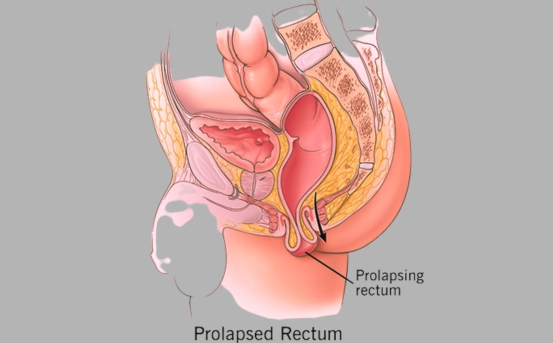
Rectal prolapse occurs when the last part of the large intestine (the rectum) slips or protrudes through the anus. This happens when the supporting tissues and muscles around the rectum become weak. Rectal prolapse can be partial (internal) or complete (external), depending on how far the rectum slips out. Although it is more common in elderly individuals, especially women, it can occur at any age. Chronic constipation, weak pelvic floor muscles, and previous childbirth injuries often contribute to the condition.
Types of Rectal Prolapse
There are three main types:
- Internal Prolapse :- The rectum starts to fold inward but does not come out of the anus. This type is often harder to diagnose and may feel like something is stuck inside.
- Partial (Mucosal) Prolapse :- Only the inner lining of the rectum slips out through the anus. This can happen in children and adults and may look like a small reddish lump.
- Complete Prolapse :- The entire rectal wall protrudes outside the anus. This is the most severe type and usually requires surgical treatment.
Common Causes of Rectal Prolapse
Rectal prolapse develops gradually over time. Several factors increase the risk:
- Chronic Constipation :- Straining during bowel movements is the most common cause. Repeated straining weakens the pelvic muscles and rectal tissues.
- Aging :- As people age, the pelvic floor muscles naturally become weaker, especially in individuals over 60.
- Childbirth-Related Injuries :- Women who have had multiple vaginal births may experience pelvic floor damage, increasing the risk of prolapse.
- Neurological Conditions :- Diseases like spinal cord injuries, multiple sclerosis, or nerve damage can weaken rectal support.
- Chronic Diarrhea or Coughing :- Frequent loose stools or continuous coughing can add pressure to the pelvic region.
- Previous Surgeries :- Some abdominal or pelvic surgeries may weaken pelvic muscles.
Symptoms of Rectal Prolapse
A person with rectal prolapse may experience:
- A visible bulge or mass coming out of the anus
- A feeling of incomplete bowel movement
- Pain or discomfort during bowel movements
- Leakage of mucus or stool (fecal incontinence)
- Bleeding from the anal area
- Chronic constipation or difficulty passing stool
In early stages, the bulge might appear only during bowel movements. Over time, it may protrude even while standing or walking.
How Rectal Prolapse Is Diagnosed
Diagnosis involves a combination of physical examination and medical tests. Common diagnostic steps include:
- Physical Examination :- A doctor examines the anal area, sometimes asking the patient to strain to observe the prolapse.
- Colonoscopy :- This test checks for polyps, tumors, or other conditions that may contribute to prolapse.
- Defecography :- An imaging test that shows the rectum during bowel movements, helping identify internal prolapse.
- MRI Pelvis :- Provides detailed images of pelvic muscles and organs to evaluate severity.
- Manometry :- Measures the strength of anal sphincter muscles.
These tests help determine the type and severity of prolapse to plan the best treatment.
Treatment Options for Rectal Prolapse
Treatment depends on the severity and cause of the prolapse. It may include lifestyle changes or surgery.
- Lifestyle Modifications :- Early-stage prolapse may improve with:
- High-fiber diet
- Drinking plenty of water
- Avoiding straining
- Regular exercise
- Pelvic floor strengthening (Kegel exercises)
- Medications :- Doctors may prescribe stool softeners or laxatives to reduce constipation and straining.
- Surgery :- Surgery is the most effective treatment for complete or recurrent prolapse. Common surgical methods include:
- Rectopexy :- The rectum is repositioned and secured to the pelvic bones or muscles.
- Perineal Surgery :- Ideal for older adults or those who cannot undergo major surgery; involves removing or repairing the protruding tissue.
- Laparoscopic or Robotic Surgery :- Minimally invasive techniques with faster recovery and less pain.
Prevention Tips for Rectal Prolapse
While not all cases can be prevented, you can reduce risk by:
- Eating a fiber-rich diet
- Maintaining healthy bowel habits
- Avoiding heavy lifting
- Staying physically active
- Treating chronic diarrhea or constipation early
- Doing regular pelvic floor exercises
When to See a Doctor
Immediate medical attention is needed if:
- A mass remains outside the anus
- You experience bleeding or severe pain
- Bowel movements become difficult or uncontrollable
- Home remedies are not improving symptoms
Delaying treatment can worsen the condition and lead to complications such as ulceration, infection, or damage to sphincter muscles.
Conclusion
Rectal prolapse is a treatable condition, but early diagnosis makes a big difference. If you notice any symptoms like a bulge, discomfort, or difficulty passing stool, consult a specialist. With proper medical care, lifestyle adjustments, and in some cases surgery, most people recover fully and regain quality of life.