Transmyocardial Revascularization remains one of the leading causes of death worldwide, and despite advancements in cardiac care, some patients continue to suffer from severe chest pain (angina) that doesn’t respond to conventional treatments. For these individuals, a surgical procedure called (TMR) offers new hope. But what exactly is TMR, and how does it work?
This is where Transmyocardial Revascularization (TMR) comes into play. TMR is a highly specialized laser based surgical procedure designed to restore blood flow to areas of the heart that cannot be reached by bypass surgery or treated effectively with stents. It provides a new therapeutic pathway for patients who have essentially exhausted all other interventions yet continue to suffer from life-limiting chest pain.
What is Transmyocardial Revascularization?
Transmyocardial Revascularization (TMR) is a surgical procedure designed to improve blood flow to areas of the heart that are not receiving enough oxygen rich blood. It is primarily used to treat patients with severe coronary artery disease (CAD) who continue to experience angina despite medication or are not good candidates for procedures like angioplasty or coronary artery bypass grafting (CABG).
In TMR, small channels are created directly into the heart muscle (myocardium) using a laser. These channels allow blood from the inside of the heart to reach oxygen deprived areas of the myocardium, improving oxygenation and potentially reducing chest pain.
Why is TMR Done?
TMR is typically reserved for patients with chronic, stable angina who have exhausted most conventional treatment options. These individuals may :-
-
Have diffuse coronary artery disease that cannot be bypassed surgically.
-
Be too high-risk for another open heart surgery.
-
Not respond well to medications or angioplasty.
-
Continue to experience chest pain that significantly limits quality of life.
In such cases, TMR can act as either a standalone procedure or be combined with bypass surgery to treat areas of the heart not reachable by grafting.
How Does TMR Work?
TMR works by creating small, laser made channels (about 1 mm in diameter) through the heart wall. These channels extend from the left ventricle (the heart’s main pumping chamber) into the outer layer of the heart muscle.
There are two key mechanisms by which TMR may relieve angina :-
-
Direct blood flow :- Initially, some of the oxygen rich blood inside the heart can directly reach the oxygen-starved areas of the myocardium through the new channels.
-
Angiogenesis stimulation :- Over time, the trauma caused by the laser may stimulate the growth of new capillaries in the heart muscle (a process known as angiogenesis), improving long-term blood supply.
The channels created are often sealed by muscle contractions during the heartbeat but may remain open at the microscopic level, still aiding perfusion.
The TMR Procedure: What to Expect?
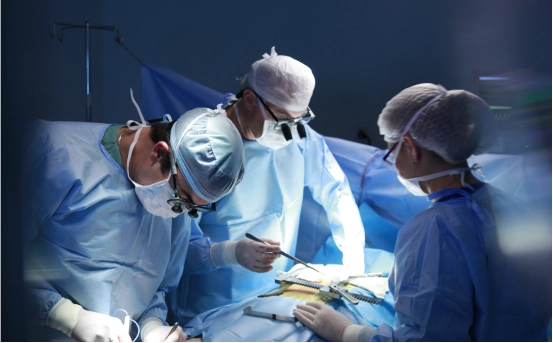
TMR is performed under general anesthesia in an operating room. It may take about 1 to 2 hours depending on the complexity and whether it’s being combined with another cardiac surgery.
During the procedure :-
-
The surgeon makes an incision in the chest to access the heart (usually through the left side).
-
A high powered CO₂ or holmium:YAG laser is used to create 20–40 tiny channels in the affected region of the heart.
-
Special imaging or guidance systems help the surgeon target areas with poor blood flow.
-
If performed along with bypass surgery, the surgeon will graft new vessels to other blocked arteries during the same session.
After the procedure, patients are moved to a cardiac ICU for close monitoring.
Recovery After TMR
Recovery after TMR depends on whether it was performed as a standalone surgery or with a bypass. In general :-
-
Hospital stays typically last 5–7 days.
-
Most patients experience immediate chest pain relief, although full benefits might take weeks or months as new blood vessels form.
-
A gradual return to normal activity is recommended, starting with light walking and physical therapy.
-
Patients are usually able to resume daily activities within 4–6 weeks, though heavy exertion should be avoided during early recovery.
Following surgery, regular follow-ups with a cardiologist are essential to monitor heart function, manage medications, and track long term improvements.
Benefits of Transmyocardial Revascularization
TMR can provide life-changing relief for patients living with unmanageable angina. Some of the key benefits include :-
-
Significant reduction in chest pain (many patients report an improvement of 2–3 classes on the Canadian Cardiovascular Society angina scale).
-
Improvement in quality of life, with better ability to perform daily activities.
-
Enhanced heart function in areas where blood flow was previously restricted.
-
Reduction in hospital visits due to chest pain or heart-related complications.
For those not eligible for bypass or stent placement, TMR may be the only viable option to reduce symptoms and improve cardiac health.
Risks and Complications
As with any cardiac surgery, TMR carries certain risks. These include :-
-
Infection at the surgical site.
-
Bleeding during or after surgery.
-
Arrhythmias (abnormal heart rhythms).
-
Stroke or heart attack, though rare.
-
Recurrent angina if the desired blood flow improvement is not achieved.
However, in specialized centers with experienced surgical teams, the risks are generally low, especially when performed on carefully selected patients.
Is TMR Right for You?
TMR is not a first-line treatment for angina. It is specifically intended for patients with “no option” angina a term used when standard interventions are not effective or feasible. Cardiologists use diagnostic imaging, angiography, and symptom evaluation to determine if TMR is appropriate.
Candidates for TMR typically meet the following criteria :-
-
History of multiple cardiac procedures with poor results.
-
Ineligible for CABG or angioplasty.
-
Stable (not emergency) angina that continues despite maximal medical therapy.
A thorough evaluation by a cardiothoracic surgeon and heart team is essential before considering this advanced treatment.
The Future of TMR
While once viewed as a novel or last resort therapy, TMR is gaining more acceptance as a valuable addition to the treatment of complex coronary artery disease. Ongoing research continues to evaluate the long term benefits, especially when TMR is combined with gene therapy or stem cells to further stimulate angiogenesis.
Moreover, minimally invasive approaches are being explored to reduce recovery time and surgical trauma, which may expand the eligibility of patients who could benefit from TMR in the future.
Conclusion
Transmyocardial Revascularization (TMR) is a promising surgical treatment for patients with severe angina who are not candidates for traditional revascularization techniques. By creating laser channels in the heart muscle, TMR aims to improve blood flow, reduce symptoms, and enhance the quality of life. Though not suitable for everyone, it represents a vital option for patients with complex coronary disease.