Introduction
Ingrown toenails are a common and often painful foot condition where the edge of the toenail grows into the surrounding skin. While mild cases can be managed at home or with basic podiatry care, severe or recurring ingrown toenails may require a minor surgical procedure to provide lasting relief. If you’re experiencing persistent pain, swelling, or infections due to an ingrown toenail, understanding what is ingrown toenails surgery and how the surgery works can help you make an informed decision.
Understanding Ingrown Toenails
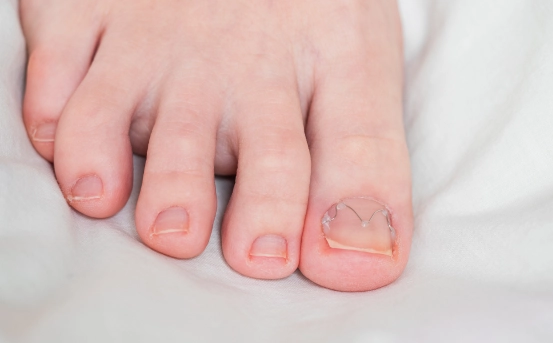
An ingrown toenail medically known as onychocryptosis occurs when the nail corner or edge pierces the surrounding skin. This leads to pain, redness, swelling, and sometimes infection. The big toe is most commonly affected, but any toenail can develop this condition.
Common Causes
- Improper nail trimming
- Wearing tight or ill-fitted shoes
- Toe injury or trauma
- Naturally curved or thick nails
- Poor foot hygiene
- Genetic predisposition
While early symptoms can often be managed with warm water soaks or proper footwear, chronic or severe cases may require surgical intervention for permanent relief.
What Is Ingrown Toenail Surgery?
Ingrown toenail surgery is a minor medical procedure performed to remove part or all of the problematic toenail that is causing pain or recurrent infection. The aim of the surgery is to prevent the nail from growing into the skin again, reduce discomfort, and restore normal function. This procedure is usually performed by a podiatrist or foot surgeon under local anesthesia, making it virtually painless and quick.
Types of Ingrown Toenail Surgery
There are two primary surgical approaches depending on the severity of the condition:
- Partial Nail Avulsion (Most Common) :- In this method, only the section of the nail that is growing into the skin is removed. It is the most widely recommended procedure for moderate to severe ingrown toenails. A chemical such as phenol may be applied to the nail matrix to prevent the removed portion from growing back. This method has a high success rate and significantly reduces recurrence.
- Total Nail Avulsion :- In this technique, the entire toenail is removed. It is typically recommended only when:
- The entire nail is severely damaged
- There is extensive infection
- The ingrown toenail keeps returning despite other treatments
- Total nail removal is less common but useful in severe cases.
- Wedge Resection :- Sometimes the surgeon removes a small wedge of tissue along with the nail edge to reshape the nail bed. This helps the nail grow straight in the future.
- Nail Matrixectomy :- In this approach, part or all of the nail matrix (the root that produces the nail) is destroyed using chemicals or lasers to stop regrowth permanently.
How Is the Procedure Performed?
Here is a step-by-step overview of what happens during a typical ingrown toenail surgery
- Local Anesthesia :- The surgeon numbs the toe using an injection. You will feel pressure during the procedure but no pain.
- Cleansing and Preparation :- The toe is cleaned to minimize infection risk.
- Nail Removal :- Depending on the technique, the surgeon removes the edge of the nail or the whole nail.
- Chemical Treatment (If Needed) :- Phenol or sodium hydroxide may be applied to prevent regrowth of the problematic nail section.
- Dressing the Toe :- An antibiotic ointment and sterile dressing are applied.
The procedure usually takes 10–20 minutes and is done on an outpatient basis.
Who Needs Ingrown Toenail Surgery?
You may be a candidate for surgery if
- You experience severe, persistent pain
- There is recurring infection
- Pus or foul-smelling discharge is present
- Walking becomes uncomfortable
- Home treatments no longer help
- The ingrown toenail keeps returning
People with diabetes or poor circulation should seek early medical attention, as untreated ingrown toenails can lead to complications.
Benefits of Ingrown Toenail Surgery
- Permanent Relief :- Prevents recurrence in most cases.
- Quick Procedure :- Usually completed within minutes.
- Minimal Downtime :- Normal activities resume quickly.
- Improved Comfort :- Reduces pain, swelling, and infection risk.
- Safe and Effective :- High success rates with minimal risks.
Recovery After Ingrown Toenail Surgery
Recovery is typically smooth and quick. Here’s what to expect
- First 24–48 Hours
- Keep the foot elevated.
- Avoid intense activity or standing for long periods.
- Some mild discomfort is normal and manageable with over-the-counter pain relievers.
- After 2–3 Days
- Change dressings as advised by your doctor.
- Keep the area clean and dry.
- Wear open-toed or loose-fitting footwear.
- Within 1–2 Weeks
- Most people return to normal routines.
- Pain and swelling significantly reduce.
- Complete Healing
- Partial nail avulsion heals in 2–4 weeks.
- Total nail removal may take longer.
Possible Risks
As with any procedure, there are minor risks
- Infection
- Nail regrowth
- Mild swelling or redness
- Temporary numbness
Following post-care instructions greatly reduces these risks.
Conclusion
Ingrown toenail surgery is a simple, safe, and highly effective solution for people suffering from painful or recurring toenail issues. Whether you choose a partial nail removal or a more advanced technique, the procedure can provide lasting relief and help you get back to your daily activities without discomfort.